
General Mills: Navigating Demand Headwinds with AI and Strategic Reinvestment – Is the Stock Undervalued?
The recent decision by Wells FargoWFC-- to lower its price target for General Mills (GIS) from $61 to $55 has reignited debates about the company's ability to navigate weak consumer demand. Yet beneath the headlines lies a more nuanced story: GIS is aggressively repositioning itself through AI-driven operational improvements and strategic reinvestment. For investors weighing the risks and opportunities, the question is whether GIS's long-term growth prospects now outweigh near-term challenges.
The Wells Fargo Price Target Cut: A Reflection of Sector Weakness
Wells Fargo's June 16 decision to trim GIS's price target by 9.8% to $55 came amid concerns over sluggish consumer demand, particularly in key categories like snacks and pet food. Analyst Chris Carey cited Yoplait brand dilution, tariff-driven margin pressures, and inventory issues in dry pet food as near-term drags. These headwinds are not unique to GIS; broader consumer staples sectors have faced softness as inflation weighs on spending and private-label competition intensifies.
However, GIS's current stock price of $53.56 is already pricing in these challenges. The lowered target now sits below the average analyst price of $60.76, creating a potential buying opportunity if the company can execute its turnaround plans.
GIS's Counteroffensive: AI-Driven Efficiency and Strategic Reinvestment
GIS is responding to these pressures with a dual strategy: aggressive cost-cutting paired with targeted reinvestment in high-growth brands and AI-powered operational upgrades. The company's Accelerate initiative, launched in 2021, has already delivered results:
- AI-Driven Supply Chain Gains:
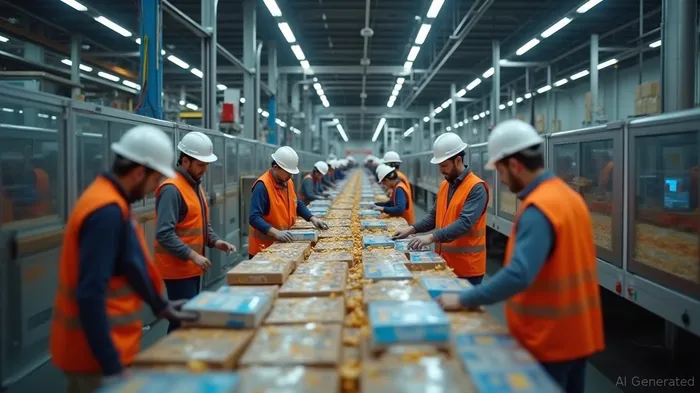
GIS is using AI to optimize logistics, reducing transportation costs by analyzing 5,000 daily shipments and cutting waste in manufacturing. These efforts have generated $20M in savings since fiscal 2024, with projections of $50M+ in waste reduction by. The technology is also streamlining inventory management, addressing the dry pet food inventory issues highlighted by Wells Fargo.
Cost Savings and Reinvestment:
The company's Holistic Margin Management (HMM) program targets a 5% improvement in margins, with $100M in additional cost savings allocated to brands like Blue Buffalo (pet food), Pillsbury (baking), and cereals. These are strategic bets on categories with higher margins and growth potential.Brand Revitalization:
GIS is doubling down on its strongest brands. For example, Blue Buffalo, now part of GIS's premium pet food division, contributed 20% of sales in 2025 with 30%+ EBIT margins. Meanwhile, Pillsbury is undergoing a value-focused relaunch to combat private-label competition.
Valuation: GIS as a Contrarian Play?
GIS's current P/E ratio of 11.59 is well below its five-year average of 18.5 and the sector average of 15.6, suggesting it's undervalued relative to its earnings power. GuruFocus's fair-value estimate of $71.38 (a 33% upside from current levels) underscores this disconnect.
While near-term risks remain—including execution delays and further margin pressure from tariffs—the company's balance sheet is strong, with a net debt/EBITDA ratio of 0.4x. This flexibility allows GIS to fund its initiatives without dilution.
Investment Thesis: Buy the Dip, but Mind the Risks
GIS presents an intriguing contrarian opportunity. The stock's current valuation and Wells Fargo's cautious stance reflect near-term concerns, but the company's AI-driven operational improvements and brand reinvestment could position it for a rebound. Key catalysts to watch include:
- Q4 Earnings (July 2025): Metrics on Blue Buffalo's growth and cost savings from AI initiatives.
- 2026 Fiscal Outlook: Whether GIS can achieve its 15% operating margin target, up from 12% in 2023.
- Consumer Sentiment Recovery: Any stabilization in discretionary spending could boost demand for value-oriented brands like Pillsbury.
Risks to Consider
- Execution Risks: GIS must demonstrate that its AI investments deliver lasting cost savings and margin improvements.
- Sector Competition: Private-label brands and rivals like Nestlé could intensify pressure on pricing power.
- Regulatory Headwinds: Compliance costs for new nutrition standards (e.g., California's 2027 rules) may strain margins temporarily.
Final Take: GIS as a Long-Term Value Play
GIS's lowered price target is a symptom of broader sector challenges, not an indictment of its long-term prospects. The company's focus on high-margin segments, AI-driven efficiency, and disciplined reinvestment in core brands aligns with a strategy to weather the current downturn and emerge stronger. For investors with a 12–18-month horizon, GIS's sub-12x P/E and GuruFocus upside suggest it's worth accumulating here.
Recommendation: Consider a gradual build of a position in GIS, with a price target of $60–$65 by early 2026. Monitor earnings catalysts and valuation multiples closely.
In a sector where defensive investors are fleeing to safety, GIS offers a blend of undervaluation and transformative potential. The Wells Fargo cut may be the final push to make this a compelling buy.





Comentarios
Aún no hay comentarios