
General Mills' Dividend Sustainability Amid Stagnant Sales and Rising Costs: A Balancing Act for Income Investors
Dividend Resilience and Historical Context
General Mills recently reaffirmed its commitment to shareholder returns by maintaining its quarterly dividend at $0.61 per share, translating to an annualized payout of $2.44 and a yield of approximately 5.2% as of January 2025. This consistency is underpinned by the company's "Accelerate" strategy, which emphasizes operational efficiency and brand innovation. Notably, GISGIS-- has increased its dividend for six consecutive years, a testament to its disciplined capital management.
Yet, the broader context is less rosy. For fiscal 2025, General MillsGIS-- reported net sales of $19 billion, but its most recent quarterly revenue fell 6.8% year-over-year to $4.52 billion. This decline, coupled with rising input costs in the CPG sector, raises concerns about the sustainability of its payout ratio. While the company's net margin of 15.24% appears robust, the absence of disclosed operating cash flow figures for 2025 complicates a full assessment of its ability to fund dividends amid revenue stagnation.
ESG Initiatives as a Strategic Lever
General Mills' sustainability goals-such as reducing greenhouse gas emissions by 30% by 2030 and achieving net-zero emissions by 2050-position it as a leader in responsible business practices. These initiatives align with growing consumer demand for ethically produced goods and could drive long-term cost savings through resource efficiency. For instance, the company's target to source 100% renewable electricity by 2030 may mitigate energy cost volatility, indirectly supporting dividend sustainability.
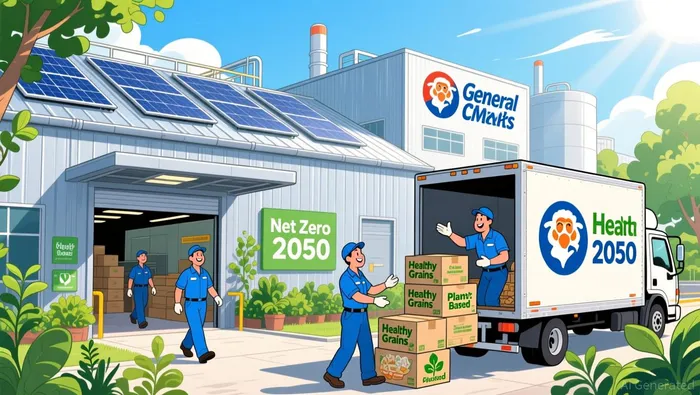
However, the lack of granular Q3 2025 sustainability metrics, such as carbon footprint or water usage data, limits visibility into near-term progress. This opacity could deter investors prioritizing immediate ESG impact, though the company's broader strategic framework remains a positive signal.
Cost Management and Competitive Positioning
General Mills' ability to sustain dividends hinges on its cost management strategies. The company's "Accelerate" strategy emphasizes leveraging scale and innovation to offset rising costs. For example, its focus on expanding its retail, international, and foodservice segments could diversify revenue streams and buffer against sector-specific downturns.
Analysts remain divided on the effectiveness of these measures. UBS has maintained a "Sell" rating for GIS, citing stagnant sales growth, while Stifel and Piper Sandler have reiterated "Buy" and "Overweight" ratings, respectively, highlighting the company's long-term organic growth potential. This divergence underscores the uncertainty surrounding GIS's ability to navigate macroeconomic pressures.
The Dividend Yield vs. Risk Trade-off
At first glance, GIS's 5.2% yield appears attractive, particularly in a low-yield environment. However, this metric must be contextualized against the company's financial health. A 15.24% net margin suggests strong profitability, but the absence of operating cash flow data leaves a critical gap in assessing dividend coverage. Historically, GIS has demonstrated resilience, but the recent quarterly revenue decline signals vulnerability in a sector marked by shifting consumer preferences and inflationary pressures.
For income investors, the key question is whether GIS's dividend stability can compensate for these risks. The company's 127-year streak of uninterrupted payments is a powerful indicator of reliability, yet the current macroeconomic climate demands caution. Rising interest rates and supply chain disruptions could strain margins further, potentially forcing a dividend cut-a scenario investors would want to avoid.
Conclusion: A Cautionary Bull Case
General Mills remains a compelling income investment for those prioritizing dividend resilience over growth. Its ESG initiatives and long-standing capital management discipline provide a buffer against short-term volatility. However, the lack of granular financial data on operating cash flow and the recent revenue decline necessitate a cautious approach. Investors should monitor the company's fiscal 2026 second-quarter earnings, scheduled for December 17, 2025, for clarity on its cost management efficacy and strategic execution. Until then, GIS's dividend yield offers allure, but its sustainability will depend on the company's ability to adapt to a challenging CPG landscape.







Comentarios
Aún no hay comentarios