
General Mills' Dividend Resilience: A Pillar of Stability in Turbulent Times
Historical Resilience: Dividend Discipline During Crises
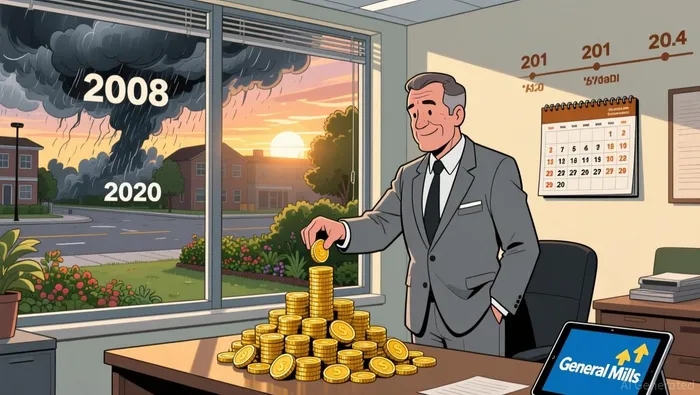
General Mills' commitment to dividend payments during economic downturns underscores its financial fortitude. During the 2008 financial crisis, the company not only maintained its dividend but also increased the annualized rate by 10% in the second quarter of fiscal 2009, a bold move amid widespread economic contraction. This decision reflected disciplined cash management and confidence in core operations, even as broader markets faltered.
A similar pattern emerged during the 2020 pandemic. While global supply chains and consumer spending were disrupted, General Mills declared a $0.49 dividend per share, aligning with pre-pandemic payouts. Analysts noted this as a testament to the company's ability to balance liquidity needs with shareholder obligations, despite pressures to reduce costs.
Recent Performance: Sustaining Payouts Amid Evolving Challenges
From 2021 to 2025, General Mills has continued its legacy of dividend reliability. The company recently declared a $0.61 quarterly dividend, maintaining a 5.15% yield at its current share price of $46.97. This payout, part of a 127-year streak of uninterrupted dividends, reflects a strategic emphasis on shareholder returns. Notably, the dividend has increased for six consecutive years, even as the stock trades near its 52-week low.
Financial metrics further reinforce this stability. General Mills' trailing twelve-month payout ratio stands at 45.6%, significantly below the 52.4% average over fiscal years 2021–2025. A payout ratio below 50% is generally considered sustainable, suggesting ample room for future increases without overexposing the company to risk.
Strategic Adaptability: Navigating Inflation and Consumer Shifts
General Mills' resilience is not merely a function of conservative financial management but also proactive strategic adjustments. At the J.P. Morgan U.S. Opportunities Forum in November 2025, CEO Jeff Harmening outlined initiatives to address inflationary pressures and shifting consumer preferences. These include:- Pricing Optimization: Adjusting prices on key brands like Pillsbury and Totino's to offset rising input costs.- Product Innovation: Launching high-margin products such as Cheerios Protein and Ghost Bars to diversify revenue streams.- Operational Efficiency: Committing $600 million in annual savings through transformation and productivity initiatives.
These measures position General Mills to sustain cash flows and, by extension, its dividend policy, even in a high-inflation environment.
Conclusion: A Dividend Powerhouse in Uncertain Times
General Mills' dividend history-from its 2008 and 2020 performances to its current financial health-demonstrates a rare blend of consistency and adaptability. With a sustainable payout ratio, a long track record of increases, and a strategic focus on innovation and cost control, the company remains a compelling option for income-focused investors seeking stability. As economic uncertainties persist, General Mills' dividend policy stands as a beacon of reliability.







Comentarios
Aún no hay comentarios