
General Dynamics' Strategic Position in the Navy's Long-Term Oiler Contract and Its Implications for Shareholder Value
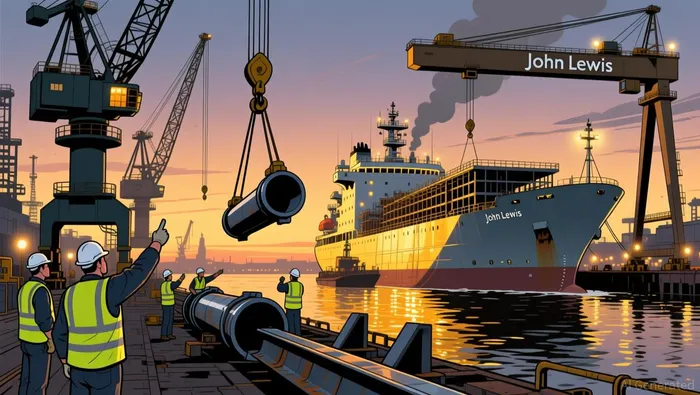
The financial implications of this contract are profound. By bolstering NASSCO's funded backlog, the $1.7 billion award provides a clear revenue runway for the next 12–36 months, directly enhancing shareholder value, according to the StockTitan report. This long-term visibility is a hallmark of defensive growth in the aerospace and defense sector, where companies with stable, government-backed contracts are less susceptible to market volatility. According to a Marketscreener report, the T-AO program's 742-foot vessels-capable of carrying 162,000 barrels of oil and supporting aviation operations-play a pivotal role in sustaining the Navy's global operations. Such strategic infrastructure projects are increasingly prioritized in an era of heightened geopolitical tensions, ensuring sustained demand for NASSCO's expertise.
The broader aerospace and defense sector is witnessing a shift toward technology-driven defensive growth. Innovations in artificial intelligence, additive manufacturing, and robotics are reshaping production and operational efficiency, according to a EpicFlow blog. General Dynamics' recent contract aligns with these trends, as the company leverages its shipbuilding capabilities to meet evolving military needs. Competitors like Howmet Aerospace and Baykar-recently acquired by Piaggio Aerospace-highlight the sector's dynamic competitive landscape, according to a Telegrafi article. However, NASSCO's dominance in the T-AO program, coupled with its track record of schedule adherence, positions it as a low-risk, high-visibility player.
Critically, the Navy's continued funding of the oiler program reflects a broader commitment to modernizing its fleet. With 17 of 20 ships already contracted, NASSCO's backlog is insulated from short-term budget fluctuations, a key advantage for investors seeking defensive assets, according to the StockTitan report. Analysts note that monitoring future contract modifications and construction milestones will be essential for assessing long-term execution risks, according to the StockTitan report. Nonetheless, the company's ability to maintain production continuity and workforce stability-key drivers of operational efficiency-reinforces its appeal in a sector where reliability is paramount.
In conclusion, General Dynamics' strategic alignment with the Navy's long-term oiler program exemplifies the power of defensive growth in the aerospace and defense sector. By securing multi-year contracts and leveraging technological advancements, the company not only strengthens its backlog but also insulates itself from market uncertainties. For shareholders, this translates to a resilient investment with clear, long-term value creation potential.





Comentarios
Aún no hay comentarios