
GenAI in Hedge Funds: Promise and Perils in Alpha Generation
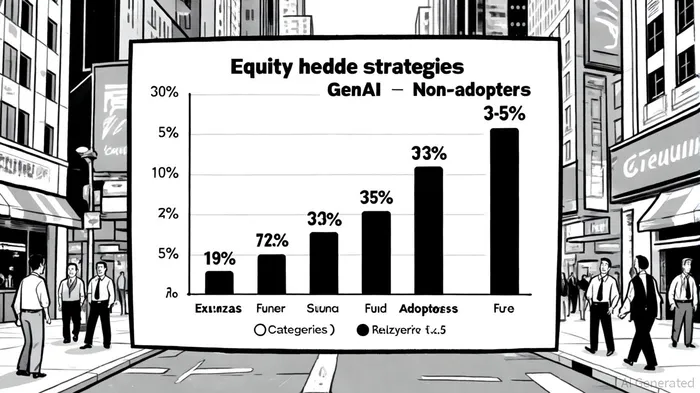
Generative AI (GenAI) has emerged as a transformative force in the hedge fund industry, with early adopters reporting measurable improvements in alpha generation and operational efficiency. According to a comprehensive review of 50 sources from 2022 to 2025, hedge funds leveraging GenAI achieve 3-5% higher annualized returns compared to non-adopters, particularly in equity hedge strategies. This performance edge is attributed to advanced data architectures that integrate synthetic datasets, large language models (LLMs), and modular workflows for scalable AI deployment, the review found.
However, the enthusiasm for GenAI is tempered by critical limitations. While tools like GANs and LLMs enhance market signal identification and portfolio stress-testing, Resonanz Capital cautions that they remain fundamentally pattern-recognition systems. A 2025 CFA Institute analysis warns that large reasoning models (LRMs) struggle with high-complexity scenarios, such as navigating geopolitical shocks or black swan events. This constraint raises questions about GenAI's ability to sustain alpha generation in volatile markets.
Systemic risks further complicate the picture. The EY 2025 survey reveals that 78% of asset managers are exploring agentic AI, yet the widespread adoption of similar models increases market correlation and model opacity, the CFA analysis argues. For instance, if multiple funds rely on identical LLMs to analyze macroeconomic data, herding behavior could amplify market swings rather than mitigate them, the CFA analysis adds. Regulatory uncertainties also loom large, as data transparency issues in LLMs and evolving compliance requirements create operational friction, the comprehensive review notes.
Beyond algorithmic challenges, infrastructure and workforce constraints hinder GenAI's potential. A CSIS report estimates that the U.S. will need 140,000 additional skilled tradespeople by 2030 to support AI infrastructure, including electricians and HVAC technicians, according to the comprehensive review. Deloitte's 2025 Financial Services Predictions underscores that AI's transformative benefits-such as reduced software costs and fraud detection-depend on resolving these labor shortages. For hedge funds, this means delayed ROI on AI investments and prolonged reliance on manual processes.
To navigate these challenges, hedge funds must adopt a hybrid approach. While GenAI excels at automating repetitive tasks and identifying macro trends, human analysts remain indispensable for contextual judgment and contrarian insights, the CFA analysis emphasizes. For example, Resonanz Capital highlights how LLMs can summarize regulatory documents, but strategic decisions still require domain expertise. Similarly, Deloitte advocates embedding AI into structured decision-making frameworks to preserve human oversight.
In conclusion, GenAI is reshaping hedge fund operations, but its alpha-generating potential is constrained by model limitations, systemic risks, and infrastructure bottlenecks. As the industry moves forward, success will hinge on balancing technological innovation with robust risk management and workforce development.







Comentarios
Aún no hay comentarios