
GEN Restaurant Group's Strategic Expansion into South Korea: A Catalyst for Growth in a Globalized Market
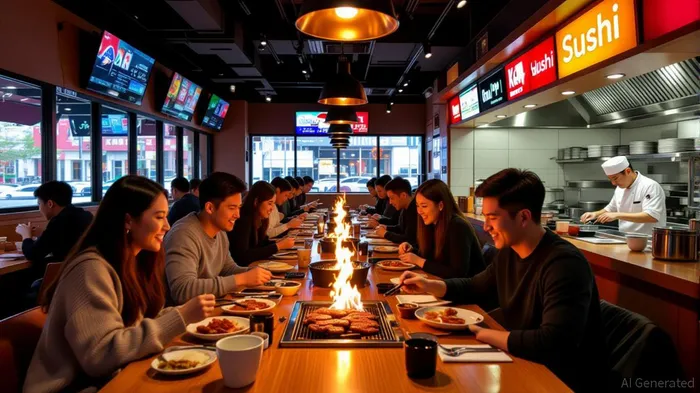
GEN Restaurant Group's foray into South Korea represents a calculated and multifaceted approach to international market entry, blending cultural authenticity with operational efficiency. By opening its first South Korean location in Ilsan—a suburb of Seoul known for its thriving dining culture and lower operating costs—the company has positioned itself to capitalize on the region's appetite for immersive culinary experiences while mitigating risks associated with high-competition urban centers[1]. This strategic move, coupled with plans to open two additional units by year-end 2025, underscores a capital-efficient model where South Korean stores cost approximately one-third of their U.S. counterparts[5]. Such cost advantages are critical for scaling rapidly in a globalized market, where margins are often squeezed by rising labor and supply chain expenses.
Market Entry: Localization and Dual-Concept Synergies
GEN's expansion strategy hinges on a dual-concept model that pairs its flagship GEN Korean BBQ with KAN Sushi in shared kitchen spaces. This approach not only reduces infrastructure and staffing costs but also leverages cross-promotion opportunities, creating a diversified revenue stream[2]. The company's emphasis on localized marketing—adapting menus and dining experiences to align with South Korean tastes—further strengthens its competitive edge. For instance, the “grill at your table” format of Korean BBQ resonates with the region's communal dining culture, while the introduction of retail-ready packaged foods (e.g., Korean barbecue meats for Costco) extends brand reach beyond restaurant walls[3].
According to a report by Market Insights Report, GEN's CEO David Kim has framed the South Korean expansion as a “cultural homecoming,” aligning with the brand's roots in Korean cuisine while enhancing its global credibility[6]. This narrative is not merely symbolic; it reflects a deeper understanding of how cultural resonance can drive customer loyalty in foreign markets.
Operational Scalability: Technology, Outsourcing, and Quality Control
GEN's ability to scale efficiently in South Korea is underpinned by its reliance on technology and strategic partnerships. The company has integrated AI-driven automation and ERP systems to streamline inventory management, payroll processing, and real-time data tracking[4]. These tools are particularly vital in addressing labor shortages, a persistent challenge in the QSR sector. By outsourcing staffing needs to local firms like Asanify and Randstad Korea, GEN ensures compliance with stringent labor laws while maintaining flexibility in workforce management[1].
Quality control remains a cornerstone of GEN's scalability strategy. The company adheres to HACCP and ISO 22000 certifications, which not only meet regulatory standards but also reinforce consumer trust in a market where food safety is paramount[4]. Additionally, internal cash flow—rather than external financing—funds expansion, allowing GEN to navigate macroeconomic headwinds such as tariffs and immigration-related staffing disruptions[5].
Challenges and Opportunities
While GEN's South Korean venture is promising, challenges persist. Rapid expansion could strain operational capabilities, particularly in managing supply chains and maintaining consistent service quality across multiple locations[2]. Moreover, macroeconomic pressures, including global tariffs and shifting consumer behaviors, may indirectly impact resource allocation. However, the company's cost-efficient model and focus on dual-concept synergies provide a buffer against these risks.
A key opportunity lies in leveraging South Korea as a trend incubator. The country's dynamic culinary landscape offers insights into emerging consumer preferences that could be adapted for U.S. markets. For example, GEN's exposure to South Korean sushi innovations or plant-based menu trends could inform future product launches in North America[5].
Conclusion
GEN Restaurant Group's South Korean expansion exemplifies a balanced approach to international growth: culturally attuned, operationally agile, and financially disciplined. By combining localized strategies with scalable technologies and strategic outsourcing, the company is well-positioned to turn South Korea into a springboard for further global expansion. For investors, this initiative highlights GEN's ability to adapt to diverse markets while maintaining profitability—a critical trait in an increasingly interconnected world.





Comentarios
Aún no hay comentarios