
Next-Gen Logistics Tech: How App-Based Engagement Platforms Are Reshaping E-Commerce Supply Chains
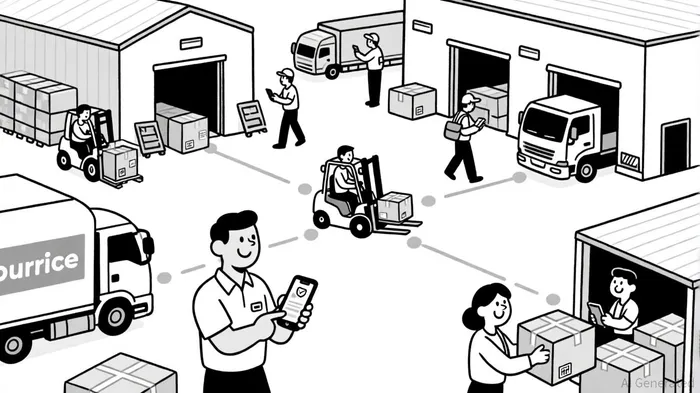
The e-commerce supply chain is undergoing a seismic shift, driven by the urgent need for speed, reliability, and customer-centricity. At the forefront of this transformation are app-based engagement platforms like EngageLab AppPush, which are redefining delivery efficiency and customer retention for logistics giants such as J&T Cargo. By leveraging real-time communication and AI-driven strategies, these platforms are not just optimizing operations—they are becoming a competitive moat in an increasingly fragmented market.
The J&T Cargo Case Study: Operational Gains Through AppPush
J&T Cargo, a leading logistics brand under the J&T Group, partnered with EngageLab to implement AppPush in its Indonesian operations. The results were striking: message delivery rates surged by over 40%, and push latency for critical notifications dropped to 1–3 seconds[1]. This hyper-responsive communication enabled couriers and operations staff to act faster, reducing delays and bottlenecks. For instance, real-time alerts for route changes or delivery exceptions allowed teams to adapt dynamically, ensuring packages reached customers on time[2].
These improvements are not just operational—they translate into customer retention advantages. A 2025 industry report notes that 72% of e-commerce complaints stem from logistics performance, with delivery speed and reliability as top pain points[3]. By addressing these issues, J&T Cargo has positioned itself to retain customers in a market where 42% of shoppers prioritize logistics reliability when choosing brands[4].
Industry Trends: The Rise of Engagement-Driven Logistics
The success of J&T Cargo mirrors broader industry trends. The global e-commerce logistics market, valued at $426.2 billion in 2023, is projected to grow at a 21.2% CAGR through 2034, reaching $3,242.86 billion[5]. This growth is fueled by three key factors:
1. AI and Automation: Modern Transportation Management Systems (TMS) now integrate AI to optimize routing, reduce fuel costs, and predict delivery windows[6].
2. Last-Mile Innovation: Drone delivery, localized warehousing, and real-time tracking are becoming table stakes for logistics providers[7].
3. Sustainability Pressures: Green logistics initiatives, such as electric vehicle fleets and carbon-neutral delivery networks, are gaining traction[8].
App-based engagement platforms like AppPush are central to these trends. For example, Porter, an Indian logistics aggregator, reported a 57% revenue growth in FY25 after adopting app-based solutions, turning a $96 million loss into a $55 million profit[9]. This underscores the financial scalability of engagement-driven logistics.
The Investment Thesis: Why Engagement Tech Matters
Investing in engagement-driven logistics technology offers a dual advantage: operational efficiency and customer retention. A 2024 study found that merchants using platforms like "Fulfillment by Amazon" saw sales increases of up to 20% due to faster delivery times[10]. Similarly, J&T Cargo's AppPush implementation likely contributed to its 147.1% year-on-year surge in adjusted net profit in 1H2025[11].
However, challenges persist. A McKinsey survey highlights that integration complexity and supplier readiness remain barriers to adoption[12]. Companies must prioritize user-friendly platforms and collaborative ecosystems to maximize ROI.
Conclusion: A High-Growth Edge in a Competitive Landscape
As e-commerce demand accelerates, logistics providers must evolve from cost centers to value drivers. App-based engagement platforms like EngageLab AppPush are proving that real-time communication and AI-driven strategies can unlock both efficiency and loyalty. For investors, the message is clear: engagement-driven logistics is not just a trend—it's a cornerstone of the next-generation supply chain.







Comentarios
Aún no hay comentarios