
Gen Z Entrepreneurs Are Leading the AI Unicorn Boom as Young Founders Build Billion-Dollar Startups Faster Than Ever
The average age of unicorn founders in the AI sector has dropped significantly in recent years. In 2020, the typical AI founder was 40 years old. By 2024, that age had fallen to 29. This trend reflects the rapid pace of AI development and the way younger entrepreneurs are leveraging generative AI tools to launch and scale companies more quickly than in the past.
AI is accelerating the timeline for building billion-dollar startups. According to a report by Antler, AI startups now reach unicorn status in an average of 4.7 years, nearly two years faster than in most other sectors. This shift is driven by more efficient development processes and the widespread availability of AI tools that reduce the need for large teams or extensive capital.
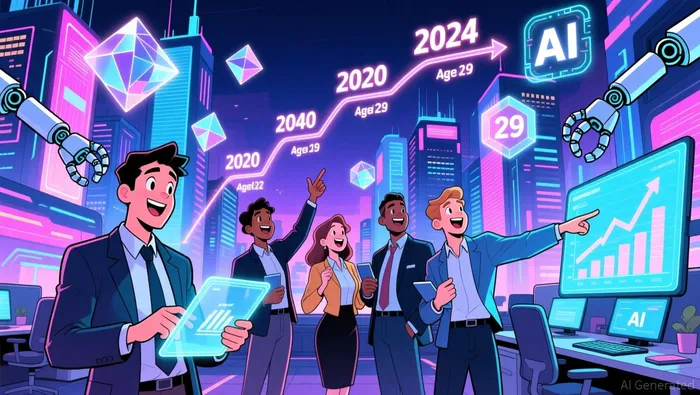
Younger founders are also more likely to adopt a fast-iteration model. Antler noted that companies like Lovable, a Swedish AI firm, reached unicorn status in just eight months. This speed of execution is reshaping how venture capital operates, with traditional 7-year fund cycles now appearing misaligned with the compressed timelines of AI startups.
Why Did This Happen?
The rise of AI tools has changed the startup landscape. Previously, building a unicorn required significant capital and teams for coding, sales, and operations. With AI, leaner teams can automate tasks and develop products more efficiently. As a result, startups can now be built with a fraction of the resources required in the past.
Younger entrepreneurs are particularly well-suited to capitalize on these changes. They often have strong technical backgrounds and are more comfortable iterating quickly based on real-time data. This ability to experiment and adapt has allowed them to outpace older founders who may rely more on established business models.
The shift has broad implications for venture capital. Traditional VC funds are structured around longer timelines, but AI startups are reaching milestones faster. This has forced investors to adjust their strategies, with more emphasis placed on early-stage funding and rapid scaling.
The geographic distribution of unicorn companies has also shifted. A decade ago, unicorns were concentrated in 30 cities across eight countries. Now, they emerge from over 300 cities in 45 countries. This diversification is largely driven by AI, which levels the playing field for startups regardless of their location.
What Are Analysts Watching Next?
Female founders remain underrepresented in the unicorn space. While the number of female-founded unicorns has increased sixfold over the past decade, they still represent just 6% of all unicorn founders. Analysts argue that this discrepancy presents a significant opportunity for investors who are willing to back underrepresented entrepreneurs.
Immigrant founders also play a major role in unicorn creation. Twenty-six percent of unicorn founders are immigrants, with 81% of them located in the U.S. This suggests that policies related to founder visas and early-stage capital could have a direct impact on the growth of future unicorns.
The continued rise of AI unicorns is forcing traditional venture capital models to adapt. The next generation of billion-dollar companies is being built by younger entrepreneurs using faster tools and more efficient strategies. Investors who fail to keep pace may find themselves left behind in this rapidly evolving landscape.
The implications for global markets are clear. As AI reshapes the startup ecosystem, the traditional barriers to entry are disappearing. This means that the next big tech company may be founded by a Gen Z entrepreneur with a laptop and a bold vision.







Comentarios
Aún no hay comentarios