
Gen Z's Disruptive Influence on Corporate Innovation and Its Investment Implications
The corporate landscape in 2025 is being reshaped by a generation that grew up in the digital age: Gen Z. Their unparalleled tech fluency, demand for authenticity, and appetite for innovation are driving seismic shifts in workforce dynamics and competitive advantage, particularly in AI and consumer goods sectors. For investors, understanding this generational pivot is no longer optional-it's a necessity.
Workforce Dynamics: Gen Z as AI's Human Catalyst
Gen Z's integration of AI into their professional lives is redefining corporate training and productivity. A staggering 82% of Gen Z workers use AI in their roles, nearly double the 52% adoption rate among Baby Boomers. This generation is not only adopting AI tools but also demanding upskilling programs to master them. Companies that fail to provide AI training risk losing talent, as Gen Z workers are 1.5x more likely to receive AI-specific training compared to older cohorts.
This shift is creating a "superagency" in the workplace, where AI empowers employees to automate repetitive tasks and focus on high-value problem-solving. According to McKinsey, this model enables employees to unlock AI's full potential. For example, Gen Z's preference for AI-driven collaboration tools is pushing firms to adopt platforms that streamline workflows, such as generative AI for content creation or data analysis. The result? A productivity boom in industries that prioritize AI literacy, with early adopters reporting 3.7x ROI on AI investments.
Competitive Advantage: AI and Consumer Goods in the Gen Z Era
Gen Z's influence on consumer goods innovation is equally transformative. Their digital-first behavior-74% of Gen Z shoppers use smartphones to research products before visiting physical stores-is forcing brands to rethink marketing and supply chains. AI-powered dynamic pricing, personalized recommendations, and hyper-localized inventory management are no longer luxuries but necessities.
The ROI for companies embracing this shift is clear. Consumer goods firms with AI-specific operating models are twice as likely to outperform peers in customer satisfaction and revenue growth. For instance, brands leveraging generative AI for product discovery (e.g., AI-generated reviews or virtual try-ons) are capturing Gen Z's attention in crowded markets. 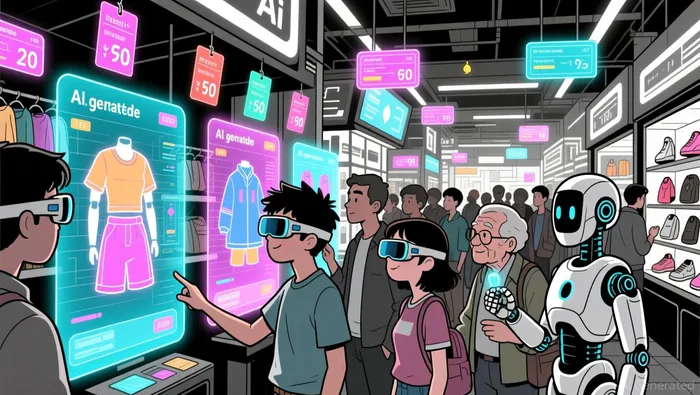 . This is evident in the $37 billion global spend on generative AI in 2025, with over half allocated to applications that directly enhance consumer experiences.
Gen Z's paradoxical spending habits-cutting overall budgets but prioritizing emotional and social value-also demands innovation. While they reduced holiday spending by 23% in 2025, they are willing to pay premiums for brands that align with their values (e.g., sustainability, ethical sourcing). AI is enabling hyper-personalized campaigns that resonate with these preferences, creating loyalty in a generation skeptical of traditional advertising.
Investment Implications: Where to Allocate Capital
The data underscores three key investment themes tied to Gen Z's disruptive influence:
AI-First Startups and Unicorn Founders:
Gen Z entrepreneurs are building billion-dollar companies at unprecedented speeds, with some reaching unicorn status in eight months. These startups leverage lean teams and AI tools to scale efficiently, reducing reliance on traditional SaaS models. Investors should prioritize venture capital funds targeting Gen Z-led AI ventures, particularly in sectors like edtech, fintech, and sustainable consumer goods.Enterprise AI Adoption:
Companies investing in AI applications (vs. infrastructure) are seeing immediate productivity gains. Financial services firms report 4.2x ROI on AI initiatives. Sectors with high Gen Z workforce participation-such as tech, healthcare, and e-commerce-are prime candidates for AI-driven efficiency upgrades.Consumer Goods Reimagined:
Brands that integrate AI into their supply chains and marketing strategies are outpacing competitors. For example, 60% of consumer goods companies plan to boost cloud investments to enable generative AI workflows. Startups specializing in AI-driven personalization (e.g., virtual styling, AI-generated content) are well-positioned to capture Gen Z's $12 trillion projected spending power by 2030.
Risks and Considerations
While the opportunities are vast, investors must navigate challenges. AI ROI often takes 1–3 years to materialize, with only 13% of projects showing returns within 12 months. Additionally, disparities in AI training-men and white-collar workers benefit more than women and operational roles-highlight the need for equitable upskilling strategies. According to FM Magazine, this gap persists despite Gen Z's leadership in AI adoption. Regulatory scrutiny of AI ethics and data privacy could also slow adoption in risk-averse sectors.
Conclusion
Gen Z is not just a demographic-they are a force accelerating the AI revolution. Their demand for authenticity, efficiency, and innovation is compelling companies to rethink everything from hiring practices to product development. For investors, the path forward lies in backing firms that align with Gen Z's values and leverage AI to create sticky, value-driven experiences. As the "Great Divide" between human-verified and AI-generated content becomes the norm, the winners will be those who embrace transparency and adaptability.







Comentarios
Aún no hay comentarios