
Gen Z Are Arriving to College Unable to Even Read a Sentence-Professors Warn It Could Lead to a Generation of Anxious and Lonely Graduates
Gen Z students are arriving at college with alarmingly low reading abilities, a trend that has raised serious concerns among professors and education experts. According to recent data, two in five Americans did not read a single book in 2025. This decline in reading has been attributed to the rise of the attention economy, fueled by social media and AI-driven content. The implications for future generations of graduates are growing more pronounced with each passing year.
Professors have warned that this trend could lead to a generation of anxious and lonely graduates who lack the communication and analytical skills necessary for success in higher education and beyond. Reading, especially long-form fiction and nonfiction, demands sustained attention, critical thinking, and emotional intelligence— skills that are increasingly rare among younger students. Experts argue that these skills are foundational for leadership and strategic decision-making.
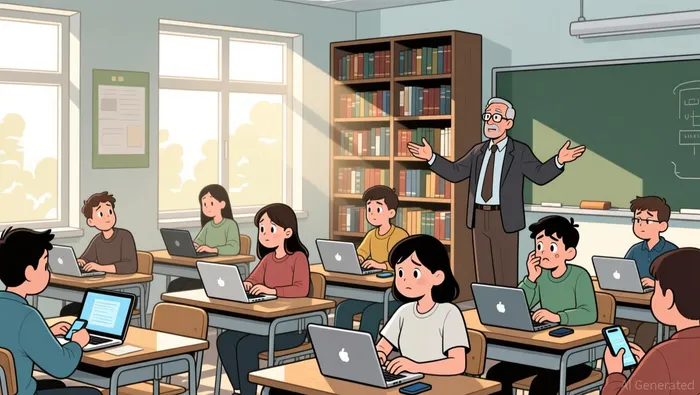
Corporate leaders and educational institutions are already noting the consequences of this shift. For example, JPMorgan Chase CEO Jamie Dimon recently emphasized the importance of curiosity and intellectual depth in leadership, traits often cultivated through reading. As Gen Z moves into the workforce, companies may struggle to find candidates with the nuanced thinking required for complex roles.
Why Is Reading Declining Among Gen Z?
The drop in reading is particularly pronounced among Americans aged 18 to 29, who read an average of 5.8 books in 2025—the lowest of any generation. The rise of digital distractions and the prevalence of AI chatbots being used to summarize content are exacerbating the issue. Students increasingly rely on technology to digest information rather than engaging directly with texts.
The shift has also been reinforced by broader changes in how younger generations consume information. Short-form content, such as TikTok videos and social media posts, is rapidly replacing long-form reading. While these formats can be engaging, they often fail to foster the deep thinking and attention to detail required for complex problem-solving.
What Are the Long-Term Implications for the Workforce and Education System?
The long-term consequences of this reading decline are far-reaching. In a world increasingly driven by AI and automation, human skills like empathy, critical thinking, and communication remain crucial. These are precisely the skills that reading develops over time.
Universities are beginning to address the issue by incorporating more reading-intensive curricula, but progress is slow. Some professors are even encouraging students to read books as a form of self-development. However, given the cultural shift away from reading, reversing this trend will require more than academic adjustments—it will also need broader societal and technological interventions.
Business leaders are also taking note. The CEO of Indeed has stated that intellectual curiosity is more important than academic credentials in hiring decisions. As such, the workforce may eventually adapt to a new standard of leadership shaped by the habits of a digitally native generation. Yet many fear this will result in a leadership gap as critical thinking declines.
What Can Investors and Policymakers Watch For?
Investors and policymakers should monitor how this trend affects workforce readiness and corporate performance in the coming years. Companies that prioritize intellectual curiosity and lifelong learning may gain an edge over those that do not. Additionally, the rise of AI and automation may begin to fill the void left by declining human reading habits.
Education reform is also likely to remain a key policy area. With Gen Z entering college at an alarming rate of reading deficiency, universities may need to rethink how they teach and assess critical thinking skills. The shift could also influence the demand for literacy-focused educational technology and AI-assisted learning tools.
Meanwhile, global companies are already investing in initiatives that foster intellectual depth and curiosity. For example, Lenovo has announced plans to design and manufacture AI servers in India, emphasizing the importance of a skilled and adaptable workforce. These investments suggest that companies are aware of the long-term value of intellectual engagement and may continue to prioritize it in their operations.
Conclusion
The decline in reading among Gen Z is a complex issue with far-reaching implications for education, business, and leadership. As attention spans shrink and digital habits take hold, the role of deep, sustained reading in shaping capable leaders is becoming increasingly evident. Universities, corporations, and governments will need to work together to address this challenge and ensure that the next generation is equipped with the skills necessary to thrive in a rapidly changing world.







Comentarios
Aún no hay comentarios