
Gemini Space Station's Nasdaq Debut: Is the Crypto Custody Play a Buy or a Bubble?
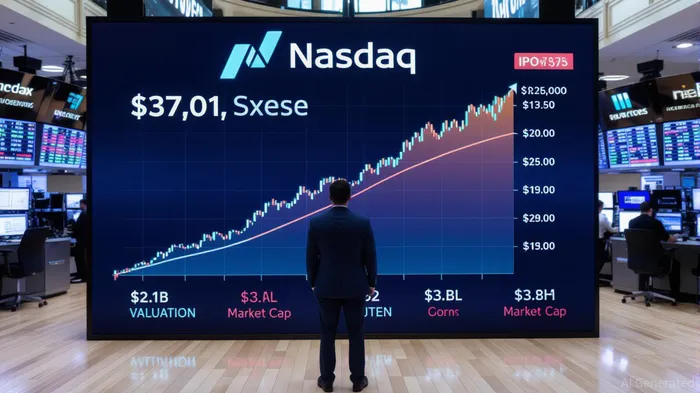
The Nasdaq debut of Gemini Space StationGEMI-- Inc. (GEMI) on September 12, 2025, marked a pivotal moment for the crypto industry. Shares opened at $37.01, far exceeding the IPO price of $28, and closed at $32.00, valuing the firm at $3.8 billion[3]. This meteoric rise reflects investor optimism about Gemini's role in crypto custody and its broader bet on digital assets. However, beneath the surface, the company faces significant financial and regulatory headwinds that warrant a closer examination of its strategic positioning.
Strategic Positioning: Custody as a Core Strength
Gemini's IPO comes amid a structural shift in the crypto market, where custody services are emerging as a critical revenue driver. The exchange oversees $18 billion in assets, serving over 10,000 institutional clients, and ranks third in the custody space behind Coinbase and BitGo. Its compliance credentials—SOC 1 and SOC 2 certifications, cold storage infrastructure, and $125 million in insurance—position it as a trusted custodian in a sector still reeling from past scandals[2].
Yet, this strength contrasts sharply with its trading business. Despite a 0.3% global market share (ranked 35th), Gemini's revenue remains heavily reliant on trading fees, which accounted for 70% of its 2024 income. This cyclical exposure leaves the firm vulnerable to market downturns, as evidenced by its 2025 financials: revenue fell to $68.6 million, while net losses ballooned to $282.5 million, driven by loan and debt servicing costs. Diversification into custody, stablecoin issuance (GUSD), and a crypto rewards credit card is underway, but these segments remain nascent.
Financial and Liquidity Risks
Gemini's balance sheet reveals a precarious reliance on external financing. The company has borrowed nearly 40,000 ETH and 4,700 BTC from its affiliated Winklevoss Capital Fund, alongside $116.5 million from Galaxy DigitalGLXY-- and $75 million from Ripple. These obligations raise concerns about liquidity constraints and potential shareholder dilution, particularly if crypto prices remain volatile.
Compounding these risks is the firm's history of regulatory turbulence. Between 2023 and 2024, Gemini faced a $3 billion fraud claim from New York's Attorney General, a $1.1 billion restitution order from the New York Department of Financial Services, and SEC investigations tied to its collapsed Earn program. While the SEC closed its probe in February 2025, the company acknowledges ongoing regulatory uncertainties, including potential exposure under the 1940 Act.
Regulatory Tailwinds and Market Dynamics
The broader regulatory landscape, however, offers a glimmer of hope. The passage of the GENIUS Act in 2025 has provided clarity for stablecoins, a segment where Gemini's GUSD token could gain traction. Additionally, the pending CLARITY Act, which aims to facilitate the tokenization of traditional assets, could unlock new revenue streams for custody-focused firms like Gemini.
Political advocacy by the Winklevoss twins further bolsters the firm's long-term prospects. Their substantial BitcoinBTC-- donations to Donald Trump's 2024 campaign and support for pro-crypto super PACs signal a strategic effort to shape favorable policy outcomes. This alignment with political forces may help mitigate regulatory risks in the coming years.
Verdict: A High-Risk, High-Reward Proposition
Gemini's Nasdaq debut has been a resounding success, with its $3.8 billion market cap underscoring investor confidence in its custody ambitions. However, the company's financial fragility, regulatory history, and reliance on trading fees present significant risks. For investors, the key question is whether Gemini can execute its diversification strategy while managing debt and regulatory scrutiny.
In the short term, the IPO's oversubscription and strong pricing suggest a “buy” case for those willing to tolerate volatility. Yet, the long-term viability of the firm hinges on its ability to scale custody and stablecoin operations while navigating an unpredictable regulatory environment. For now, Gemini remains a speculative bet—a crypto custody play with transformative potential, but one that demands cautious optimism.





Comentarios
Aún no hay comentarios