
GE Healthcare's Strategic Pivot in China: Divestiture Opportunities and Sector Consolidation in Medical Tech
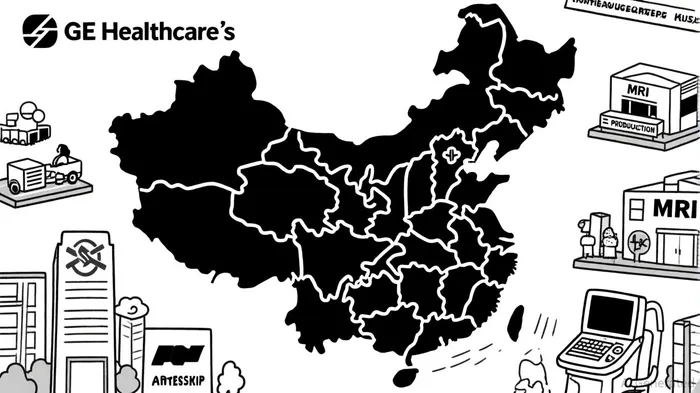
In 2025, GEGE-- Healthcare's strategic reevaluation of its China operations has become a focal point for investors and industry analysts. The company, which has faced a 15% revenue decline in China in 2024 due to weakened sales, U.S.-China tariffs, and domestic competition [2], is now exploring the sale of a stake in its China unit. This move, potentially valued at several billion dollars [1], reflects a broader industry trend of consolidation and localization in the medical technology sector.
Strategic Divestitures and Tariff Mitigation
According to a report by Bloomberg, GE HealthcareGEHC-- is working with financial advisers to assess strategic options for its China business, including partial divestitures [1]. This decision follows a mid-single-digit revenue decline in the first half of 2025, though the company anticipates a recovery in the second half [3]. The U.S.-China trade war has significantly impacted GE's financial performance, with tariffs accounting for $0.65 of the $0.85 per-share earnings hit in 2025 [3]. By reducing this tariff impact to $0.45 through supply chain reorganization, GE has demonstrated how strategic adjustments can mitigate economic pressures while freeing capital for innovation [1].
The potential sale of a stake in China aligns with GE's broader 2025 strategy, which includes launching AI-driven solutions like Vocado and investing in digital transformation [3]. However, the company remains cautious about short-term risks, as China is its second-largest market with 7,000 employees [3].
Industry-Wide Consolidation and Localization
GE's moves mirror trends among global medtech giants like Siemens Healthineers and PhilipsPHG--, which are doubling down on China despite sales slowdowns. These companies are prioritizing localization—such as establishing production facilities and partnerships—to reduce reliance on cross-border supply chains and navigate regulatory hurdles [3]. For example, GE has set up MRI production and ultrasound headquarters in China, signaling a commitment to long-term growth despite near-term challenges [3].
The sector's consolidation is further driven by economic pressures and the need for operational efficiency. In 2025, mergers and acquisitions (M&A) have focused on technology-driven growth, with high-profile deals reshaping care delivery models [4]. GE's acquisition of Nihon Medi-Physics and its expanded partnership with Vietnam's FPT highlight how global players are leveraging regional expertise to enhance AI-enabled diagnostics and radiopharmaceutical solutions [4].
Investment Implications and Future Outlook
For investors, GE's strategic pivot in China presents both risks and opportunities. While the potential stake sale could unlock value and reduce exposure to volatile trade policies, it also raises questions about the company's long-term commitment to a market with significant growth potential. China's aging population and rising demand for advanced medical technologies—such as AI-powered imaging and precision diagnostics—position it as a critical battleground for medtech innovation [3].
A key indicator to monitor is GE's ability to balance divestitures with localized R&D investments. For instance, its oncology partnership with NovartisNVS--, which combines GE's imaging expertise with Novartis's drug development capabilities, could set a precedent for cross-industry collaborations in China [1]. If successful, such initiatives may accelerate sector consolidation by creating integrated solutions that smaller players struggle to match.
Conclusion
GE Healthcare's strategic pivot in China underscores the evolving dynamics of the medical tech sector. By addressing tariff challenges, pursuing selective divestitures, and investing in localized innovation, the company is navigating a complex market while contributing to broader industry consolidation. For investors, the key takeaway is that resilience in China—through strategic flexibility and technological leadership—will define long-term success in a sector increasingly shaped by geopolitical and economic headwinds.





Comentarios
Aún no hay comentarios