
GE Healthcare's Potential Exit from China: Strategic Divestment and Its Implications for Global Med-Tech Investment
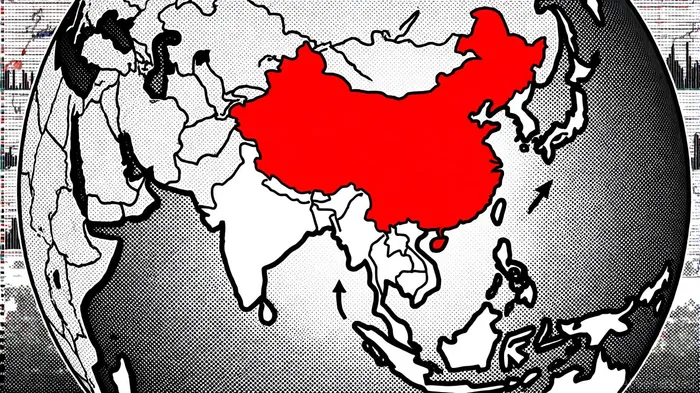
The potential divestment of GEGE-- Healthcare's China operations has ignited a critical debate about the future of global med-tech investment. As one of the largest medical technology firms in the world, GE's reported exploration of a stake sale in its China business—its third-largest market—reflects broader challenges and strategic recalibrations in an increasingly fragmented global economy. According to a report by Bloomberg, the company is in early-stage discussions to sell a portion of its China unit, which generated $2.13 billion in revenue in 2024, a 15% decline from the prior year[1]. This drop is attributed to the winding down of pandemic-era stimulus programs, anti-corruption campaigns that curtailed hospital spending, and U.S.-China trade tensions[2].
The Strategic Calculus Behind the Divestment
GE Healthcare's China operations face a perfect storm of headwinds. The anti-corruption campaigns, which have frozen procurement pipelines in Chinese hospitals, have been a persistent drag on sales. As stated by Reuters, the company has also grappled with tariffs that account for 75% of the net impact on its 2025 adjusted earnings outlook, forcing it to shift manufacturing to “tariff-friendly” locations[3]. This mirrors a trend among global firms, including Siemens Healthineers and PhilipsPHG--, which are similarly rethinking their China strategies amid domestic competition and geopolitical risks[4].
The decision to consider a stake sale is not merely a reaction to short-term pain but a strategic pivot. By reducing exposure to a market with eroding margins, GE can reallocate capital to regions with stronger growth potential. Goldman SachsGS-- analysts, for instance, have upgraded GE HealthcareGEHC-- shares to “buy,” citing expectations of a faster-than-anticipated recovery in China by 2026 and improved operational leverage elsewhere[5]. This aligns with a broader industry shift toward localized production and supply chain resilience, as seen in GE's $53 million investment in Shanghai and $69.7 million in Tianjin to localize manufacturing[6].
Implications for Global Med-Tech Investment
The potential GE exit signals a recalibration of global med-tech investment strategies. China, once a growth engine for multinational firms, is now seen as a high-risk, high-reward market. While the country's aging population and rising healthcare demand present long-term opportunities, the current environment is marked by regulatory uncertainty and pricing pressures. For example, the American Chamber of Commerce in Shanghai reported a record-low 41% optimism level among U.S. firms for their five-year business outlook in China[7].
This trend could accelerate capital flows into Southeast Asia, India, and Eastern Europe, where companies are establishing new manufacturing hubs to bypass tariffs and geopolitical risks. GE's localization strategy—shifting from transpacific shipments to local production—exemplifies this shift[8]. However, such moves require significant upfront investment and may dilute economies of scale, posing challenges for smaller firms.
A Broader Industry Trend
GE's situation is emblematic of a larger industry reckoning. Competitors like Siemens and Philips have also reported sales declines in China, with Siemens' CFO noting prolonged procurement delays[9]. Yet, these firms remain committed to the market, betting on a post-pandemic rebound. The key question is whether the structural changes in China's healthcare sector—such as stricter procurement rules and domestic innovation—will create a more level playing field for foreign and local players.
For investors, the GE case underscores the importance of diversification. While China remains a critical market, over-reliance on its growth trajectory is increasingly risky. The med-tech sector's future may lie in hybrid strategies: maintaining a presence in China while hedging against volatility through investments in emerging markets and advanced manufacturing technologies.
Conclusion
GE Healthcare's potential exit from China is a microcosm of the challenges and opportunities facing global med-tech firms. While the immediate financial hit from a stake sale could be significant, the long-term benefits of reduced risk and strategic flexibility may outweigh the costs. For investors, the key takeaway is clear: the era of unbridled optimism about China's market is over. Success in the med-tech sector now demands agility, localized strategies, and a willingness to navigate geopolitical headwinds.
As the company weighs its options, the broader industry will be watching closely. GE's decision could set a precedent for how multinationals balance growth, risk, and resilience in an increasingly multipolar world.





Comentarios
Aún no hay comentarios