
GE HealthCare's Carestation 850: Redefining Anesthesia Delivery for Long-Term Value Creation
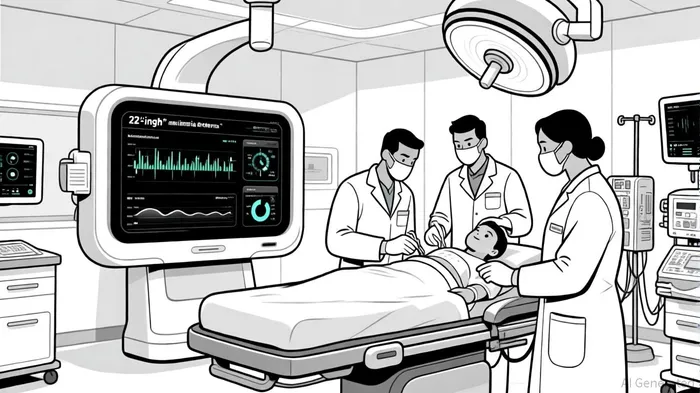
In the rapidly evolving landscape of healthcare technology, GE HealthCare's Carestation 850 represents a bold leap forward in anesthesia delivery systems. Unveiled at ANESTHESIOLOGY 2025, this next-generation device is engineered to address the dual imperatives of clinical precision and operational efficiency while aligning with global sustainability goals. For investors, the Carestation 850 exemplifies how medical innovation can drive long-term value creation by redefining perioperative care.
A Technological and Strategic Breakthrough
The Carestation 850's design integrates cutting-edge features tailored to modern healthcare challenges. Its 22-inch touchscreen interface, optimized algorithms, and smart vaporization platform enable clinicians to manage complex cases with unprecedented ease. Notably, the system's End-tidal Control (Et Control) automates fresh gas flow adjustments to maintain target anesthetic levels, reducing agent consumption by up to 34% and cutting greenhouse gas emissions by over 40%, according to GE HealthCare's product page. These capabilities not only enhance patient outcomes but also align with hospitals' growing emphasis on cost containment and environmental stewardship.
Strategically, the Carestation 850 positions GE HealthCareGEHC-- to capitalize on a market projected to grow at a 7.71% compound annual rate, reaching $26.67 billion by 2030, according to Mordor Intelligence. By embedding customizable applications and data-driven analytics-such as the Carestation Insights suite-the device empowers health systems to optimize resource allocation, reduce agent expenditures by 15–30%, and improve operating room utilization, as shown in GE's clinical view. This digital-first approach mirrors GE's broader innovation strategy, which prioritizes AI-enabled solutions and sustainability to meet the demands of a resource-constrained healthcare ecosystem, as outlined in a Project Practical case study.
Financial and Operational Implications
The economic case for the Carestation 850 is compelling. Hospitals adopting low-flow anesthesia protocols supported by the system could see significant cost savings. For instance, reduced anesthetic agent use and emissions translate to lower procurement costs and compliance with environmental regulations. A general ROI methodology for hospital investments highlights that technologies with measurable efficiency gains-such as automated dispensing systems-can achieve payback periods of 3.8 years and generate cumulative savings exceeding €36,000 over eight years, according to an ROI calculation tool. While specific Carestation 850 case studies remain unpublished, its integration of AMSORB™ Plus CO2 absorbent-which reduces waste by breaking down into harmless compounds-further underscores its potential to lower long-term operational costs, as detailed in a Morningstar press release.
Navigating Regulatory and Market Challenges
Despite its promise, the Carestation 850 faces hurdles. As of October 2025, the device remains pending FDA 510(k) clearance, though it has secured CE and Australian Therapeutic Goods approvals, per the FDA's 510(k) database. This regulatory delay limits its immediate market access in the U.S., a critical region for GE HealthCare's growth. However, the company's track record of navigating complex regulatory pathways-coupled with the system's alignment with global sustainability trends-suggests a favorable long-term outlook.
Moreover, GE's recent recall of older Carestation models due to ventilation issues in Volume Control Ventilation (VCV) mode, as documented in an FDA recall notice, highlights the importance of robust quality assurance. While the Carestation 850 is not implicated in this recall, the incident underscores the need for rigorous post-market monitoring. For investors, this reinforces the value of GE's commitment to innovation and safety, which are critical for maintaining market trust.
Conclusion: A Catalyst for Value Creation
The Carestation 850 is more than a technological advancement-it is a strategic asset for GE HealthCare's future. By addressing clinical, operational, and environmental pain points, the system aligns with the industry's shift toward value-based care. For investors, the device's potential to drive cost savings, enhance perioperative efficiency, and support sustainability goals positions it as a cornerstone of long-term value creation. As the anesthesia market expands and regulatory approvals progress, the Carestation 850 could redefine standards in anesthesia delivery, cementing GE HealthCare's leadership in a high-growth sector.





Comentarios
Aún no hay comentarios