
GBP/USD: A Case for Shorting Amid UK Fiscal Weakness and Dovish BoE Outlook
The GBP/USD pair has long been a barometer for global macroeconomic sentiment, but recent developments in the UK fiscal landscape and the Bank of England's (BoE) policy trajectory have created a compelling case for bearish positioning. With the UK's public finances deteriorating at an alarming pace and the BoE adopting a cautious, dovish stance, the pound faces mounting headwinds. Coupled with technical indicators pointing to a potential breakdown in key support levels, strategic shorting opportunities are emerging for investors willing to navigate this complex environment.
UK Fiscal Weakness: A Structural Drag on the Pound
The UK's fiscal position has deteriorated sharply in 2025, with borrowing figures underscoring a lack of fiscal discipline. According to the Office for National Statistics, the UK government borrowed £17.4 billion in October 2025, the third-highest October deficit since records began in 1993. For the fiscal year to October 2025, total borrowing reached £116.8 billion, an 8.4% increase compared to the same period in 2024. The current budget deficit, which funds day-to-day public sector operations, stood at £12.6 billion in October, contributing to a cumulative £83.9 billion shortfall for the year-a £7.4 billion (9.7%) rise year-on-year.
The Office for Budget Responsibility (OBR) has further highlighted the long-term risks, projecting a £9 billion increase in the current budget deficit by 2029-30, with public sector net financial liabilities (PSNFL) expected to rise by £61 billion. These figures signal a lack of fiscal credibility, which has historically been a critical driver of currency weakness. As investors price in the likelihood of austerity measures or delayed fiscal consolidation, the pound remains vulnerable to capital outflows and speculative shorting.
Dovish BoE: A Policy Environment Favoring the Dollar
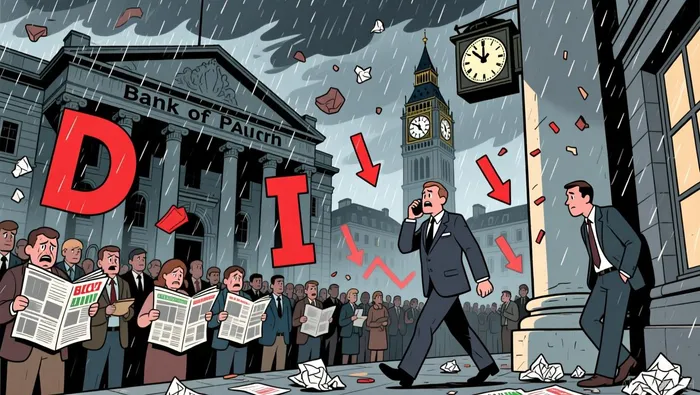 The BoE's November 2025 monetary policy decision reinforced its dovish stance, with the Monetary Policy Committee voting 5–4 to maintain the Bank Rate at 4%. Four members had advocated for a 25-basis-point cut to 3.75%, reflecting growing concerns over inflation persistence and weak demand. While the BoE acknowledged that inflation has peaked at 3.8%, it emphasized that the path to the 2% target remains uncertain, with services sector inflation lingering at 4.7%.
The central bank's cautious approach is rooted in the risk of second-round effects, where easing wage pressures could feed back into inflation, prolonging the disinflationary process. This uncertainty has limited the BoE's ability to commit to a clear rate-cutting trajectory, creating a policy vacuum that favors the dollar. Meanwhile, the US Federal Reserve's anticipated rate cuts-albeit delayed by labor market softness-provide a relative tailwind for the USD, further widening the yield differential in favor of the dollar.
Technical Indicators: A Bearish Setup for GBP/USD
From a technical perspective, GBP/USD has entered a critical phase. The pair closed Q3 2025 at approximately 1.3350, having fallen from a 4-year high of 1.3790 to a low of 1.3150. Key support levels at 1.3330 and 1.3150 are now in focus, with a break below 1.3330 potentially opening the door to a test of 1.2700. The MACD indicator shows fading bullish momentum, with the MACD line below the signal line and red histogram bars indicating waning upward pressure.
On the 4-hour chart, GBP/USD has broken above a descending trendline and formed an ascending channel, suggesting a short-term bullish bias toward 1.34. However, this optimism is tempered by the broader bearish context. The moving averages remain neutral, with six Buy and six Sell signals across timeframes, but the UK's fiscal and economic challenges are likely to dominate the medium-term outlook. Analysts at J.P. Morgan anticipate GBP/USD to reach 1.36 by December 2025, with a potential recovery to 1.39 by March 2026, but these forecasts hinge on the BoE's ability to credibly commit to rate cuts-a scenario that remains uncertain.
Strategic Implications for Investors
The confluence of UK fiscal weakness, BoE dovishness, and bearish technical indicators creates a robust case for shorting GBP/USD. Investors should consider entering positions with tight stop-loss orders above key resistance levels (e.g., 1.34) and targeting initial profit-taking at 1.3150, with a longer-term outlook for 1.2700 if the BoE fails to regain credibility. However, risks remain on the upside, particularly if the US dollar weakens further due to Fed inaction or global trade tensions.
In conclusion, the GBP/USD pair is poised for a bearish correction driven by structural fiscal challenges and a BoE policy environment that favors the dollar. While technical indicators suggest short-term volatility, the broader macroeconomic fundamentals provide a compelling rationale for strategic shorting in Q4 2025.







Comentarios
Aún no hay comentarios