
GBLI's PAU Launches Reinsurance MGA: Strategic Move or Market Disruptor?
Global Indemnity Group's (GBLI) subsidiary, Penn-America Underwriters (PAU), has launched its first de novo reinsurance managing general agency (MGA), a move that underscores its ambition to carve a niche in the rapidly evolving reinsurance landscape, according to PAU's launch announcement. This venture, led by veteran reinsurance executive George Dragonetti, raises a critical question: Is this a calculated strategic expansion or a bold attempt to disrupt a market already saturated with innovation?
Strategic Entry: Leveraging Expertise and Ecosystem
PAU's reinsurance MGA is anchored by Dragonetti's three-decade career, including leadership roles at Nav Re, RLI Re, and Emerald Bay Risk Solutions. His experience in Bermuda and the U.S. positions him to navigate complex risk models and capitalize on specialty lines such as climate risk and parametric insurance-sectors where demand is surging. According to a Clyde & Co. report, specialty lines are pivotal to MGA growth in 2025, driven by structural shifts in the excess and surplus (E&S) sector and MGAs' ability to access underserved markets.
PAU's entry aligns with GBLI's broader "Manifest initiative," which aims to expand its capabilities in both insurance and reinsurance solutions, as reported by Life Insurance International. The division already operates three insurance agencies and leverages technology through subsidiaries like Kaleidoscope Insurance Technologies, a software provider. This ecosystem enables PAU to integrate data analytics and AI into underwriting, a critical differentiator in a market where, according to an S&P report, MGAs are increasingly seen as innovators.
Market Trends: Growth, Maturity, and Risks
The reinsurance MGA sector has matured significantly, with U.S. direct premiums written exceeding $114 billion in 2024-a 26% growth rate, albeit slower than previous years (see the Clyde & Co. report cited above). Hybrid fronting carriers, such as State National and Transverse, have fueled this expansion by providing $19 billion in MGA premiums in 2024, often leveraging alternative capital sources like captives and ILS (per PAU's launch announcement). However, S&P cautions that this growth comes with risks, including capacity dependence and misaligned incentives between MGAs and reinsurers (see the S&P report cited above).
GBLI's MGA faces competition from established players but benefits from a favorable reinsurance environment. Reinsurance capital hit $805 billion in H1 2025, with projected returns on equity (ROE) of 13–14% for underlying profits and 17–18% for headline earnings (as noted in the S&P report). This capital abundance allows PAU to target niche markets without immediate pressure to scale aggressively-a strategy that could mitigate the risks of overexpansion.
Long-Term Value Creation: Innovation and Governance
PAU's long-term value hinges on its ability to innovate while maintaining underwriting discipline. The MGA's focus on specialty lines aligns with industry trends, as reinsurers seek first-dollar coverage for emerging risks. For instance, parametric insurance-where payouts are triggered by predefined metrics (e.g., weather events)-is gaining traction in agriculture and catastrophe-prone regions. PAU's technological infrastructure, including AI-driven analytics, could enhance its ability to price these risks accurately.
However, S&P emphasizes that MGAs must demonstrate strong governance to attract reinsurer partnerships (see the S&P report cited above). PAU's alignment with Dragonetti's expertise and GBLI's existing underwriting capabilities suggests a disciplined approach. Praveen K. Reddy, PAU's CEO, has highlighted the MGA's potential to deliver "superior underwriting performance," a claim supported by a BeyondSPX profile: PAU reported a 61% increase in underwriting income in Q2 2025 and a combined ratio improvement to 94.0%.
Risks and the Path Forward
Despite its strengths, PAU's MGA faces headwinds. Casualty lines, such as commercial auto, remain challenging, with loss ratios exceeding 160% in 2024 due to social inflation and rising claims costs (as detailed in the Clyde & Co. report). Additionally, the MGA's reliance on fronting carriers exposes it to capacity volatility-a risk mitigated only if PAU secures long-term reinsurance treaties.
To solidify its position, PAU must also navigate regulatory scrutiny. MGAs are increasingly under the microscope for governance practices, particularly in Bermuda, where Dragonetti previously operated. Saul Fox, GBLI's chairman, has stressed the importance of "aligned remuneration structures" in mitigating these risks (per PAU's launch announcement).
Conclusion: Strategic Expansion, Not a Disruptor
GBLI's PAU is not attempting to disrupt the reinsurance MGA market but rather to strategically expand its footprint within it. By leveraging Dragonetti's expertise, its technological ecosystem, and the Manifest initiative, PAU is positioning itself to capitalize on specialty lines and reinsurance capital growth. While the MGA's success will depend on maintaining underwriting discipline and navigating sector-specific risks, its launch reflects a calculated move to enhance long-term value-a hallmark of GBLI's broader strategy in the evolving insurance landscape.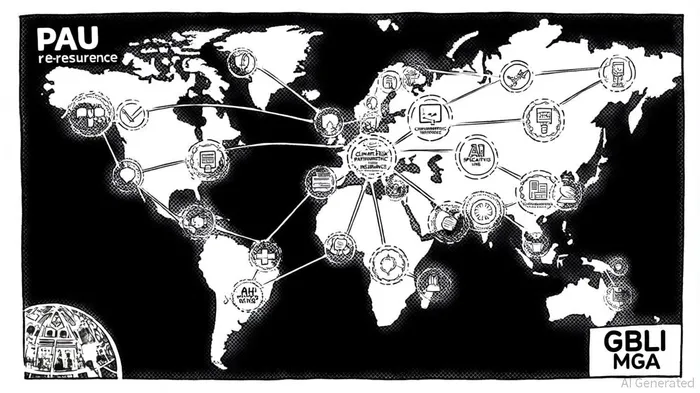





Comentarios
Aún no hay comentarios