
Gaza's Future Uncertain After Israel-Hamas Ceasefire
Generado por agente de IAEli Grant
sábado, 25 de enero de 2025, 9:25 am ET1 min de lectura
HCMT--
The recent Israel-Hamas ceasefire deal has brought a fragile calm to the region, but the future of Gaza remains uncertain. With an estimated $18.5 billion in damage and a potential 350-year rebuilding timeline under the blockade, the international community faces a significant challenge in balancing immediate humanitarian aid with long-term reconstruction and development efforts.
The United Nations (UN) has launched a draft early recovery strategy for Gaza, outlining a joint, cross-pillar approach by the UN Country Team (UNCT) and Humanitarian Country Team (HCT) to scale up early recovery interventions once certain conditions on the ground are met (UN, 2024). This strategy aims to provide a framework for a more secure environment within which to work and for Palestinians institutions with which to relate.
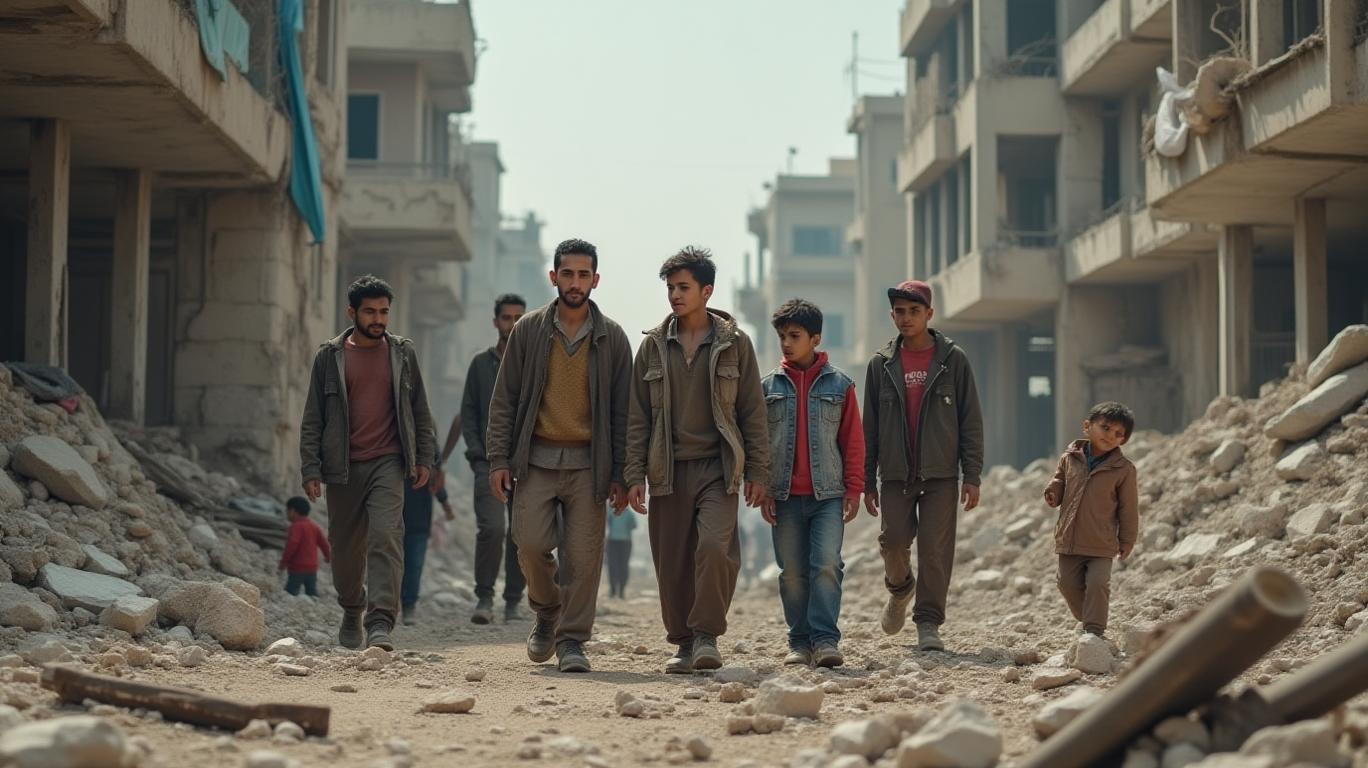
However, the task of clearing the war-torn rubble alone is daunting. The UN estimates that the war has littered Gaza with over 50 million tons of rubble, which would take over 15 years to clear away with over 100 trucks working full time. Additionally, the rubble contains huge amounts of unexploded ordnance and other harmful materials, as well as human remains, further complicating the clearance process (UN, 2024).
The UN assessment suggests that a comprehensive recovery and reconstruction plan, combining humanitarian aid with strategic investments in recovery and reconstruction along with lifting economic restrictions and promoting recovery-enabling conditions, could help put the Palestinian economy on a restorative track to realign with Palestinian development plans by 2034. However, this scenario can only play out if recovery efforts are unrestricted (UNDP & UNESCWA, 2024).
To address the security concerns of Israel and the Palestinian Authority while ensuring the safe and unimpeded delivery of humanitarian aid and reconstruction materials to Gaza, and facilitating the return of displaced persons, the international community can take several steps. These include establishing a robust monitoring and verification mechanism, coordinating with Israel and the Palestinian Authority, promoting Palestinian Authority control over Gaza, ensuring the safe and unimpeded delivery of aid and reconstruction materials, and facilitating the return of displaced persons.
In conclusion, the future of Gaza remains uncertain, with significant challenges ahead in balancing immediate humanitarian needs with long-term reconstruction and development efforts. The international community must work together to address these challenges and support the Palestinian Authority in its efforts to rebuild and govern Gaza effectively and accountably.
MET--
ONCT--
The recent Israel-Hamas ceasefire deal has brought a fragile calm to the region, but the future of Gaza remains uncertain. With an estimated $18.5 billion in damage and a potential 350-year rebuilding timeline under the blockade, the international community faces a significant challenge in balancing immediate humanitarian aid with long-term reconstruction and development efforts.
The United Nations (UN) has launched a draft early recovery strategy for Gaza, outlining a joint, cross-pillar approach by the UN Country Team (UNCT) and Humanitarian Country Team (HCT) to scale up early recovery interventions once certain conditions on the ground are met (UN, 2024). This strategy aims to provide a framework for a more secure environment within which to work and for Palestinians institutions with which to relate.
However, the task of clearing the war-torn rubble alone is daunting. The UN estimates that the war has littered Gaza with over 50 million tons of rubble, which would take over 15 years to clear away with over 100 trucks working full time. Additionally, the rubble contains huge amounts of unexploded ordnance and other harmful materials, as well as human remains, further complicating the clearance process (UN, 2024).
The UN assessment suggests that a comprehensive recovery and reconstruction plan, combining humanitarian aid with strategic investments in recovery and reconstruction along with lifting economic restrictions and promoting recovery-enabling conditions, could help put the Palestinian economy on a restorative track to realign with Palestinian development plans by 2034. However, this scenario can only play out if recovery efforts are unrestricted (UNDP & UNESCWA, 2024).
To address the security concerns of Israel and the Palestinian Authority while ensuring the safe and unimpeded delivery of humanitarian aid and reconstruction materials to Gaza, and facilitating the return of displaced persons, the international community can take several steps. These include establishing a robust monitoring and verification mechanism, coordinating with Israel and the Palestinian Authority, promoting Palestinian Authority control over Gaza, ensuring the safe and unimpeded delivery of aid and reconstruction materials, and facilitating the return of displaced persons.
In conclusion, the future of Gaza remains uncertain, with significant challenges ahead in balancing immediate humanitarian needs with long-term reconstruction and development efforts. The international community must work together to address these challenges and support the Palestinian Authority in its efforts to rebuild and govern Gaza effectively and accountably.

Divulgación editorial y transparencia de la IA: Ainvest News utiliza tecnología avanzada de Modelos de Lenguaje Largo (LLM) para sintetizar y analizar datos de mercado en tiempo real. Para garantizar los más altos estándares de integridad, cada artículo se somete a un riguroso proceso de verificación con participación humana.
Mientras la IA asiste en el procesamiento de datos y la redacción inicial, un miembro editorial profesional de Ainvest revisa, verifica y aprueba de forma independiente todo el contenido para garantizar su precisión y cumplimiento con los estándares editoriales de Ainvest Fintech Inc. Esta supervisión humana está diseñada para mitigar las alucinaciones de la IA y garantizar el contexto financiero.
Advertencia sobre inversiones: Este contenido se proporciona únicamente con fines informativos y no constituye asesoramiento profesional de inversión, legal o financiero. Los mercados conllevan riesgos inherentes. Se recomienda a los usuarios que realicen una investigación independiente o consulten a un asesor financiero certificado antes de tomar cualquier decisión. Ainvest Fintech Inc. se exime de toda responsabilidad por las acciones tomadas con base en esta información. ¿Encontró un error? Reportar un problema




Comentarios
Aún no hay comentarios