
Gauzy’s Light Control Tech Sheds New Light on Aviation Innovation: A Strategic Win for the Israeli Start-Up
In a move that underscores the growing demand for premium passenger experiences in aviation, Gauzy Ltd.GAUZ--, an Israeli tech firm specializing in smart light-control systems, has secured a pivotal partnership with Air France-KLM Group. The airline has selected Gauzy’s electromechanical shading system to outfit its new La Première first-class suites on a fleet of Boeing 777-300ER aircraft. This technology, which offers passengers unprecedented control over light and privacy, marks a significant step forward in cabin innovation while positioning Gauzy to capitalize on a rapidly expanding market.
The Technology: A Blend of Comfort and Efficiency
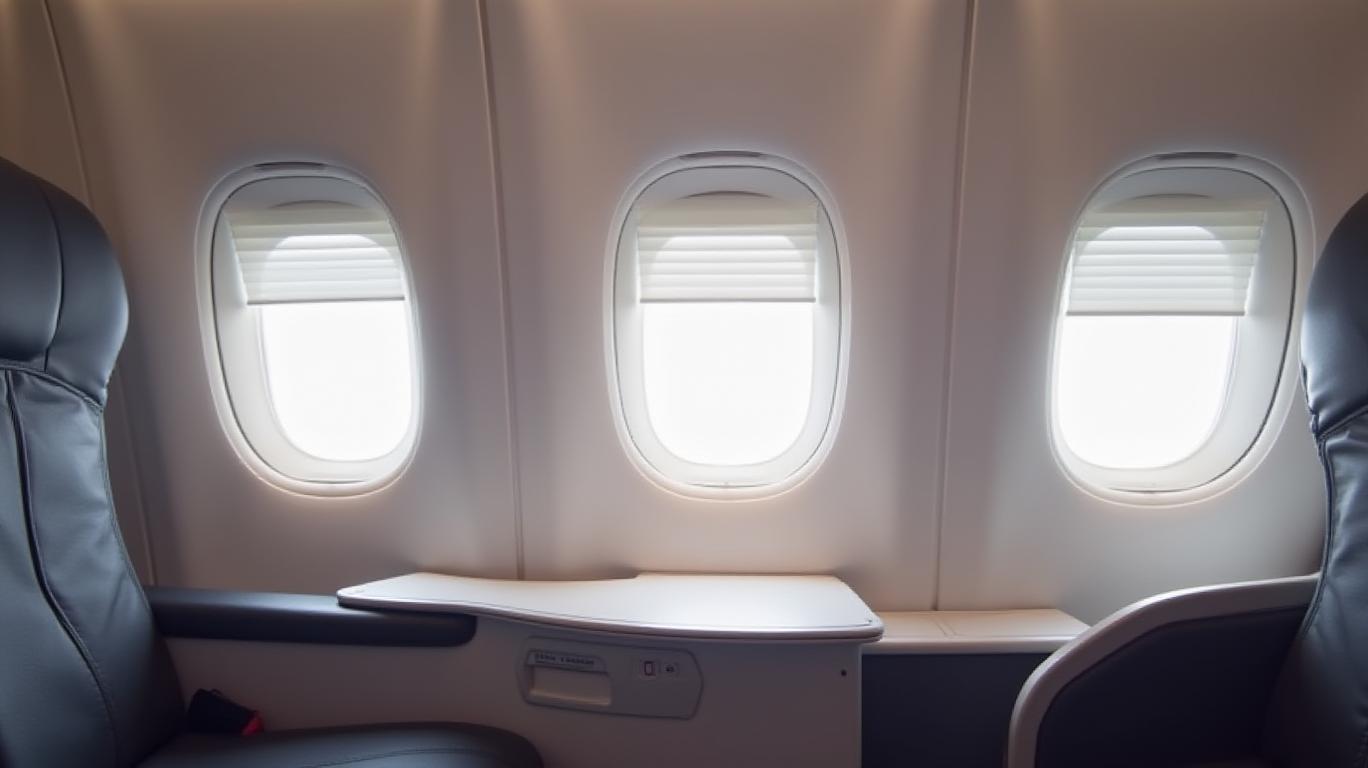
Gauzy’s double-pleated shading solution is engineered to deliver both passenger-centric features and operational efficiencies. Passengers can adjust the shades to translucent or blackout modes via a control panel, ensuring privacy for sleep or relaxation. Meanwhile, flight crews retain centralized control to adjust shades remotely during service, reducing manual adjustments and minimizing wear-and-tear costs. This system is integrated into Air France’s 5-window first-class suites—a first for the airline—enhancing aesthetics while optimizing temperature regulation in wide-body cabins.
The electromechanical design ensures reliability in the rigorous aviation environment, a critical factor for global carriers like Air France-KLM.
A Niche Market with Explosive Growth Potential
The airline shading and lighting market, valued at $600 million annually, is projected to grow at a 6.4% CAGR through 2028 (Frost & Sullivan). Gauzy already dominates a key segment: its cockpit shading systems hold over 95% market share, a testament to its technical expertise. Now, the company aims to replicate this success in cabin markets, where its shading systems offer a competitive edge over rivals.
Gauzy’s CEO, Eyal Peso, emphasized the strategic significance of the Air France deal: “This partnership validates our ability to meet the highest standards of comfort and privacy for premium travelers. It also highlights the rarity of qualified suppliers in this niche, where safety and reliability are non-negotiable.”
Cross-Industry Ambitions and Supply Chain Strength
Beyond aviation, Gauzy is eyeing adjacent markets like architecture and automotive, where its light-control technologies could be applied to smart buildings or vehicle sunroofs. This diversification aligns with the firm’s long-term growth strategy, leveraging its R&D prowess to expand beyond its current $200 million valuation.
The company’s existing partnerships with aerospace OEMs—including Embraer, HondaJet, and Daher—bolster its supply chain credibility. Serial production capabilities for cabin shades, alongside Air France’s rollout timeline (beginning April 2025), suggest a scalable business model.
Risks and Competitive Landscape
While Gauzy’s technical leadership is clear, competition remains limited to a handful of global suppliers, such as Parker Aerospace and Gentex Corporation, which dominate cockpit and cabin systems. However, Gauzy’s focus on passenger-centric innovation—like its customizable shading—could carve out a distinct market position.
The partnership’s timing also matters: as airlines invest in retrofitting aging fleets (Boeing 777-300ERs are among the most widely used wide-body jets), Gauzy’s solutions address a growing need for cabin upgrades. Air France’s plan to retrofit additional Boeing 777 aircraft by 2025 underscores the potential for recurring revenue streams.
Conclusion: A Bright Future for Gauzy
Gauzy’s deal with Air France-KLM is more than a supplier agreement—it’s a strategic foothold in a sector ripe for innovation. With a $600 million market growing at 6.4% annually, and its existing 95% cockpit shading dominance, Gauzy is well-positioned to expand its addressable market. Its foray into automotive and architectural applications could amplify this growth, creating a multi-industry platform.
The Air France partnership, set to debut on high-profile routes like Paris to Singapore and Tokyo-Haneda by year-end .2025, serves as a reference case for future contracts. As airlines prioritize premium cabin experiences to differentiate themselves, Gauzy’s blend of technical precision and passenger-centric design is a compelling value proposition. Investors should take note: in a fragmented market with high barriers to entry, Gauzy’s early-mover advantage could translate to sustained profitability and scalability.
With its sights set on the skies and beyond, Gauzy is not just illuminating aircraft cabins—it’s lighting the way for smart light-control technology in the 21st century.





Comentarios
Aún no hay comentarios