
Garmin's Descent S1 Buoy: A Submerged Revolution in Dive Safety and Tech Dominance
The underwater tech market, valued at $2.5 billion and growing at 8% annually, is about to face a seismic shift. Garmin's new Descent S1 Buoy isn't just a gadget—it's a paradigm shift in professional diving, blending cutting-edge sonar networking, AI-driven alerts, and ecosystem integration to tackle longstanding safety and operational inefficiencies. For investors, this could be a golden ticket to capitalize on a sector primed for disruption.
The Problem: Diving's Silent Risks
Commercial divers, instructors, and adventure tourism operators face stark challenges: reliance on visual signals for communication, delayed emergency responses, and the absence of real-time data tracking. Traditional dive operations are riddled with risks, from disorientation to equipment malfunctions, costing industries millions in delays and incidents. The global commercial diving market alone—handling offshore energy projects, marine construction, and salvage—accounts for over 60% of dive-related revenue, yet safety gaps persist.
The Solution: SubWave Sonar and AI-Powered Precision
Garmin's Descent S1 Buoy introduces SubWave sonar networking, enabling two-way communication between divers and surface crews up to 100 meters below. This breakthrough allows eight divers to exchange preset messages—such as tank pressure alerts, emergency signals, or decompression updates—in real time. Paired with the GarminGRMN-- Dive app, surface crews monitor live data (depth, location, tank pressure) and trigger emergency recalls if needed.
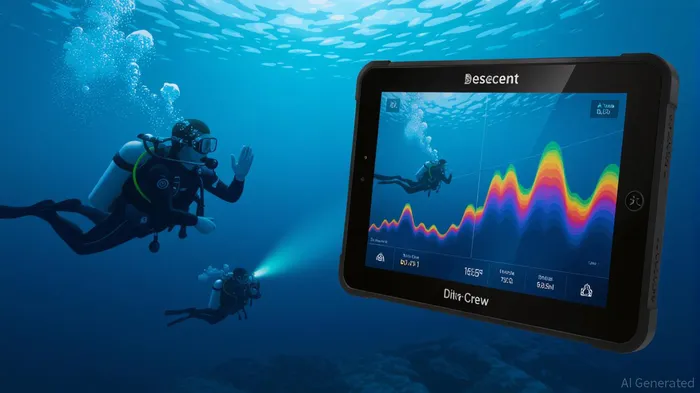
The AI element, though understated, is transformative. Automated alerts for low tank pressure or abnormal dive profiles reduce human error, while post-dive heatmaps enable data-driven risk analysis. For commercial teams, this means fewer delays and safer operations; for adventure tourism, it adds a layer of trust for clients.
Market Opportunity: Tapping into High-Value Niches
The Descent S1 Buoy targets three lucrative segments:
1. Professional Dive Teams: Oil and gas, construction, and salvage firms need reliable tools to manage risks in deep-water environments.
2. Instructional Services: Dive schools can use the buoy's tracking and safety features to standardize training and reduce instructor workload.
3. Adventure Tourism: High-end tour operators can market “tech-enabled safety” as a premium selling point, attracting thrill-seekers willing to pay a premium.
At $2,499.99, the buoy isn't for casual divers—but its ROI for commercial users is compelling. A single incident prevented or a life saved justifies the cost. Garmin's existing ecosystem of marine and wearable devices (like the Garmin Dive app and compatible Android phones) creates a sticky customer base, locking in repeat purchases and subscriptions.
Competitive Landscape: Garmin's Ecosystem Edge
While competitors like Suunto and Aqualung offer diving gear, none rival Garmin's vertical integration. The Descent S1 Buoy isn't just hardware; it's part of a data-driven ecosystem. Its compatibility with Garmin's network of apps, charts, and GPS tools gives it an edge over standalone devices.
Garmin's stock has steadily climbed, outperforming the S&P 500 by 22% since 2020, reflecting its strategic bets on niche tech markets. The Descent S1 Buoy could accelerate this trend if it captures 10-15% of the $2.5B underwater tech market.
Risks and Realities
Environmental factors like wave interference or diver positioning can limit signal range. Garmin's documentation notes these risks, but the product's value lies in its supplementary role—complementing, not replacing, traditional safety protocols. Scalability is another hurdle; the buoy's high price may restrict adoption in budget-sensitive sectors.
Investment Thesis: A Buoyant Play on Safety Tech
For investors, Garmin's Descent S1 Buoy is a high-growth, high-margin opportunity in a fragmented market. Its ecosystem integration, coupled with AI-driven safety features, positions Garmin to dominate underwater tech the way PelotonPTON-- disrupted fitness.
Buy Signal:
- Garmin's stock currently trades at a P/E ratio of 22x, below its 5-year average of 25x.
-
- A 15% market share in professional diving segments could add $375M to annual revenue.
Hold/Wait Signal:
- If SubWave's reliability falters in real-world trials, or if competitors (e.g., Sonar+ from DiveTech Inc.) undercut pricing.
Final Dive into the Future
The Descent S1 Buoy isn't just a gadget—it's a lifeline. By merging sonar, AI, and ecosystem power, Garmin is redefining safety in one of the world's most hazardous industries. For investors, this is more than a tech play; it's a bet on innovation that could make drowning an avoidable footnote in the history of diving. The waves are rising—now's the time to dive in.





Comentarios
Aún no hay comentarios