
Gap's Strategic Collaborations and Stock Performance: A Sustainable Growth Path in 2025?
Stock Performance: Volatility Amid Strategic Momentum
Gap's stock has exhibited mixed signals in 2025. As of November 14, 2025, the stock closed at $24.15, fluctuating within a $23.96–$24.71 range according to market data. While this reflects short-term volatility, the company's recent dividend payment of $0.165 on October 8, 2025, and a Jefferies upgrade to "Buy" suggest investor confidence in its strategic direction. However, the stock's May 29 opening at $28.39-peaking at $28.40 before retreating to $27.95-highlights lingering uncertainty about its ability to sustain momentum.
Strategic Collaborations: Sustainability as a Growth Lever
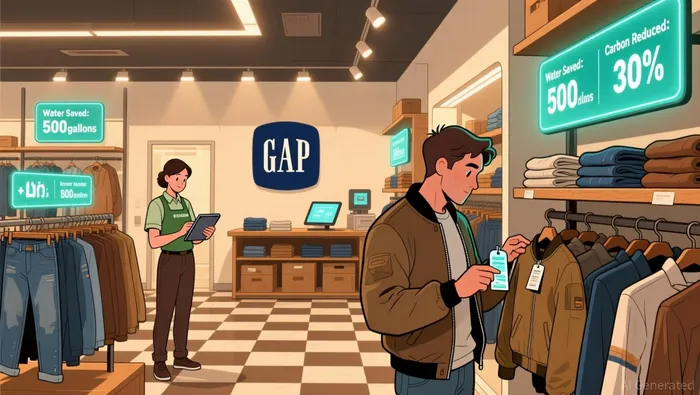
Gap's 2025 strategy is anchored in sustainability, with ambitious targets to source 100% of its cotton from sustainable sources and 45% of polyester from recycled materials. These goals, already 98% and 40% achieved in 2024, position the company to meet rising consumer demand for eco-friendly products. Collaborations with industry groups like the Microfibers Consortium and the Textile Exchange Recycled Polyester Round Table underscore its commitment to systemic change.
The brand's "Gap for Good" initiative, which promotes water-saving Washwell techniques, aligns with global trends. For instance, China's apparel manufacturers are leveraging GOTS-certified organic cotton and recycled polyester, reducing water consumption by 40%. Gap's alignment with such innovations could enhance its appeal in markets prioritizing low-carbon solutions.
Brand Revitalization: Nostalgia Meets Modernity
Gap's 2025 brand strategy blends cultural storytelling with sustainability to re-engage consumers. The "Better in Denim" campaign, featuring KATSEYE and Kelis' "Milkshake", generated 400 million views and 8 billion impressions, demonstrating the power of nostalgia-driven marketing. Collaborations with influencers like Julia Huynh, who co-designed a hoodie, also highlight the brand's pivot toward inclusivity and youth-centric design.
These efforts align with broader consumer behavior shifts. While 75% of consumers identify as "conscious shoppers", only 33% consistently act on these values, a gapGAP-- Gap's storytelling aims to bridge. By embedding sustainability into cultural narratives, the brand is transforming ethical consumption into a lifestyle choice rather than a moral obligation.
Market Trends: A Green Shift in Apparel Demand
The global sustainable apparel market is projected to grow at a 9.9% CAGR from 2025 to 2032, reaching $17,769.2 million. This growth is driven by regulatory pressures (e.g., EU Green Deal) and consumer demand for transparency. Gap's supplier engagement in the Cascale Manufacturer Climate Action Program (MCAP) positions it to meet these evolving standards.
However, challenges persist. Fast fashion's 7% CAGR through 2029 and skepticism around greenwashing could undermine Gap's efforts. Competitors like Zara are adopting circular economy practices, intensifying competition. Gap's success will depend on its ability to differentiate through authenticity and innovation.
Conclusion: A Path Forward, But Risks Remain
Gap's 2025 strategies-sustainability-driven collaborations, brand revitalization, and alignment with market trends-signal a promising foundation for growth. The Jefferies upgrade and its 98% sustainable cotton milestone reflect progress, while campaigns like "Better in Denim" demonstrate effective consumer engagement. However, stock volatility and the broader industry's "say-do" gap highlight the need for sustained execution.
For investors, the key question is whether Gap can maintain its momentum amid rising competition and shifting consumer priorities. If the company continues to innovate in sustainability and storytelling, it may yet reclaim its position as a leader in the evolving apparel landscape.







Comentarios
Aún no hay comentarios