
Gaming-Related Cybersecurity Risks to the Crypto Ecosystem: Assessing Infostealers and the Growth of Security Solutions
The convergence of gaming and cryptocurrency ecosystems has created a fertile ground for cybercriminals, with infostealers like Stealka emerging as a critical threat to digital asset security. As gaming platforms evolve into virtual economies where in-game assets hold real-world value, the risks to crypto users have intensified. This article examines the threat landscape posed by infostealers, their impact on the crypto sector, and the burgeoning market for endpoint protection and wallet security solutions.
The Rise of Infostealers in Gaming and Crypto
Infostealers have become a dominant tool in cybercrime, with Stealka and its counterparts exploiting the popularity of gaming platforms to target cryptocurrency users.
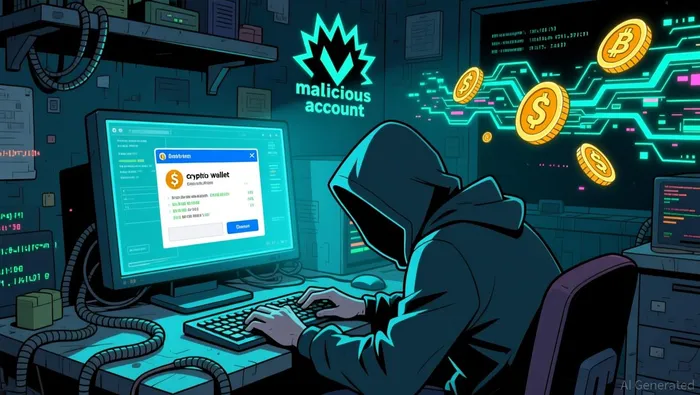
Stealka, distributed through pirated mods for games like Roblox, Grand Theft Auto, and Minecraft, is designed to exfiltrate sensitive data such as encrypted private keys, seed phrases, and wallet file paths from applications like MetaMask, Binance, and Trust Wallet according to reports. According to Kaspersky, the malware has been detected in Russia, Türkiye, Brazil, Germany, and India, with over 4 million attack attempts linked to GTA alone in 2024–2025.
The threat extends beyond Stealka. Variants like Katz Stealer (marketed as Malware-as-a-Service at $100/month) and StealC V2 are part of a broader ecosystem of infostealers that leverage phishing, supply chain attacks, and cloud-hosted campaigns to steal credentials and crypto keys. These tools are often used as precursors to ransomware or supply chain breaches, as seen in the Jaguar Land Rover incident, where stolen Jira credentials enabled access to proprietary data.
The Crypto Security Crisis: A $3.4 Billion Problem
The financial stakes are staggering. In 2025, crypto thefts reached $3.4 billion globally, with North Korean hackers alone stealing $2.02 billion. Phishing attacks targeting crypto users surged by 40% in the first half of 2025, while infostealers stole 1.8 billion credentials-a 800% increase from previous years. The rise of adversary-in-the-middle (AITM) phishing kits has further eroded the effectiveness of multifactor authentication (MFA), enabling attackers to bypass security measures.
For gamers, the risks are compounded. Stealka's ability to access browser extensions and password managers (e.g., LastPass), and Telegram sessions underscores the vulnerability of users who store crypto assets in connected wallets. As gaming platforms increasingly facilitate real-world financial transactions, the attack surface for cybercriminals expands exponentially.
Market Response: Growth of Endpoint and Wallet Security Firms
The surge in threats has fueled demand for advanced security solutions. The blockchain security software market, valued at $2,279.28 million in 2025, is projected to grow at a 2.8% CAGR, reaching $2,914.38 million by 2034. Meanwhile, the broader digital identity and security market is expected to expand by $59.4 billion between 2024 and 2029, driven by investments in AI-based threat detection, biometric verification, and zero-trust architectures.
Crypto wallet security is a particularly lucrative segment. The global crypto wallet market, valued at $14.84 billion in 2026, is forecasted to grow at a 26.7% CAGR, reaching $98.57 billion by 2034. Innovations such as multi-party computation (MPC) wallets, multi-signature authorizations, and cross-chain solutions are gaining traction, especially in gaming, where users manage assets across multiple blockchain networks according to research.
Investment trends reflect this momentum. Blockchain gaming initiatives attracted $2.3 billion in funding in 2023, with a focus on secure storage and transaction management according to industry analysis. Firms specializing in endpoint protection and wallet security are also benefiting from the rise of decentralized finance (DeFi) and NFTs, which require robust safeguards against AI-fueled phishing and quantum computing threats according to security experts.
Strategic Opportunities for Investors
For investors, the intersection of gaming and crypto security presents compelling opportunities. Key areas to consider include: 1. Endpoint Protection Platforms (EPPs): Companies offering AI-driven threat detection and behavioral analytics to combat infostealers like Stealka. 2. Crypto Wallet Providers: Firms developing MPC wallets, biometric authentication, and cross-chain solutions to secure gaming-related assets. 3. Identity Threat Detection and Response (ITDR): Startups leveraging machine learning to detect credential theft and insider threats.
However, risks remain. The Malware-as-a-Service (MaaS) model has democratized cybercrime, enabling even low-skilled actors to exploit vulnerabilities. Additionally, geopolitical factors-such as North Korea's state-sponsored hacking operations-introduce volatility into the market according to threat intelligence reports.
Conclusion
The gaming and crypto ecosystems are under siege from sophisticated infostealers like Stealka, which exploit the trust users place in pirated mods and unofficial software. As cybercriminals refine their tactics, the demand for endpoint protection and wallet security solutions will only grow. For investors, this represents a critical inflection point: the market for security solutions is expanding rapidly, but success will depend on identifying firms that can adapt to evolving threats and regulatory landscapes.





Comentarios
Aún no hay comentarios