
Gamified Crypto Mining Apps: How User Engagement Drives Platform Valuation and Token Demand
The rise of gamified crypto mining apps has redefined how users interact with blockchain ecosystems, transforming passive participation into active engagement. By integrating game mechanics like rewards, streaks, and social competition, these platforms have unlocked new pathways for token demand and platform valuation. This analysis explores the interplay between behavioral economics, user retention metrics, and crypto adoption trends, offering a data-driven framework for evaluating the investment potential of gamified crypto projects.
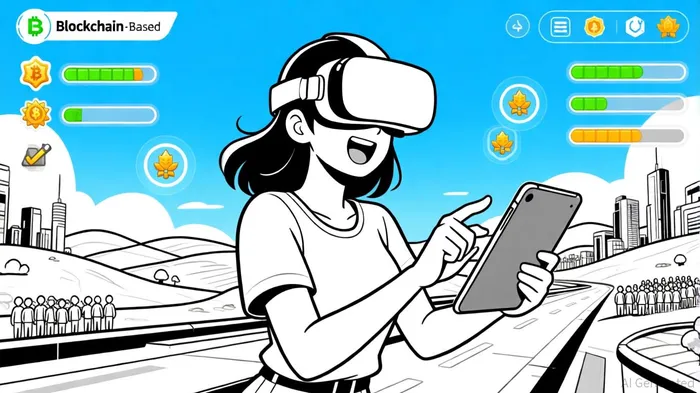
Behavioral Economics: The Psychology Behind Engagement
Gamification leverages core principles of behavioral economics to shape user behavior. Token-based incentives act as extrinsic motivators, rewarding actions such as daily logins, mining, or completing challenges, according to a FasterCapital analysis. These rewards trigger operant conditioning, reinforcing desired behaviors and fostering long-term participation, according to an ICIS paper. For example, platforms like Pi Network and Ice Network use streak-based rewards to create habitual engagement, ensuring users return daily to avoid losing progress, as noted in a Klever blog post.
However, the line between extrinsic and intrinsic motivation is delicate. A 2024 study on play-to-earn (P2E) models revealed that over-reliance on financial incentives can reduce intrinsic motivation by up to 45.35%, a phenomenon known as the "crowding out" effect, according to a Coinomist press release. This underscores the need for balanced design-combining tangible rewards with elements like social recognition and skill development to sustain engagement, according to a Gitnux market report.
User Engagement Metrics: The Quantifiable Link to Token Demand
User engagement metrics such as Daily Active Users (DAU), retention rates, and DAU/MAU ratios are critical indicators of a platform's health. Gamified apps with high DAU/MAU ratios (e.g., 20% or above) demonstrate strong "stickiness," correlating with sustained token demand, as noted in the Klever blog post. For instance, Coinbase's Onchain Summer event achieved an 83% return rate through daily wheel spins, proving how gamified mechanics can drive repeat interactions, as reported in a CryptoNews report.
Retention rates further validate this dynamic. Platforms like Learnify and TapCoin report 45% 90-day retention rates, far exceeding traditional models, according to the Gitnux report. This loyalty translates into consistent token utility, as users engage in staking, trading, or governance activities. Moreover, cohort analysis reveals that users incentivized through organic participation (e.g., mining) exhibit higher long-term retention than those driven by promotional campaigns, the FasterCapital analysis found.
Case Studies: Pi Network and Ice Network
Pi Network exemplifies how gamification can stabilize token demand amid volatility. Despite a 17% price drop in 2025, Pi Network's $100 million gaming fund and apps like FruityPi have maintained user growth, with over 8 million wallet migrations, according to the Gitnux report. By tying gameplay to Pi tokens, the platform creates a self-sustaining economy where user activity directly fuels token demand, the CryptoNews report notes.
Ice Network employs token-based incentives to foster community loyalty. Its use of leaderboards, progressive rewards, and social sharing aligns with broader gamification trends, boosting retention by 43% and community activity by 63%, the FasterCapital analysis reports. These strategies notNOT-- only enhance user experience but also drive liquidity, as tokens are traded for exclusive features or content, the Klever blog post observes.
Crypto Adoption: Gamification as a Catalyst
Gamified crypto mining apps are pivotal in expanding blockchain adoption, particularly in regions with limited financial infrastructure. In Southeast Asia, play-to-earn (P2E) models like Axie InfinityAXS-- have enabled users to earn digital assets during economic downturns, contributing to a 25.7% CAGR in the P2E market, the Gitnux report estimates. By lowering entry barriers through intuitive interfaces and educational gamification, platforms like Binance and Duolingo have attracted millions of new users, the CryptoNews report highlights.
Quantitative data reinforces this trend. From 2020 to 2025, Southeast Asia's crypto adoption rates surged in tandem with P2E engagement, with Indonesia and the Philippines leading the charge, according to the ICIS paper. Gamification's role in this growth is evident: it transforms abstract concepts like staking and liquidity provision into relatable, rewarding experiences, the Coinomist press release suggests.
Investment Implications: Valuing Engagement-Driven Platforms
For investors, the key lies in evaluating how user engagement metrics translate into platform valuation. Total Value Locked (TVL) and market cap should be analyzed alongside DAU, retention rates, and ARPDAU (Average Revenue Per Daily Active User), the FasterCapital analysis recommends. A platform with high TVL but weak retention may signal speculative activity rather than sustainable growth. Conversely, projects with robust DAU/MAU ratios and tiered token rewards (e.g., Ice Network) demonstrate stronger network effects, the Klever blog post argues.
Conclusion
Gamified crypto mining apps are reshaping the blockchain landscape by merging behavioral science with financial incentives. As user engagement metrics become increasingly tied to token demand and platform valuation, investors must prioritize projects that balance extrinsic rewards with intrinsic motivation. With the global gamification market projected to reach $19.42 billion by 2025, the FasterCapital analysis concludes, the intersection of gaming and crypto presents a compelling opportunity for those who understand the psychology of engagement.





Comentarios
Aún no hay comentarios