
GameStop's Warrant Distribution and Its Implications for Shareholder Value
In a bold move to secure financial flexibility, GameStopGME-- (GME) announced a warrant distribution to shareholders on September 9, 2025, with the actual distribution scheduled for October 7, 2025. This strategic decision, which grants shareholders one warrant for every ten shares held (rounded down to the nearest whole warrant) and convertible note holders a proportional allocation, has sparked intense debate about its implications for shareholder value, investor returns, and market perception. While the company frames the move as a non-dilutive capital-raising tool, the mixed market reaction and underlying risks warrant a closer examination of its strategic and financial ramifications.
Strategic Rationale: Flexibility vs. Dilution Risks
GameStop's warrant distribution is designed to generate up to $1.9 billion in gross proceeds if fully exercised, with the funds earmarked for general corporate purposes, including potential acquisitions, per GameStop's investor release. The warrants, exercisable at $32.00 per share until October 2026, are structured to provide liquidity and flexibility without immediate equity dilution. However, this flexibility comes at a cost. The issuance of approximately 59 million warrants introduces a contingent dilution risk, as the exercise of these warrants-should the stock price rise above $32-would increase the number of shares outstanding, potentially depressing earnings per share (EPS) and shareholder value, as reported by a Yahoo Finance report.
The company's rationale hinges on its ability to deploy the raised capital effectively. For instance, strategic acquisitions or investments in high-growth areas could justify the dilution. Yet, as noted by SimplyWallSt analysts, the success of this strategy depends on GameStop's capacity to generate returns that offset the dilutive impact. This is particularly critical given the company's recent financial performance, which, while showing improved profitability from cost-cutting and interest income, still faces questions about long-term growth prospects, according to Yahoo Finance coverage.
Financial Implications: Market Reactions and Shareholder Sentiment
The market's response to the warrant distribution has been tepid at best. On the day of the announcement (September 9), GameStop's stock closed at $23.59, a decline from its recent highs, per Yahoo historical prices. By October 7, the stock had further dipped to $24.35, reflecting investor concerns about the dilutive effect and the company's ability to utilize the capital effectively. This downward trend underscores a broader skepticism about the strategic value of the warrants.
Retail and institutional investors have expressed divergent views. While some see the warrants as a speculative opportunity-given their tradable nature on the NYSE under the ticker GMEGME-- WS-others view them as a disincentive for long-term holders. A shareholder commentary highlighted on an InvestorHub post, for example, criticized the distribution as inequitable for investors who purchased shares at peak prices, arguing that the warrants disproportionately benefit newer or speculative investors. Such sentiment risks eroding trust in management's capital allocation decisions.
Market Perception: Balancing Opportunities and Risks
The warrant distribution also signals a shift in GameStop's financial strategy. By leveraging warrants-a hybrid security that combines debt and equity features-the company is signaling a preference for flexible capital structures. This aligns with broader trends in corporate finance, where firms increasingly use complex instruments to manage liquidity without immediate equity issuance. However, this approach carries reputational risks if not executed transparently, as discussed in a Barchart story.
The mixed market reaction highlights a key tension: while the warrants provide a potential funding lifeline, they also complicate the company's capital structure. For instance, the warrants' $32 exercise price is significantly above the current stock price, making their exercise contingent on a meaningful rebound in GameStop's valuation. If the stock remains below this threshold, the warrants may expire worthless, rendering the capital-raising effort ineffective. Conversely, if the stock surges, the dilution could undermine the very growth that triggered the price increase.
Conclusion: A High-Stakes Gamble
GameStop's warrant distribution represents a calculated gamble to secure financial flexibility while navigating a challenging retail landscape. The move's success will depend on three factors: (1) the company's ability to deploy the raised capital into value-creating initiatives, (2) its capacity to manage dilution risks through disciplined capital allocation, and (3) its effectiveness in restoring investor confidence through transparent communication.
For investors, the warrants introduce both opportunities and uncertainties. While they offer a leveraged bet on GameStop's future performance, they also amplify the stakes of the company's strategic bets. In this context, the warrant distribution is less a solution to GameStop's challenges and more a reflection of its ongoing struggle to balance short-term liquidity needs with long-term value creation.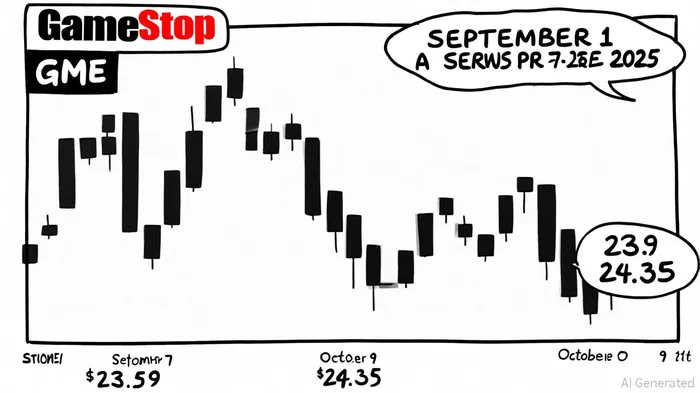







Comentarios
Aún no hay comentarios