
GAMCO's Challenge to Lennar's Exchange Offer: A Governance and Value Creation Dilemma
The recent exchange offer by Lennar CorporationLEN-- (LEN) to distribute shares of its subsidiary Millrose PropertiesMRP--, Inc. has sparked a contentious debate over corporate governance and shareholder value creation. At the heart of this dispute is GAMCO Investors, Inc. (GAMI), a 5.5% holder of Lennar's Class B shares, which has challenged the exclusion of Class B shareholders from the exchange, as detailed in Lennar's governance documents. This conflict underscores broader questions about equity in governance structures, the alignment of incentives, and the long-term implications for trust in corporate decision-making.
The Exchange Offer and Its Structural Flaw
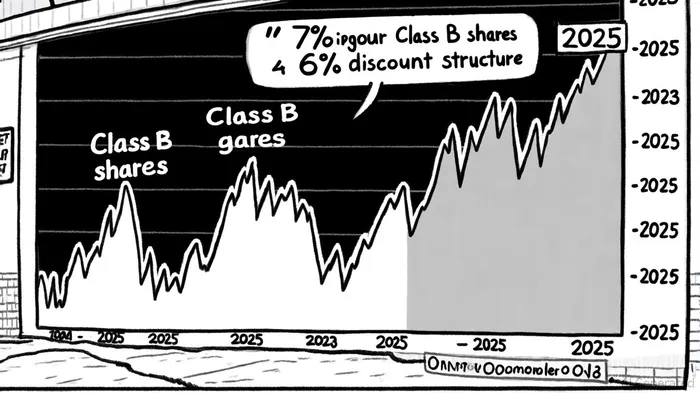
Lennar's exchange offer, announced in a press release, allows Class A shareholders to trade their shares for MillroseMRP-- Class A stock at a 6% discount, with the final exchange ratio tied to the volume-weighted average prices of both entities. While this move aims to unlock value by distributing Millrose's stake, it systematically disadvantages Class B shareholders, who hold identical economic rights but trade at a 7% discount to Class A shares, GAMCO argued in a shareholder letter. GAMCO's letter to Lennar's board argues that this exclusion perpetuates an inequitable valuation gap, effectively transferring value from a minority group of shareholders to the majority, an issue also reflected in Lennar's press releases.
The structural flaw lies in the dual-class share system itself, which grants Class B shareholders superior voting rights but no commensurate economic benefits. By excluding Class B holders from the exchange, LennarLEN-- forgoes an opportunity to address this disparity-a decision that could erode confidence in its governance framework. As stated by GAMCO in a filing on Lennar's investor relations site, "The current approach risks alienating a segment of shareholders who have contributed to Lennar's success but are now being treated as second-class stakeholders."
Governance Resilience vs. Shareholder Dissent
Lennar's corporate governance structure, as outlined in its 2025 proxy materials (the DEF 14A), emphasizes ethical practices, board independence, and shareholder engagement. The recent re-election of all board nominees and approval of executive compensation packages suggest strong support for the leadership's strategy, according to an Investing.com article. However, these outcomes do not absolve the board of its duty to address material inequities in shareholder treatment.
The board's response to GAMCO's challenge has been notably defensive. While Lennar's governance documents highlight initiatives like dividend payments and stock buybacks as value creators, they lack explicit mechanisms to reconcile the Class A–B valuation gap. This omission raises questions about the board's commitment to equitable governance, particularly as dual-class structures face increasing scrutiny from investors and regulators.
Strategic Implications for Value Creation
The exchange offer's success hinges on its ability to enhance shareholder value. Yet, by excluding Class B shareholders, Lennar risks creating a two-tiered value proposition: one that benefits the majority at the expense of a vocal minority. GAMCO's proposal-to either include Class B shareholders directly or allow conversion to Class A shares-presents a pragmatic solution to this dilemma, according to a Morningstar report.
From a strategic perspective, addressing the valuation gap could strengthen Lennar's corporate reputation and reduce the likelihood of future governance challenges. Conversely, a rigid stance may invite regulatory intervention or legal action, as seen in similar cases where minority shareholders have sought redress for perceived inequities.
Conclusion: Governance as a Catalyst for Trust
The GAMCO-Lennar dispute is emblematic of a broader tension in modern corporate governance: the balance between strategic flexibility and equitable treatment. While Lennar's board has demonstrated resilience in maintaining its governance framework, the exclusion of Class B shareholders from the exchange offer risks undermining the very trust that underpins long-term value creation.
As the exchange offer's deadline approaches, the outcome will serve as a litmus test for Lennar's commitment to inclusive governance. For investors, the lesson is clear: corporate governance is not merely a compliance exercise but a dynamic force that shapes perceptions of fairness, accountability, and sustainability.





Comentarios
Aún no hay comentarios