
Galp Energia's Q2 Earnings and Strategic Expansion in Namibia: A High-Conviction Bet in a Shifting Energy Landscape
In a volatile energy market marked by geopolitical tensions and fluctuating commodity prices, Galp Energia's Q2 2025 earnings report stands out as a testament to strategic resilience and operational agility. With a reported adjusted net profit of €373 million, the company has demonstrated its ability to navigate uncertainty while accelerating its transition into a low-carbon energy leader. For investors seeking long-term value in the evolving E&P sector, Galp's upstream performance and its ambitious expansion in Namibia's Mopane field present a compelling case.
Q2 Earnings: Resilience Amid Volatility
Galp's Q2 results highlight a disciplined approach to capital allocation and a robust upstream segment. Despite a 20% reduction in capital expenditures (CapEx), the company maintained a strong cash breakeven of $20 per barrel in its upstream operations, a critical metric for sustaining profitability in low-price environments. Working interest production rose by 8% quarter-over-quarter to 113,000 barrels of oil equivalent per day (kboepd), driven by improved operational efficiency and strategic divestments, including a €870 million inflow from the sale of its Mozambique Area 4 stake.
The midstream segment also delivered strong performance, with natural gas and LNG trading volumes surging 70% year-over-year to 18.6 terawatt-hours (TWh). This diversification into gas and renewables—coupled with a 9% year-over-year increase in renewable energy capacity to 1.7 gigawatts—underscores Galp's pivot toward a lower-carbon future. However, refining margins contracted 20% year-over-year to $6.1 per boe, reflecting the sector's cyclical challenges.
Namibia's Mopane Field: A Game-Changer for Long-Term Growth
While the Q2 earnings reflect short-term stability, Galp's strategic expansion in Namibia's Mopane field is where its long-term potential truly shines. The Mopane project, located in the Orange Basin under the PEL 83 license, is estimated to hold up to 10 billion barrels of oil equivalent—placing it among the most significant discoveries in the Atlantic margin.
The field's geological profile is highly favorable: light, low-viscosity oil with minimal CO₂ and no hydrogen sulfide (H₂S) simplifies production and reduces environmental risks. Galp's exploration campaign, including five successful wells and a 3D seismic survey, has confirmed the lateral extension of high-quality reservoirs. The upcoming Mopane-3X well, targeting AVO-10 and AVO-13 zones, could unlock a second development hub, further expanding the project's potential.
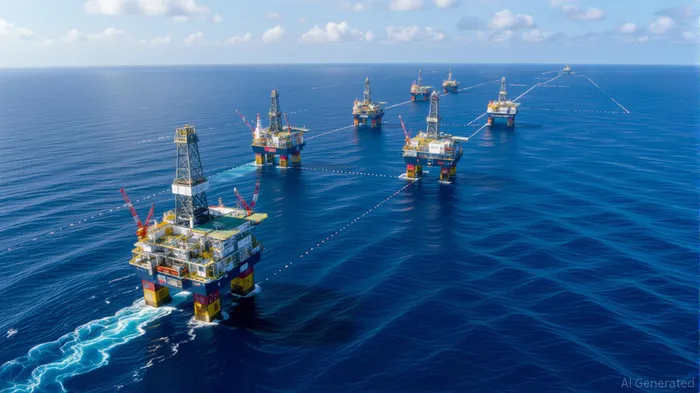
Galp is currently offering to sell half of its 80% stake in Mopane, including operatorship, to attract partners like ShellSHEL-- or PetrobrasPBR.A--. This farm-out strategy not only de-risks the project but also aligns with the company's focus on monetizing high-impact assets to fund its energy transition. The Namibian government's push to fast-track development—aiming to make the country a top-10 global oil producer by 2035—adds further momentum to the project.
Balancing Hydrocarbons and Sustainability
Critics may argue that large-scale oil projects contradict the energy transition, but Galp's approach is nuanced. The company's upstream cash breakeven and low-carbon initiatives, such as renewable hydrogen and biofuels at its Sines industrial site, illustrate a dual strategy: leveraging hydrocarbon profits to fund decarbonization. The Mopane field's carbon intensity, already 50% below industry averages, further aligns with Galp's commitment to reducing emissions.
Moreover, the project's potential to generate €400 million annually in operating cash flow from the Brazil Bacalau project (expected to come online in late 2025) provides a financial buffer for renewable investments. This balance of near-term cash flow and long-term sustainability positions Galp as a leader in the “energy transition 2.0” era, where integrated E&P players thrive.
Investment Implications
For investors, Galp's Q2 performance and Namibia expansion present a rare combination of near-term stability and long-term growth. The company's EBITDA guidance above €350 million for 2025, coupled with a resilient balance sheet (current ratio of 1.72), supports confidence in its ability to withstand market headwinds. Analysts' price targets, ranging from €15.92 to €28.43, suggest a potential 75% upside from current levels.
However, risks remain. Delays in Mopane's development or a prolonged energy transition could impact valuations. That said, Galp's disciplined CapEx, strategic partnerships, and focus on low-carbon innovation mitigate these concerns.
Conclusion: A High-Conviction Play
Galp Energia's Q2 earnings and Namibia expansion reflect a company that is not only surviving but thriving in a transformative energy landscape. By combining operational excellence, strategic monetization, and a clear-eyed approach to the energy transition, Galp is well-positioned to deliver sustained value. For investors seeking exposure to a high-conviction energy stock with both upstream scale and renewable ambition, Galp offers a compelling case. As the Mopane field progresses and the Bacalau project comes online, the company's ability to balance profitability with sustainability will likely cement its status as a leader in the next decade of energy.
Investment Advice: Consider a long position in Galp Energia (EPA:PG) for investors with a 3–5-year horizon, with a focus on its Namibia project's development milestones and EBITDA growth. Monitor the farm-out process and energy transition roadmap for catalysts.







Comentarios
Aún no hay comentarios