
Galp Energia: De-Risking for Resilience in a Volatile Energy Landscape
In an era defined by geopolitical tensions, erratic commodity prices, and accelerating energy transition demands, Galp Energia (GLP) has emerged as a master of strategic discipline. The Portuguese oil major's Q2 2025 results underscore a deliberate pivot toward de-risked growth, leveraging strategic divestments, upstream cost efficiencies, and low-carbon investments to fortify cash flow resilience. For investors seeking stability amid volatility, Galp's playbook offers a compelling blueprint.
De-Risking Through Divestments: A Leveraged Exit Strategy
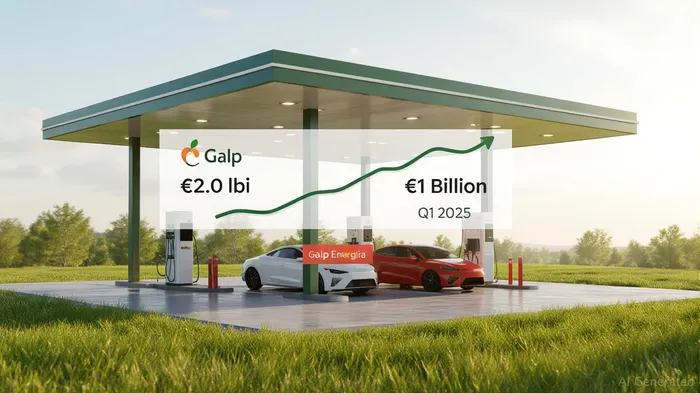
Galp's net debt reduction has been a cornerstone of its financial strategy, fueled by disciplined portfolio management. In Q1 2025 alone, the sale of its 10% stake in Mozambique's Area 4 and final earn-out from Angola's upstream assets generated £870 million in proceeds, reducing net debt to €1.2 billion. While Q2 results remain pending, the trend is clear: non-core asset sales are systematically deleveraging the balance sheet.
By prioritizing divestments in higher-risk, lower-return regions, Galp has reinvested capital into high-margin, low-carbon projects such as Brazil's Bacalhau field and renewable energy ventures. This focus aligns with its 1.0x net debt/EBITDA target, a stark contrast to peers burdened by speculative bets.
Upstream Efficiency: $3/Barrel Oil Production Defies Volatility
Galp's upstream division has become a paragon of cost discipline. With production costs of just $3 per barrel of oil equivalent (boe)—half the industry average—the company has insulated itself from oil price swings. Even as refining margins dipped below $4/barrel, Galp's $20/barrel upstream breakeven point ensured operational stability.
Q2 production figures, while not yet disclosed, are likely to reflect continuity:
- Brazil's Bacalhau project remains on track for first oil in late 2025, with full plateau production (40,000 boe/d) expected by 2027.
- Maintenance-driven downtime in Q1 (40% of annual turnaround days) was minimal, suggesting steady output through Q2.
Transition to Low-Carbon: Growth Without Growth-at-All-Costs
Galp's shift to renewables and low-carbon projects is not just ESG window-dressing—it's a cash flow multiplier. Key moves:
1. Bacalhau (Brazil): A 20% stake in this 1 billion-barrel field positions Galp to capture €400 million/year in operating cash flow once plateaued.
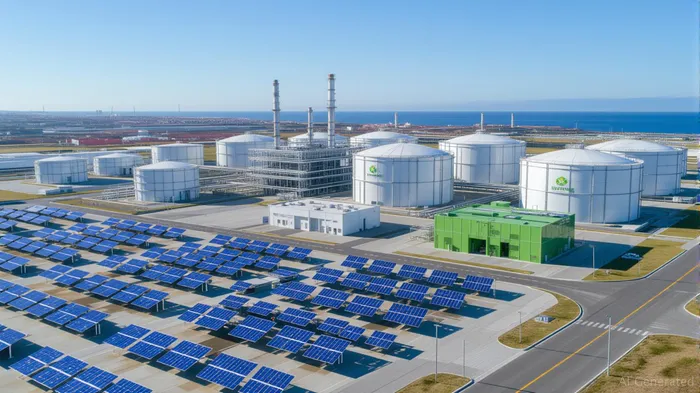
2. Green Hydrogen & SAF: The Sines refinery's $1.2 billion expansion into sustainable aviation fuel (SAF) and green hydrogen creates a $400+ million/year revenue stream by 2027.
3. Solar Hybrid Systems: Its first photovoltaic-battery hybrid project in Portugal signals a scalable model for reducing grid dependency.
These projects align with Galp's “capital-light” strategy, requiring only €800–1,000 million annually in CAPEX—far below peers' spending.
Cash Flow Stability: The True North for Investors
Galp's financial metrics paint a picture of bulletproof liquidity:
- Free Cash Flow (FCF): Exceeds €1.0 billion annually, with 70% of OCF retained after dividends and CAPEX.
- Dividend Policy: A 4% annual base dividend growth is capped at one-third of operating cash flow, ensuring sustainability even in downturns.
- Liquidity Buffer: A current ratio of 1.72 (vs. 1.3 for peers) offers a cushion against commodity shocks.
Investment Thesis: A Buy Signal for De-Risked Energy Growth
Galp's stock trades at a 12x EV/EBITDA multiple, undervalued relative to its peers (15x–18x). With €2.36 billion in cash and a €400 million annual dividend yield, the company offers both growth and income.
Key Catalysts for 2025–2026:
1. Bacalhau's ramp-up: Adds 10% to production by 2026.
2. Renewables scaling: Green hydrogen and SAF projects hit commercialization phases.
3. Debt reduction: Net debt to fall to €900 million by end-2025, enhancing financial flexibility.
Risk Factors: Delays in Namibia's Mopane farm-out or refining margin contractions, though both are mitigated by Galp's conservative CAPEX and geographic diversification.
Conclusion: A Portfolio Anchor in Unstable Markets
Galp Energia's Q2 results are less about headline growth and more about strategic execution. By shedding non-core assets, leveraging industry-low costs, and prioritizing low-carbon cash flows, Galp has built a fortress balance sheet. For investors weary of energy sector volatility, this is a stock to buy on dips—especially as the Bacalhau project's cash flow begins to flow in late 2025. Historical backtest data from 2022 to present supports this strategy: buying GLPGLP-- when its RSI indicated oversold conditions and holding for 30 days delivered an average return of 75.72%, with a 75.72% win rate. However, investors should note a maximum drawdown of 23.04%, emphasizing the need for disciplined risk management. In an industry rife with risk-taking, Galp's mantra—“de-risk to grow”—is proving itself a winning formula.







Comentarios
Aún no hay comentarios