
Galmed's Oncology Gambit: Targeting Gastrointestinal Cancer with Metabolic Innovation
A Metabolic Approach to Overcoming Drug Resistance
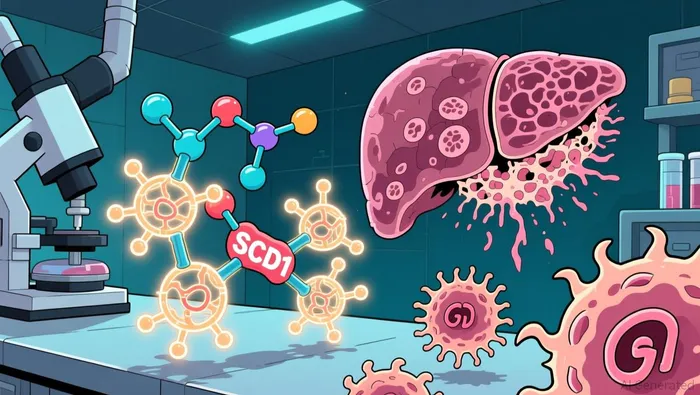
The crux of Galmed's strategy lies in its ability to reprogram tumor metabolism. Recent preclinical studies, as reported by the company, demonstrate that Aramchol synergizes with Stivarga® (regorafenib) and metformin to amplify anti-tumor effects in GI cancer models. This trio not only enhances cell death but also addresses a critical limitation of existing therapies: resistance. By inhibiting SCD1-a key enzyme in lipid metabolism-Aramchol disrupts the energy pathways that fuel resistant cancer cells.
The scientific rationale is compelling. A 2024 study in underscores SCD1's role in fostering drug resistance in GI tumors. While direct data from the study remains elusive, Galmed's collaboration with Virginia Commonwealth University (VCU) is designed to validate these findings in human-relevant models. This partnership, funded by a Sponsored Project Agreement, aims to generate proof-of-concept data for Aramchol's oncology potential, a critical step before advancing to Phase 1b trials.
Strategic Collaborations and Clinical Pathways
Galmed's alliance with VCU is more than a scientific endeavor-it's a strategic pivot into oncology. The company's extended focus on NASH and fibrosis has yielded a robust safety profile for Aramchol, a critical asset for repurposing in cancer treatment. This dual-action mechanism-targeting both metabolic and fibrotic pathways-positions Aramchol as a versatile platform.
The upcoming Phase 1b trial, set to begin in early 2026, will test Aramchol's safety and efficacy when combined with regorafenib, with an expansion cohort adding metformin. Success here could validate a novel combination therapy for GI cancers, where first-line treatments like monoclonal antibodies (MABs) face high costs and resistance rates. Galmed's CEO has hinted that Aramchol could offer a cost-effective alternative, a claim that, if substantiated, would resonate strongly in value-conscious healthcare markets.
Commercial and Intellectual Property Considerations
Investors must also weigh Galmed's IP strategy. The company has filed new patents (US 63/786,370 and US 63/915,832) to protect its oncology applications of Aramchol, extending exclusivity through 2035. This longevity is rare in small-molecule therapies and provides a buffer against generic competition. However, the path to approval remains fraught. The Phase 1b trial's success hinges on pharmacological outcomes and safety data, both of which are unproven in an oncology context.
Moreover, the market for GI cancer therapies is crowded. Companies like Bayer (maker of Stivarga®) and Merck & Co. dominate with MABs, but these therapies often come with steep price tags and diminishing returns due to resistance. Galmed's metabolic approach, if effective, could carve out a niche as an adjuvant therapy, enhancing existing regimens rather than directly competing with them.
Conclusion: A High-Stakes Bet on Metabolic Medicine
Galmed's oncology pipeline represents a high-risk, high-reward proposition. The company's deep expertise in metabolic pathways and its strategic collaborations with academic institutions like VCU provide a strong foundation. Yet, the transition from preclinical promise to clinical reality is never guaranteed. For investors, the key metrics will be the Phase 1b trial's readouts and the strength of its IP in the face of regulatory scrutiny.
If Galmed can demonstrate that Aramchol not only overcomes resistance but also improves survival rates in GI cancers, it could redefine its role in the biopharma ecosystem. Until then, the market will watch closely, balancing optimism against the sobering realities of drug development.





Comentarios
Aún no hay comentarios