
FX Risk Defense: Japan and Germany Inflation Data and Downside Implications
Central Bank Policy Stances and Downside Risks
Japan's central bank appears set to hold its benchmark rate at 0.5% amid persistent inflation at 3.0% yoy, though officials warn incremental hikes remain possible if wage growth fails to sustain price pressures according to central bank officials. Prime Minister Takaichi's cautionary tone reflects concerns that current inflation lacks broad-based wage momentum, while yen volatility adds pressure to balance stimulus and currency stability. 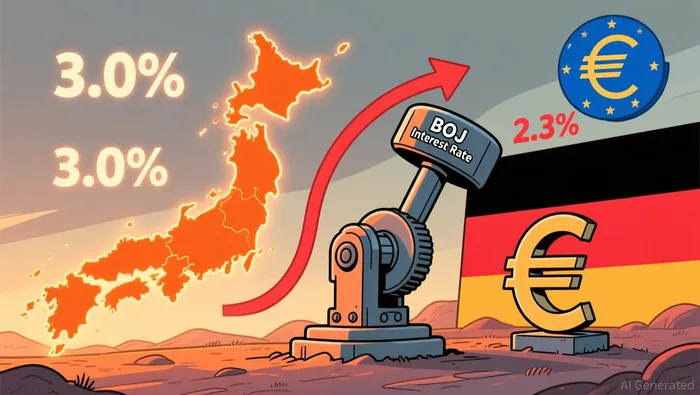 Meanwhile, the ECB's "good place" stance hinges on services inflation still running at 3.5% yoy, with policymakers acknowledging risks from global trade policy uncertainty and a weakening dollar as reported by Reuters. This dollar depreciation could amplify tariff impacts on eurozone exporters, straining competitiveness and funding costs according to ECB financial stability reports. Systemic vulnerabilities persist, including fragile fiscal positions in some eurozone nations and highly leveraged non-bank financial intermediaries, which could escalate quickly under geopolitical shocks or abrupt capital flows.
FX Market Implications and Investment Considerations
Japan's persistent inflation, at 3.0% YoY in October 2025, continues to weigh heavily on the yen, pressuring it against the dollar amid concerns over its nine-month lows and the need for ongoing monitoring according to inflation data. Conversely, the euro benefits from underlying price pressures within the bloc, notably Germany's services inflation climbing 3.5% YoY, supporting the currency's resilience even as the ECB considers policy stability as reported by German statistics agency. However, the European Central Bank's own November review flags a risk: persistent global trade uncertainty and U.S. fiscal imbalances could weaken the dollar according to ECB financial stability analysis, creating potential volatility for euro denominated positions. Investors should maintain visibility on these dynamics and consider diversification strategies, particularly given the heightened risk of abrupt capital flows and geoeconomic fragmentation impacting currency valuations.







Comentarios
Aún no hay comentarios