
FVAL's Dividend Boost Signals Value Leadership in a Recovery
The Fidelity Value Factor ETF (FVAL) recently announced a 3% dividend hike, raising its annual payout to $1.01 per share—a move that underscores its confidence in the underlying strength of its portfolio. This increase comes amid a broader market environment where value stocks are gaining traction, positioning FVALFVAL-- as a compelling vehicle for investors seeking both income and exposure to a recovering economy. But what makes FVAL unique is its strategic blend of sector diversification and valuation-driven allocations, which sets it apart in a market hungry for undervalued opportunities.
Sector Diversification: Tech-Led Value
FVAL's portfolio defies traditional value ETF norms by heavily weighting Technology at 28.3%, far exceeding allocations in sectors like Financials (14.03%) or Healthcare (11.59%). This focus on tech—typically a growth-oriented sector—reflects FVAL's data-driven methodology, which prioritizes metrics like low price-to-fundamental ratios over sector biases. Top holdings such as Microsoft (7.33%), Apple (6.58%), and Alphabet (4.21%) highlight its strategy of identifying large-cap tech firms trading at discounts to their fundamentals.
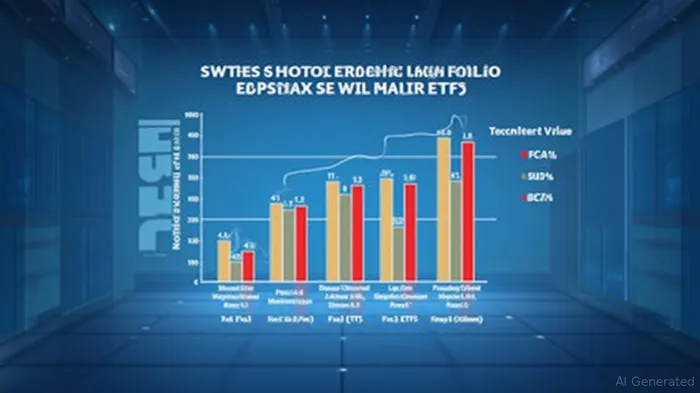
This tech-heavy approach isn't a gamble but a calculated play. In a recovery, companies with strong cash flows and undervalued stocks—like many in tech—can outperform. For instance, FVAL's 1-year return of 25.92% (vs. the S&P 500's 17%) suggests its strategy is paying off. Meanwhile, its beta of 0.96 indicates lower volatility than the market, offering stability without sacrificing upside.
Valuation Advantage in a Value-Driven Market
The ETF's dividend increase isn't just about income—it's a reflection of its portfolio's cash-generating power. FVAL targets firms with high free cash flow yields and low price-to-future earnings ratios, ensuring dividends are sustainable even amid economic shifts. The 1.62% dividend yield, while below broader market averages, is supported by consistent quarterly payouts, including a June 2025 declaration of $0.2320 per share.
Critically, FVAL's valuation focus aligns with a broader market trend. As inflation eases and growth stocks face skepticism, investors are rotating into undervalued sectors. FVAL's blend of tech (with its innovation-driven resilience) and traditional value plays like Financials (14.03%) and Industrials (8.87%) creates a balanced portfolio poised to thrive in this environment.
Risks and Considerations
No strategy is without drawbacks. FVAL's 0.15% expense ratio lags peers like the Vanguard Value ETF (VTV) at 0.04%, which could erode long-term returns. Additionally, its top 10 holdings concentration (35.93%) raises concentration risk, particularly in tech-heavy names. Investors should also note that the December 2025 dividend remains an estimate, pending Fidelity's final announcement.
Investment Opportunity: A Mixed-Asset Value Play
For investors seeking exposure to a value-driven recovery, FVAL offers a unique angle. Its tech-heavy tilt provides growth-like upside while its valuation metrics anchor it to traditional value principles. Pair this with a dividend yield that's steadily rising, and FVAL becomes a tool for both income and capital appreciation.
Final Take
FVAL's dividend boost isn't just a numbers game—it's a sign of its portfolio's health and its ability to adapt to evolving markets. In a recovery where value stocks are finally getting their due, the ETF's blend of valuation discipline and sector diversification makes it a standout choice. While cost-conscious investors may prefer cheaper alternatives, FVAL's performance and strategy justify its premium for those seeking a tech-tilted value play.
Bottom Line: Consider FVAL for a balanced value portfolio, but monitor its December dividend announcement and expense ratio impact closely.





Comentarios
Aún no hay comentarios