
Futures Fall After Trump's Tariff Reversal Rally
Generado por agente de IATheodore Quinn
jueves, 10 de abril de 2025, 5:44 am ET2 min de lectura
TSLA--
The stock market's rollercoaster ride continues, with U.S. stock index futures falling sharply on Thursday, April 10, 2025, just a day after a historic rally sparked by President Donald Trump's unexpected tariff reversal. The Dow, S&P 500, and Nasdaq futures all tumbled, with the Nasdaq 100 E-minis leading the decline at 2.61%. This dramatic shift underscores the market's sensitivity to trade policy changes and the ongoing uncertainty surrounding global trade dynamics.
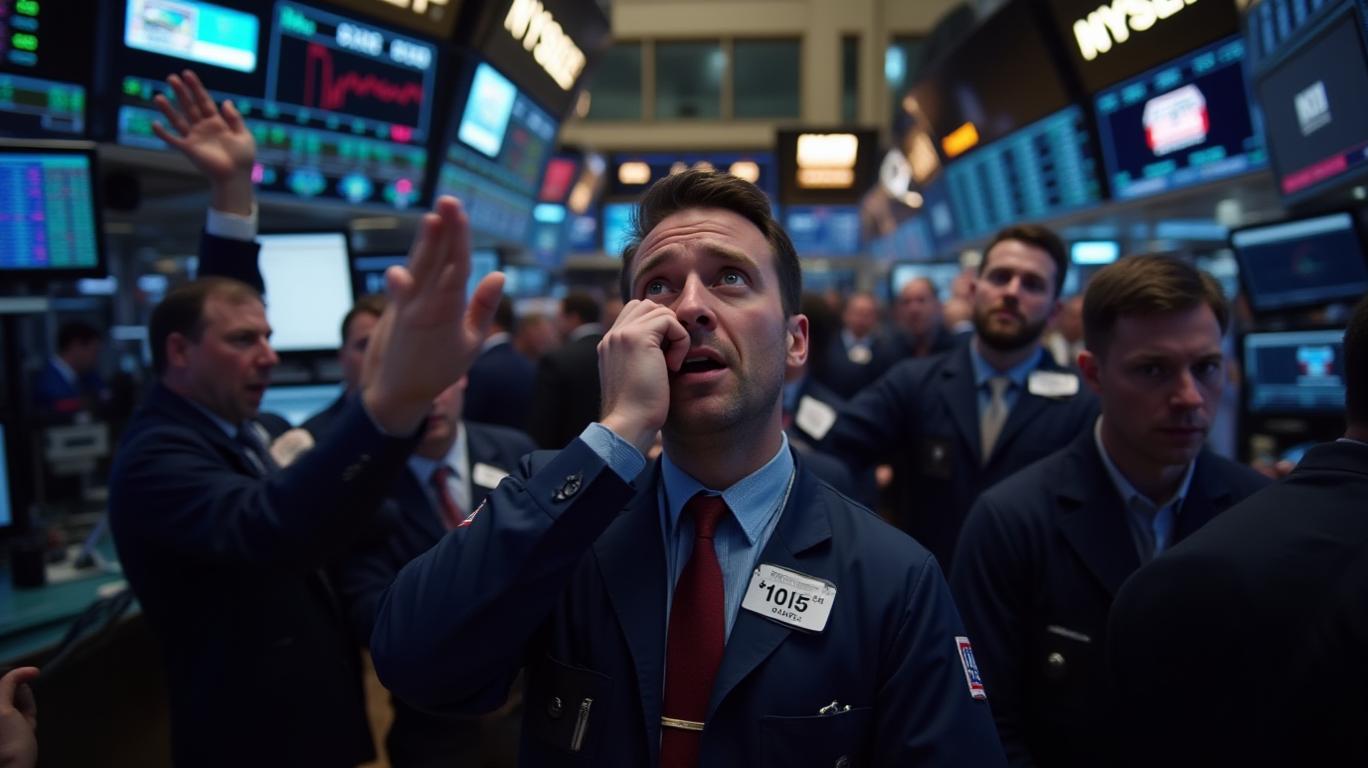
The rally on Wednesday was nothing short of spectacular. The S&P 500 surged almost 7%, while the Nasdaq jumped more than 8%, marking the biggest single-day percentage gains since 2008 and 2001, respectively. This surge was triggered by Trump's announcement of a 90-day pause on his "reciprocal" tariffs for most countries, coupled with a significant reduction in tariff rates to a universal 10%. However, the relief was not universal, as tariffs on Chinese imports were hiked to 125%, escalating the trade war with China.
The market's euphoria was short-lived. On Thursday, the Dow E-minis were down 658 points, or 1.61%, S&P 500 E-minis were down 117.75 points, or 2.14%, and Nasdaq 100 E-minis were down 503.5 points, or 2.61%. This reversal highlights the market's volatility and the challenges investors face in navigating the unpredictable trade landscape.
The tariff reversal has significant implications for various sectors, particularly those reliant on global supply chains and international markets. Companies like TeslaTSLA-- and NvidiaNVDA--, which have seen significant volatility in their stock prices due to trade policies, are particularly affected. On Wednesday, Tesla's stock surged 22.69%, and Nvidia's rose 18.72%. However, on Thursday, Tesla's stock slid 4.5%, and Nvidia's was down 3.8% in premarket trade.
The 90-day pause on tariffs provides a temporary respite for these companies, but the continued high tariffs on Chinese imports pose a significant risk. As noted by John Canavan, lead analyst at Oxford Economics, "The way President Trump worded this makes it not entirely clear if we actually have a pause or if we just have lower reciprocal tariffs at 10%. But regardless, either way, it's clear that the president is backing off some of the worst of his tariff threats here, and I think that's clearly going to be a net positive for risk assets that can last."
Moreover, the potential for further rate cuts by the Fed, as suggested by Nordea analysts, could provide additional support for these companies. However, the risks remain tilted to the downside, and any hit to growth could lead to further market interventions. As Nordea analysts stated, "Risks are clearly tilted to the downside, and if the hit to growth is larger than we assume or the Treasury market stops functioning, a series of rate cuts and market interventions could follow."
In conclusion, while the recent tariff reversals have provided short-term relief and optimism for sectors like Big Tech and insurance, the long-term impact will depend on the stability of trade policies and the overall economic environment. Investors in these sectors should closely monitor developments in trade policy and adjust their strategies accordingly. The market's volatility and the ongoing trade war with China will continue to pose challenges, but the potential for further rate cuts by the Fed could provide some support.
The stock market's rollercoaster ride continues, with U.S. stock index futures falling sharply on Thursday, April 10, 2025, just a day after a historic rally sparked by President Donald Trump's unexpected tariff reversal. The Dow, S&P 500, and Nasdaq futures all tumbled, with the Nasdaq 100 E-minis leading the decline at 2.61%. This dramatic shift underscores the market's sensitivity to trade policy changes and the ongoing uncertainty surrounding global trade dynamics.
The rally on Wednesday was nothing short of spectacular. The S&P 500 surged almost 7%, while the Nasdaq jumped more than 8%, marking the biggest single-day percentage gains since 2008 and 2001, respectively. This surge was triggered by Trump's announcement of a 90-day pause on his "reciprocal" tariffs for most countries, coupled with a significant reduction in tariff rates to a universal 10%. However, the relief was not universal, as tariffs on Chinese imports were hiked to 125%, escalating the trade war with China.
The market's euphoria was short-lived. On Thursday, the Dow E-minis were down 658 points, or 1.61%, S&P 500 E-minis were down 117.75 points, or 2.14%, and Nasdaq 100 E-minis were down 503.5 points, or 2.61%. This reversal highlights the market's volatility and the challenges investors face in navigating the unpredictable trade landscape.
The tariff reversal has significant implications for various sectors, particularly those reliant on global supply chains and international markets. Companies like TeslaTSLA-- and NvidiaNVDA--, which have seen significant volatility in their stock prices due to trade policies, are particularly affected. On Wednesday, Tesla's stock surged 22.69%, and Nvidia's rose 18.72%. However, on Thursday, Tesla's stock slid 4.5%, and Nvidia's was down 3.8% in premarket trade.
The 90-day pause on tariffs provides a temporary respite for these companies, but the continued high tariffs on Chinese imports pose a significant risk. As noted by John Canavan, lead analyst at Oxford Economics, "The way President Trump worded this makes it not entirely clear if we actually have a pause or if we just have lower reciprocal tariffs at 10%. But regardless, either way, it's clear that the president is backing off some of the worst of his tariff threats here, and I think that's clearly going to be a net positive for risk assets that can last."
Moreover, the potential for further rate cuts by the Fed, as suggested by Nordea analysts, could provide additional support for these companies. However, the risks remain tilted to the downside, and any hit to growth could lead to further market interventions. As Nordea analysts stated, "Risks are clearly tilted to the downside, and if the hit to growth is larger than we assume or the Treasury market stops functioning, a series of rate cuts and market interventions could follow."
In conclusion, while the recent tariff reversals have provided short-term relief and optimism for sectors like Big Tech and insurance, the long-term impact will depend on the stability of trade policies and the overall economic environment. Investors in these sectors should closely monitor developments in trade policy and adjust their strategies accordingly. The market's volatility and the ongoing trade war with China will continue to pose challenges, but the potential for further rate cuts by the Fed could provide some support.

Divulgación editorial y transparencia de la IA: Ainvest News utiliza tecnología avanzada de Modelos de Lenguaje Largo (LLM) para sintetizar y analizar datos de mercado en tiempo real. Para garantizar los más altos estándares de integridad, cada artículo se somete a un riguroso proceso de verificación con participación humana.
Mientras la IA asiste en el procesamiento de datos y la redacción inicial, un miembro editorial profesional de Ainvest revisa, verifica y aprueba de forma independiente todo el contenido para garantizar su precisión y cumplimiento con los estándares editoriales de Ainvest Fintech Inc. Esta supervisión humana está diseñada para mitigar las alucinaciones de la IA y garantizar el contexto financiero.
Advertencia sobre inversiones: Este contenido se proporciona únicamente con fines informativos y no constituye asesoramiento profesional de inversión, legal o financiero. Los mercados conllevan riesgos inherentes. Se recomienda a los usuarios que realicen una investigación independiente o consulten a un asesor financiero certificado antes de tomar cualquier decisión. Ainvest Fintech Inc. se exime de toda responsabilidad por las acciones tomadas con base en esta información. ¿Encontró un error? Reportar un problema




Comentarios
Aún no hay comentarios