
The Future of Snacking: How ESG-Driven Innovators Are Transforming Consumer Goods and Creating Long-Term Value
In an era where health-conscious consumers and socially responsible investors demand more from the brands they support, snack bar tycoons like Daniel Lubetzky are redefining success. By strategically aligning their businesses with environmental, social, and governance (ESG) principles, these leaders are not only meeting evolving market demands but also unlocking sustained growth. Nowhere is this clearer than in the case of KIND Healthy Snacks and its founder's ventures through Camino Partners, which exemplify how strategic diversification and ESG integration can drive value in the consumer goods sector.
The ESG Advantage: Why Health Trends and Sustainability Are Profit Drivers
The shift toward healthier lifestyles and environmental stewardship is no passing fad. According to Nielsen, 73% of global consumers say they would definitely or probably change their consumption habits to reduce their environmental impact. This sentiment is fueling demand for brands that prioritize sustainability, transparency, and social impact—precisely the areas where Daniel Lubetzky's companies excel.
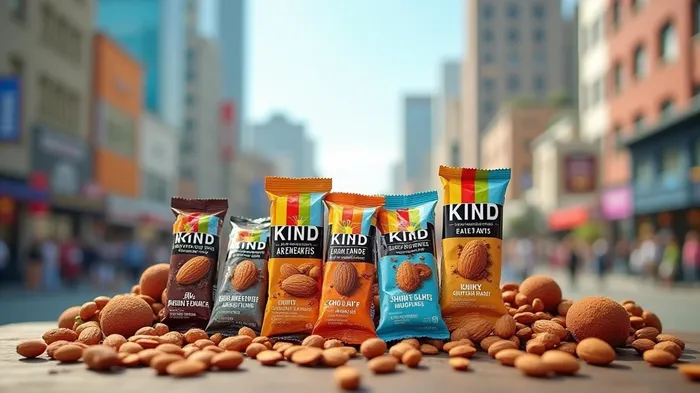
Take KIND's almond-based snacks, which have become synonymous with ethical sourcing and health. By committing to bee-friendly almond farming and water conservation, the brand has built trust with consumers. For instance, its 2025 goal to source 30% of almonds from regenerative farms—supported by partnerships like the Wolfe's Neck Center—positions it as a leader in circular agriculture. This approach isn't just about compliance; it's about future-proofing supply chains against climate risks and regulatory changes.
Data-Backed Growth: How ESG Metrics Translate to Market Performance
Investors seeking proof need look no further than the correlation between ESG progress and financial returns. Consider Mars, Incorporated, the parent company of KIND, which has seen its stock outperform peers amid its climate commitments.
While direct stock data for KIND is tied to Mars, the brand's strategic moves—such as its recyclable packaging pilot with Whole Foods and its 30% regenerative almond sourcing—are catalysts for long-term value. These initiatives align with the MSCI ESG Index, which has outperformed traditional benchmarks over the past decade, attracting $1.7 trillion in ESG-focused assets.
Diversification Beyond Snacks: Camino Partners' Health Ecosystem
Lubetzky's recent pivot to Camino Partners, a venture capital platform investing in health-focused businesses, underscores the power of diversification. By leveraging his expertise in scaling mission-driven brands, Camino is targeting sectors like fitness, home healthcare, and medical aesthetics—areas poised for exponential growth.
For example:
- Barry's Fitness: A global boutique gym brand with 90+ studios, Camino's investment taps into the $44 billion fitness industry's shift toward community-driven, high-energy workouts.
- LiveWell: A home healthcare provider addressing the $1.2 trillion aging population market, offering scalable solutions for at-home care.
- Well Labs+: A medical spa aggregator capitalizing on the $6.5 billion anti-aging aesthetics sector, merging wellness with self-care.
These ventures reflect a holistic vision for health—combining physical fitness, mental well-being, and accessibility—that resonates with both consumers and investors.
The Social Impact Multiplier: Why Kindness Pays Off
Lubetzky's legacy isn't just about business acumen; it's about embedding social purpose into every decision. The KIND Foundation's Frontline Impact Project, which supported healthcare workers during the pandemic, and Camino's emphasis on “values-driven” investments, demonstrate that corporate social responsibility (CSR) isn't a cost—it's a competitive advantage.
Brands with strong CSR profiles enjoy higher customer loyalty and access to premium pricing. For instance, KIND's commitment to eliminating artificial ingredients and reducing plastic waste has allowed it to command a 20–30% premium over conventional snacks. This pricing power, combined with ESG-aligned cost efficiencies (e.g., water conservation cutting operational expenses), creates a virtuous cycle of profitability.
Risks and the Path Forward
No strategy is without challenges. Scaling regenerative agriculture and achieving 100% recyclable packaging by 2030 require significant capital and collaboration. Additionally, the health sector's regulatory landscape—particularly in healthcare and medical aesthetics—is complex. However, Lubetzky's track record of forging partnerships with NGOs, governments, and tech innovators (e.g., LandScan AI for carbon measurement) suggests these hurdles are manageable.
Conclusion: Invest in the Future of Wellness
The convergence of health trends, ESG principles, and strategic diversification isn't just a strategy—it's the new baseline for consumer goods success. Companies like KIND and Camino Partners are proving that value creation and social impact are inseparable. For investors, this is a rare opportunity: back brands that are not only adapting to change but leading it.
The question isn't whether ESG-driven health innovation will dominate the market—it already is. The real question is: Are you investing in the pioneers, or the also-rans?
Act now. The future of snacking—and health—is here.
This article is for informational purposes only and should not be construed as financial advice. Always conduct thorough research before making investment decisions.







Comentarios
Aún no hay comentarios