
The Future of Small Business Health Benefits: Why ICHRA Platforms Like Thatch Represent a Strategic Bet for 2026 and Beyond
The small business health benefits landscape is undergoing a seismic shift, driven by rising costs of traditional group plans, administrative complexity, and a growing demand for employee flexibility. At the heart of this transformation lies the Individual Coverage Health Reimbursement Arrangement (ICHRA), a model that has surged in adoption by over 1,000% since 2020. For investors, platforms like Thatch-built on scalable B2B SaaS innovation-are emerging as strategic bets to capitalize on this disruption.
The ICHRA Growth Story: A Response to Market Pain Points
ICHRA adoption has accelerated sharply, with a 34% increase in 2025 among employers with more than 50 employees and a 52% rise in other employer types. This growth is no accident. Traditional group health insurance premiums for small businesses are projected to rise by a median of 11% in 2026, driven by inflation, labor shortages, and specialty drug costs. Meanwhile, ICHRAs offer cost predictability, reduced administrative burdens, and the flexibility for employees to select individual plans tailored to their needs.
The model's appeal is further amplified by a robust individual insurance market. Employers using ICHRAs can avoid the rigid structures of group plans while employees gain the freedom to retain coverage during job transitions-a critical advantage in a tight labor market. Insurers like Centene and Oscar are already pivoting to ICHRA opportunities, recognizing its potential to reshape employer-sponsored benefits.
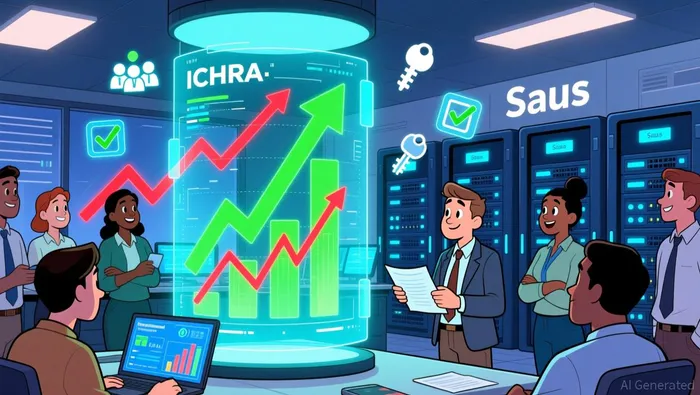
Thatch: A SaaS-Driven Disruptor in Health Benefits
Thatch exemplifies how B2B SaaS innovation is redefining healthcare. Its platform simplifies ICHRA administration, enabling employers to allocate tax-free funds to employees, who can then purchase individual plans or use the funds for dental, therapy, and other services. This decoupling of health insurance from employment not only aligns with employee preferences but also addresses employer pain points like rising premiums and administrative complexity.
Thatch's scalability is underpinned by its fintech-integrated SaaS model. The platform automates budgeting, payments, and reimbursements, reducing the operational overhead for employers. Its recent $40 million Series B funding, led by Index Ventures, underscores investor confidence in its ability to expand market reach and enhance its offerings. The Thatch Marketplace-a curated ecosystem of health and wellness services further differentiates it by offering employees personalized, value-added benefits.
Market Disruption and Long-Term Strategic Value
The traditional employer health benefits model is increasingly obsolete. The average cost of family health insurance has risen 22% over five years, pushing 64% of small businesses to explore alternatives. Thatch's approach directly challenges this status quo by empowering employees with choice while giving employers greater control over costs. This dual-value proposition is a hallmark of disruptive innovation, akin to how fintech platforms upended banking.
However, challenges remain. Legislative uncertainty-such as the potential expiration of enhanced individual market subsidies-could impact affordability in 2026. Additionally, some states are projecting 10–20% rate hikes for individual plans, which may test the model's resilience. Yet, these risks are outweighed by the structural advantages of ICHRAs: lower cost trends compared to group coverage and alignment with broader consumer-driven healthcare trends.
Conclusion: A Strategic Investment in the Future of Work
For investors, ICHRA platforms like Thatch represent more than a niche opportunity-they are part of a fundamental shift in how health benefits are administered. The scalability of SaaS models, combined with the flexibility of ICHRAs, positions these platforms to dominate a market increasingly strained by traditional models. While short-term uncertainties persist, the long-term trajectory is clear: businesses and employees alike are demanding solutions that prioritize choice, cost efficiency, and adaptability. Thatch's innovation and funding momentum make it a compelling candidate to lead this transformation.







Comentarios
Aún no hay comentarios