
The Future of Industry: A Strategic Investment in AI-Driven Automation for Generational Wealth
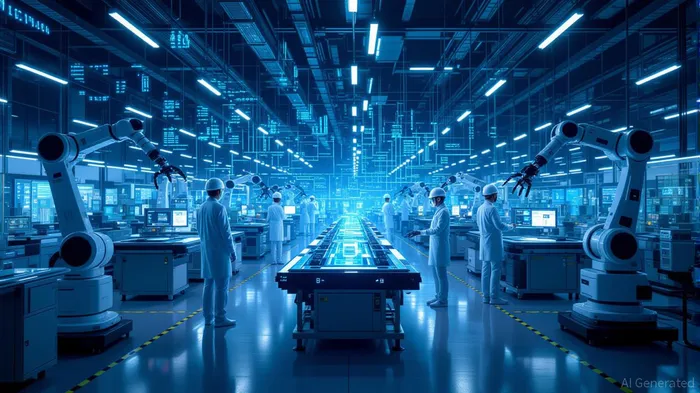
The industrial landscape is undergoing a seismic shift, driven by the convergence of artificial intelligence (AI) and automation. As global markets pivot toward efficiency, sustainability, and resilience, AI-driven industrial automation is no longer a speculative trend but a foundational pillar of modern manufacturing. For investors seeking to build generational wealth, this sector offers a unique opportunity to align with a compounding growth trajectory that spans decades.
Market Growth: A Decade of Exponential Potential
The AI-driven industrial automation market is projected to surge from $169.82 billion in 2025 to $443.54 billion by 2035, with a compound annual growth rate (CAGR) of 9.12%. More aggressive forecasts, such as Meticulous Research®'s $570.4 billion projection by 2035 (CAGR of 10.3%), underscore the sector's robust momentum. This growth is fueled by the integration of Industry 4.0 technologies—IIoT, advanced robotics, and AI—which are redefining productivity across sectors like automotive, oil and gas861002--, and pharmaceuticals.
Key Trends Shaping the Sector
- AI-Powered Predictive Maintenance: By analyzing sensor data in real-time, AI systems reduce downtime by up to 40% and cut maintenance costs. This technology is a cornerstone for industries like oil and gas, where operational complexity demands precision.
- Government-Driven Adoption: Initiatives such as Germany's Industrie 4.0 and India's Production-Linked Incentive Scheme are subsidizing automation for SMEs, democratizing access to cutting-edge tools.
- Cloud and Edge Computing: Cloud-based deployment offers scalability, while edge computing enables low-latency decision-making, critical for real-time automation.
- Digital Twins and Cobots: Virtual replicas of physical systems allow for predictive modeling, while collaborative robots (cobots) enhance human-machine collaboration, boosting flexibility on production floors.
Technological Innovations as Catalysts
The automotive sector, poised for the fastest growth, exemplifies this innovation. The rise of electric vehicles (EVs) demands advanced robotics and AI-driven quality control systems. Similarly, 5G-enabled smart factories are becoming the norm, with ultra-low latency enabling seamless IoT integration.
Navigating Challenges and Risks
While the sector's potential is vast, investors must remain mindful of challenges:
- High Initial Costs: Automation infrastructure requires significant upfront investment, though government incentives are mitigating this barrier.
- Cybersecurity Risks: As systems become interconnected, robust security frameworks are essential.
- Sustainability Pressures: Energy-efficient automation and circular economy integration are gaining regulatory and consumer traction.
Strategic Investment Approach
For a long-term, generational wealth strategy, consider the following:
1. Diversify Across Layers: Invest in both hardware (e.g., robotics manufacturers like ABB or Fanuc) and software (e.g., AI platforms such as NVIDIANVDA-- or Siemens' MindSphere).
2. Prioritize Resilience: Allocate to companies with strong R&D pipelines and partnerships with governments or industry leaders.
3. Leverage ETFs: Broad exposure can be achieved through thematic ETFs like the Global X Robotics & AI ETF (BOTZ) or the iShares Industrial Select Sector ETF (XLI).
4. Monitor Policy Shifts: Geopolitical and regulatory changes, such as carbon taxes or trade policies, will shape the sector's evolution.
Conclusion: Building a Legacy of Innovation
AI-driven industrial automation is not a fleeting trend but a structural shift in how industries operate. By investing in this sector with a long-term horizon, investors can capitalize on a compounding growth story that aligns with global economic and environmental imperatives. The key lies in patience, diversification, and a focus on companies that are not just adapting to change but leading it.
For those with a 20- to 30-year time horizon, this is more than an investment—it's a commitment to the future of industry itself.







Comentarios
Aún no hay comentarios