
The Future of Food Innovation and Meal Prep as a Lucrative Niche in 2025
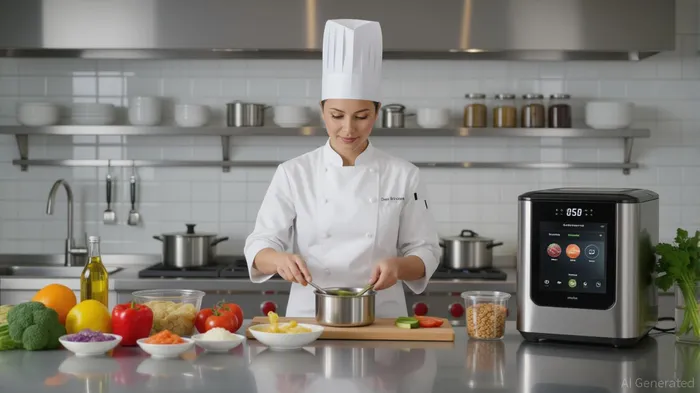
The food industry is undergoing a seismic shift, driven by a perfect storm of convenience-seeking consumers, health-conscious eating habits, and technological advancements in supply chain logistics. As we approach the midpoint of 2025, the intersection of meal prep innovation and scalable food-tech solutions has emerged as a prime investment opportunity. Let's break it down.
The Consumer Demand Equation: Convenience, Health, and Flavor
Food Network's 2025 meal prep trends underscore a clear consumer preference for simplicity without sacrificing flavor or nutrition. One-pan and sheet pan meals, such as roasted gnocchi with veggies or sheet pan fried rice with tofu, dominate the landscape[3]. These recipes cater to time-strapped individuals who want to minimize cleanup while maximizing taste. Meanwhile, protein-packed options like Chicken and Lentil Tacos highlight the growing demand for portable, nutrient-dense meals[3].
The emphasis on global flavors—think Korean soju-inspired dishes or Tex-Mex sliders—reflects a broader consumer appetite for culinary diversity[2]. This trend isn't just about novelty; it's about creating meals that feel indulgent yet align with health goals. Lighter options like CantaloupeCTLP-- Gazpacho and Rainbow Noodle Salad further illustrate the shift toward balanced, seasonal eating[3].
The Tech-Driven Supply Chain Revolution
The food-tech sector is no longer just about delivery apps or plant-based burgers. In 2025, the real magic lies in AI-driven supply chains, robotics, and automation. According to the World Economic Forum's Future of Jobs Report 2025, food-tech platforms are leveraging artificial intelligence and data analytics to optimize inventory management, reduce waste, and personalize customer experiences[1]. For example, predictive algorithms can now forecast demand for ready-to-eat meals with pinpoint accuracy, ensuring freshness while minimizing overproduction.
Smart logistics are also addressing global challenges like inflation and trade disruptions. Automated kitchens and robotic food preparation systems are scaling operations at a fraction of the labor cost, making it feasible for startups to compete with established players[1]. This isn't just efficiency—it's a structural transformation of the industry.
Market Growth: A Booming Sector with Clear Metrics
While specific companies remain under the radar in current research, the sector's growth is undeniable. The World Economic Forum notes that the food-tech market is expanding rapidly, with ready-to-eat meal platforms leading the charge[3]. Though exact CAGR figures are sparse, the integration of AI and automation into food production is projected to drive double-digit growth in the coming years[1].
Investors should also consider the role of frozen ingredients and desserts, which Food Network highlights as a time-saving solution for meal prep[4]. . alone, and innovations in flash-freezing and flavor preservation are extending shelf life without compromising quality.
Why This Is a Prime Investment Opportunity
The convergence of three forces—consumer demand for convenience, health-conscious eating, and tech-enabled supply chains—creates a virtuous cycle for investors. Ready-to-eat meal platforms that integrate AI for personalization (e.g., tailoring meals to dietary restrictions or flavor preferences) are poised to dominate. Similarly, companies that streamline last-mile delivery or develop sustainable packaging solutions will benefit from regulatory tailwinds and eco-conscious consumers.
Risks and Considerations
No investment is without risk. Regulatory hurdles, particularly around food safety and labeling for AI-generated meals, could slow adoption. Additionally, while automation reduces labor costs, it requires upfront capital expenditure. However, given the sector's alignment with macroeconomic trends—urbanization, aging populations, and rising disposable incomes—these risks are manageable.
Conclusion: Time to Feast on Opportunity
The future of food isn't just about what we eat—it's about how we produce, distribute, and consume it. Food Network's 2025 trends and the broader tech-driven transformation of the industry point to a sector ripe for disruption. For investors, the key is to target platforms that combine culinary creativity with operational scalability. Whether it's a startup perfecting the art of one-pan meals or a tech firm revolutionizing supply chains, the next big win in food innovation is already on the table.







Comentarios
Aún no hay comentarios