
The Future of Energy Markets in a Post-Petro Era
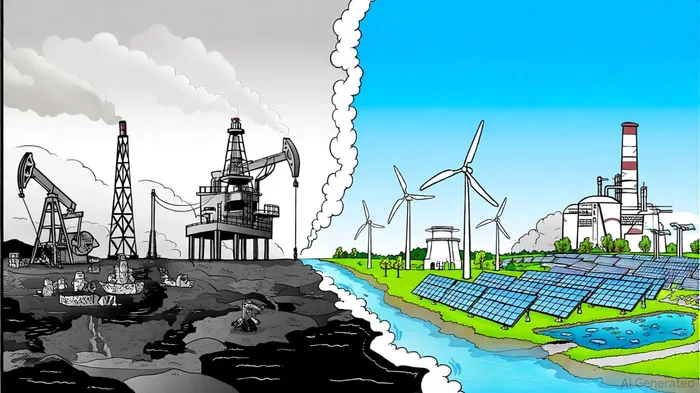
The global energy landscape is undergoing a seismic transformation. For decades, oil and gas dominated capital flows, geopolitical strategies, and economic planning. But today, a new paradigm is emerging: the reallocation of capital from fossil fuels to clean energy infrastructure is accelerating, reshaping markets, and redefining what it means to be “energy-secure.” This shift is not merely a response to climate pressures but a strategic recalibration driven by economics, technology, and policy.
According to a report by BloombergNEF, global clean energy investment surged by 17% in 2023, reaching $1.8 trillion, with renewable energy, electric vehicles (EVs), hydrogen, and carbon capture leading the charge [3]. By 2024, the momentum has only intensified. The International Energy Agency (IEA) notes that clean energy investments are projected to outpace fossil fuel spending by a staggering 10:1 ratio this year, up from 2:1 in 2015 [2]. This marks a pivotal inflection point: half of all energy supply investments in 2023 went to clean energy, and that share is expected to rise to over 70% by 2030 [1].
The data tells a story of rapid decarbonization. Fossil fuel capital expenditures (capex) have stagnated, while cleantech capex has surged. The net growth in energy capex now averages just 2% annually, a far cry from the explosive growth seen in the early 2000s oil and gas boom [1]. Meanwhile, solar photovoltaic (PV) investment alone is set to exceed $500 billion in 2024, outpacing all other generation technologies combined [2]. Grid and storage infrastructure, once overlooked, are now receiving $400 billion in annual investment—a critical enabler for integrating renewables into the energy mix [2].
Yet, the transition is far from uniform. Emerging Market and Developing Economies (EMDEs), excluding China, accounted for only 15% of global clean energy spending in 2024 [2]. This imbalance underscores a critical challenge: while developed nations are racing to build resilient clean energy systems, many EMDEs remain dependent on outdated infrastructure and foreign capital. However, there are signs of progress. India, Brazil, and parts of Africa have seen notable growth in clean energy investment, driven by policy reforms and improved grid infrastructure [2].
The strategic reallocation of capital is not without its complexities. For investors, the shift presents both risks and opportunities. On one hand, stranded assets in fossil fuel sectors loom as a potential threat. On the other, the clean energy transition offers a $1.8 trillion annual market by 2030—a scale that dwarfs traditional energy sectors [1]. The winners will be those who can navigate the supply chain bottlenecks, regulatory shifts, and technological innovations that define this new era.
For policymakers, the challenge is to ensure that the transition is inclusive. Clean energy must not become a luxury for the developed world. Public-private partnerships, green bonds, and technology transfer agreements will be essential to bridge the gap between ambition and execution in EMDEs.
As the world moves toward a post-petro era, the message is clear: capital is flowing to the future. The question is no longer whether the energy transition will happen, but how quickly—and who will lead the charge.







Comentarios
Aún no hay comentarios