
Fueling Uncertainty: The Northeast Heating Oil Reserve Sale and Its Market Implications
The Trump administration's proposal to liquidate the NortheastNECB-- Heating Oil Reserve (NEHR)—a 1 million-barrel emergency stockpile of ultra-low sulfur diesel—has ignited a heated debate over energy security, market volatility, and the role of government reserves in stabilizing fuel prices. As Congress weighs the sale, investors must assess how this move could reshape energy markets, inflation dynamics, and emergency preparedness, while identifying opportunities in energy infrastructure and alternative heating solutions.
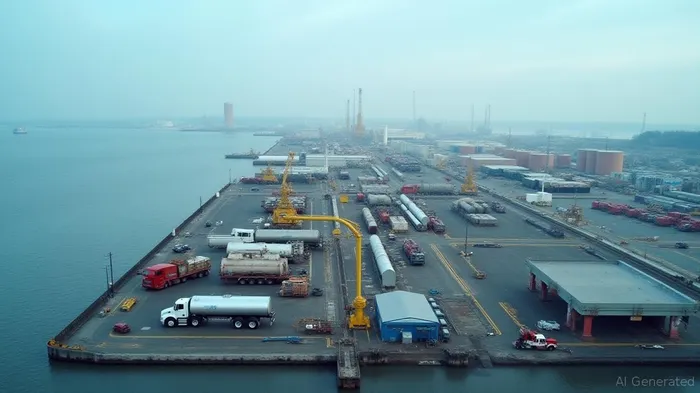
Immediate Market Impact: Diesel Prices and Inflation
The sale of 1 million barrels of diesel from the NEHR could temporarily depress regional fuel prices, particularly in the Northeast, where winter heating costs are a major inflationary pressure. Historically, the reserve has been activated only once—in 2012 during Hurricane Sandy—to stabilize supply chains. With diesel prices already under pressure from weak global demand and oversupply in refined products, the release of this inventory could amplify downward price pressure.
Investors should monitor diesel futures contracts (e.g., the NYMEX ULSD) for signs of a price dip in the coming months. However, the long-term strategic risk is clear: reduced government stockpiles could amplify price spikes during supply disruptions, such as winter storms or infrastructure failures. This creates a “volatility trap” for energy consumers and businesses reliant on stable fuel costs.
Strategic Energy Security Risks
The NEHR's closure underscores a broader shift toward privatizing energy reserves, prioritizing fiscal austerity over crisis preparedness. While the administration argues the sale could generate $86 million for deficit reduction, critics warn that eliminating this regional buffer leaves the Northeast vulnerable to supply shocks.
The Northeast's reliance on just-in-time fuel deliveries—compounded by its aging pipeline network—means even minor disruptions could trigger shortages. For instance, a winter storm in 2021 caused gas rationing in New England, highlighting the fragility of regional supply chains. Without the NEHR, such crises could force prices to surge, disproportionately affecting households and small businesses.
Investment Opportunities: Energy Infrastructure and Alternatives
The NEHR sale presents two distinct investment themes:
1. Energy Infrastructure Hardening: Companies building resilient distribution networks, such as pipeline operators and terminal developers, stand to benefit as utilities and governments seek to mitigate supply risks.
- Stock Spotlight: OKE (Kinder Morgan), a leader in midstream energy infrastructure, could see demand for its storage and pipeline assets.
- Stock Spotlight: VLO (Valero Energy), a major refiner with terminals in the Northeast, may gain market share if the NEHR's diesel floods regional markets.
- Alternative Heating Solutions: The push to reduce reliance on fossil fuels—accelerated by the NEHR's potential closure—creates opportunities in renewable heating systems (e.g., geothermal, heat pumps) and energy efficiency.
- Stock Spotlight: BLDP (Ballard Power Systems), a pioneer in hydrogen fuel cells for heating and transport, could see increased adoption in regions seeking decarbonization.
- ETF Play: The PowerShares Global Clean Energy Portfolio (PBW) tracks companies advancing sustainable energy solutions, including heating alternatives.
Risks and Considerations
- Congressional Approval: The NEHR sale requires legislative action, and bipartisan opposition (particularly from Northeast senators) could delay or block it. Investors should track Senate Energy Committee hearings and vote timelines.
- Market Overreaction: A sudden diesel price drop could misprice risks, creating short-term buying opportunities in energy equities. Conversely, an unexpected crisis could trigger a short squeeze in energy stocks.
- Supply Chain Dynamics: The NEHR's diesel is ultra-low sulfur, a blend critical for winter heating. Its sale might disrupt regional refining margins, favoring refiners with flexible production capabilities.
Conclusion: Act with Caution, Act with Clarity
The NEHR sale is a catalyst for rethinking energy security and market resilience. Investors should:
1. Hedge against volatility by shorting diesel futures if the sale proceeds or take long positions in energy infrastructure stocks.
2. Position for decarbonization by allocating to clean energy firms offering heating alternatives to fossil fuels.
3. Monitor geopolitical and weather risks, as any disruption to Northeast supply chains could reverse the market's current complacency.
The clock is ticking. As Congress debates the NEHR's fate, investors who act swiftly to capitalize on this inflection point in energy policy will be best positioned to navigate the stormy seas of fuel markets.
Data queries and visuals generated via financial APIs (e.g., Bloomberg, TradingView) and energy market analytics tools.







Comentarios
Aún no hay comentarios