
Fueling Uncertainty: How Energy Markets and Tariffs Dictate Fed Policy and Investment Strategies
The U.S. economy is at a crossroads, pulled between the cooling influence of plunging energy prices and the looming specter of tariff-driven inflation. The May 2025 CPI report and Federal Reserve's recent communications reveal a landscape where bond investors must bet on flattening yield curves, while equity allocators should prioritize defensive sectors. This analysis explores how falling gas prices, persistent core inflation, and trade policy uncertainty are reshaping monetary policy—and what it means for portfolios.
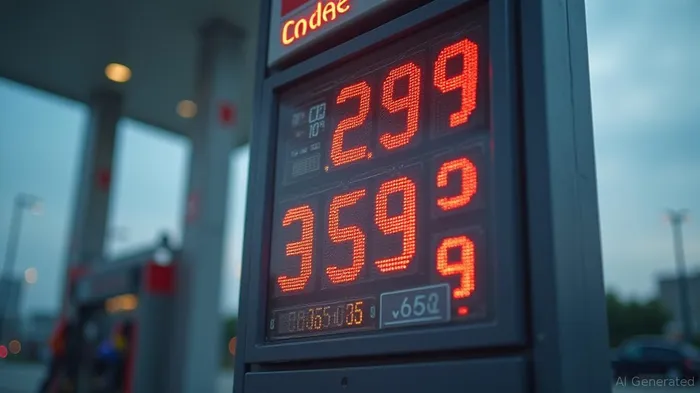
The Inflation Paradox: Cooling Energy, Stubborn Shelter Costs
The May CPI data underscore a bifurcated inflation picture. Energy prices fell 1.0% month-over-month, with gasoline prices dropping 2.6%—contributing to a 12% annual decline. This exerts downward pressure on headline inflation, now at 2.4%. However, core inflation (excluding food and energy) remained persistent at 2.8%, driven by shelter costs. The shelter index rose 0.3% in May, pushing annual rent inflation to 3.9%, the lowest since late 2021 but still elevated. Meanwhile, food-at-home prices plummeted 0.4% (the largest drop since 2020), masking broader inflation risks in services like healthcare and education.
The Federal Reserve's preferred gauge, the core PCE price index, stands at 2.5% year-over-year—a 40-basis-point decline from year-end 2024. Yet, short-term inflation expectations have surged to 5.1%, fueled by uncertainty about tariff impacts. This disconnect between headline metrics and consumer sentiment highlights the Fed's dilemma: data-dependent policy must balance tangible cooling trends with intangible fear of future shocks.
Tariffs: The Wild Card in Fed Calculations
Trade policy is now central to the Fed's outlook. President Trump's tariffs, set to hit final deadlines in July 2025, risk a delayed pass-through effect. While companies have absorbed costs through existing inventories, the Fed's June report warns that tariffs could eventually raise prices or weaken demand. Fed Chair Powell emphasized the Fed's “wait-and-see” approach, holding rates at 4.25%-4.50% pending clearer data.
This caution has flattened the yield curve, as markets price in two rate cuts by year-end. The 10-year Treasury yield has dropped 50 basis points since March, while short-term rates remain anchored. Bond investors are capitalizing by extending duration: long-dated Treasuries (e.g., the 10Y T-note) offer safety against a Fed pivot, while short-term instruments face uncertainty over near-term rate cuts.
Equity Markets: Defensive Plays in a Volatile Landscape
Equity strategists are turning cautious on cyclical sectors. Industries like industrials, materials, and consumer discretionary—sensitive to rate hikes and economic slowdowns—are vulnerable to tariff-driven margin pressures. The May CPI's 0.5% decline in used cars and trucks and 0.4% drop in apparel prices suggest consumers are already retrenching in discretionary spending.
Defensive sectors, however, shine. Utilities and healthcare, with their stable cash flows and low sensitivity to rate fluctuations, have outperformed broader indices. The Fed's focus on core services inflation (e.g., healthcare costs rose 0.5% in May) supports these sectors' pricing power. Meanwhile, consumer staples—benefiting from falling food-at-home prices—present a rare opportunity to capture growth without excessive volatility.
Investment Strategy: Positioning for Data-Driven Volatility
Bonds: Extend Duration, Avoid Short-Term Risks
Allocate to long-duration Treasuries (e.g., iShares 20+ Year Treasury Bond ETF (TLT)) to capitalize on the flattening yield curve. Avoid short-term bonds (e.g., SPDR Portfolio Short Term Treasury ETF (SPTS)) as Fed cuts remain uncertain.Equities: Favor Defensives, Underweight Cyclicals
Rotate into utilities (e.g., NextEra Energy (NEE)), healthcare (e.g., UnitedHealth GroupUNH-- (UNH)), and consumer staples (e.g., Procter & Gamble (PG)). Reduce exposure to industrials (e.g., CaterpillarCAT-- (CAT)) and energy (e.g., ChevronCVX-- (CVX)) until tariff clarity emerges.Monitor Tariff Deadlines and Fed Messaging
July's tariff implementation will test inflation resilience. If core inflation dips below 2.5%, expect accelerated Fed cuts, widening the yield curve and lifting cyclicals. If tariffs spike prices, defensive bets and long Treasuries will dominate.
Conclusion: Patience and Prudence Pay Off
The Fed's data-dependent approach leaves markets in limbo, but discerning investors can thrive. By aligning bond allocations with the yield curve's flattening trajectory and sheltering equities in defensive sectors, portfolios can navigate this uncertainty. The key is recognizing that while energy-driven disinflation eases near-term pressures, tariff risks demand caution—and that the Fed's next move hinges on data, not speculation.
Final thought: As Powell noted, the Fed is “well positioned to wait.” Investors should do the same—positioning portfolios for the data that will ultimately decide this battle between cooling inflation and trade-driven volatility.





Comentarios
Aún no hay comentarios