
Fueling Resilience: India's Strategic Oil Reserves Expansion and Its Global Investment Implications
The geopolitical volatility of the Middle East, underscored by escalating Iran-Israel tensions, has thrust energy security to the forefront of global policy agendas. For India, which imports 85% of its crude oil—40% of which traverses the Strait of Hormuz—expanding its Strategic Petroleum Reserves (SPRs) to 90 days of consumption by 2025 is not just an infrastructure project but a geopolitical imperative. This initiative, aligning with International Energy Agency (IEA) guidelines, opens compelling investment opportunities in engineering, energy storage, and global partnerships. Let's dissect the risks, rewards, and actionable strategies for investors.
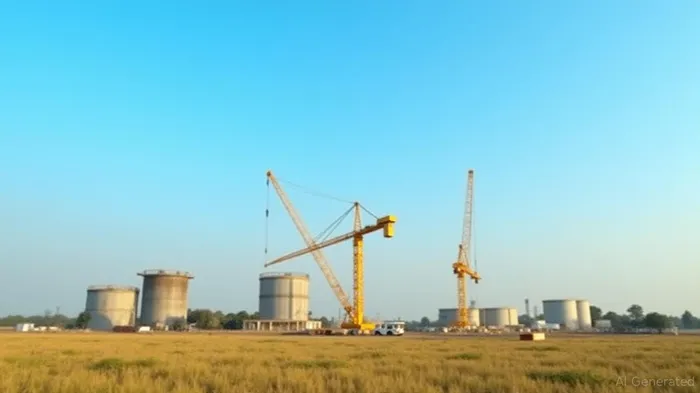
The Expansion Blueprint: From 9 Days to 90 Days
India's current SPR capacity of 5.3 million metric tons (MMt) covers just 9.5 days of oil needs—a stark contrast to its 2025 target. The Phase II expansion, adding 6.5 MMt across new sites in Odisha and Karnataka, is critical. However, delays in land acquisition at Chandikhol and regulatory hurdles have introduced execution risks. To accelerate progress, the government is subsidizing up to 60% of construction costs and inviting global firms like UAE's ADNOC, which has leased 5.86 million barrels at Mangalore.
By 2025, India aims to reach 13.32 MMt capacity, covering 22 days of consumption—a milestone that underscores its long-term goal of tripling SPR capacity to 15 MMt within a decade. This phased approach addresses both immediate geopolitical threats and structural import dependency.
Key Data Insight: India's crude import bill hit $158 billion in FY23, up from $88 billion in 2015. A 90-day SPR buffer could reduce fiscal vulnerability to price spikes, offering a compelling macroeconomic tailwind.
Why Geopolitics Drives the Need for Speed
The Strait of Hormuz, through which 20% of global oil flows, is a geopolitical flashpoint. Recent attacks on shipping lanes and Iran's threats to block the strait highlight the fragility of energy supply chains. With 40% of India's crude transiting this chokepoint, a robust SPR acts as a “financial insurance policy.”
The Phase III+ expansions, which will integrate with renewable energy initiatives, also position India to balance hydrocarbon reliance with net-zero goals. However, challenges remain: resolving land disputes, modernizing refining capacity, and avoiding regulatory missteps (e.g., crude export bans) are critical to execution.
Investment Themes: Infrastructure, Partnerships, and Diversification
- Engineering and Construction Plays:
Companies like Engineers India Ltd (EIL) are front-runners in designing and executing SPR infrastructure. EIL's expertise in oil storage and pipeline projects makes it a prime beneficiary of Phase II and III contracts.
Investment Thesis: EIL's order backlog and government prioritization of energy security could drive earnings growth, even as geopolitical risks persist.
Strategic Storage Partnerships:
Public-private partnerships (PPPs) under the DBFOT (Design-Build-Finance-Operate-Transfer) model offer investors exposure to SPR assets. Foreign firms like ADNOC, which leases SPR capacity, signal a trend toward shared risk-reward models. Indian firms with storage expertise, such as GAIL India or Reliance Industries, could also secure lucrative contracts.Global Oil Major Collaborations:
ADNOC's $1.2 billion investment in India's SPR is a template for partnerships. Investors should track firms with ties to Middle Eastern or Russian oil majors, which could gain access to discounted crude supplies.
The Case for Diversification Beyond Oil
While SPR expansion mitigates hydrocarbon risks, India's energy mix is evolving. The government's push for renewable energy (targeting 500 GW renewables by 2030) and its $300 billion National Monetization Pipeline (NMP) create complementary opportunities in green infrastructure and grid modernization.
Risks to the Investment Case
- Execution Delays: Land acquisition bottlenecks and cost overruns could stretch timelines.
- Global Oil Prices: A prolonged bear market could reduce the perceived urgency for SPRs.
- Policy Shifts: Changes to crude export rules or fiscal incentives might disrupt project economics.
Final Recommendation: Position for Energy Resilience
Investors should overweight engineering firms like EIL and storage infrastructure plays, while maintaining a satellite allocation to energy transition stocks. The SPR expansion is a “buy the dip” opportunity in Indian industrials, with geopolitical tailwinds ensuring sustained demand.
For contrarian investors, the volatility in oil prices and SPR-linked equities could present entry points in the next 6–12 months. As India shores up energy security, its partners—both local and global—are set to profit handsomely.
In an era of energy insecurity, India's strategic foresight is not just about barrels of oil—it's about rewriting the rules of global energy resilience.
Disclaimer: This analysis is for informational purposes only. Investors should conduct their own due diligence and consider consulting a financial advisor.







Comentarios
Aún no hay comentarios