
Fueling the Future: RYAM and Verso's Jesup Project Could Be a Game-Changer for Sustainable Aviation
The race to decarbonize aviation is heating up, and one project in Jesup, Georgia, is positioning itself as a leader in the global shift toward sustainable aviation fuel (SAF). Rayonier AdvancedRYAM-- Materials (NASDAQ: RYAM) and VersoVERO-- Energy's collaboration to build an e-SAF facility could be a breakthrough—not just for reducing carbon emissions but for proving that green fuel production can turn a profit. Let's dive into this strategic partnership and why it's worth watching closely.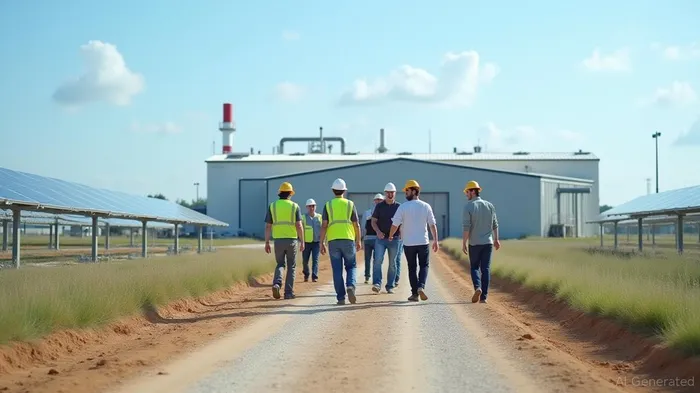
### Why This Project Matters: Decarbonization Meets Profit Potential
The aviation industry is under immense pressure to slash emissions, with the International Air Transport Association (IATA) targeting net-zero carbon emissions by 2050. Enter e-SAF, a synthetic fuel produced using renewable energy, green hydrogen, and captured CO₂. Unlike traditional SAF, which relies on agricultural waste, e-SAF can be scaled without competing with food production—a critical edge in a world facing climate and resource crises.
RYAM and Verso's project in Jesup combines three key elements:
1. Biogenic CO₂ Capture: RYAM's existing Georgia plant produces biogenicBIIB-- CO₂—a carbon-neutral byproduct of its cellulose manufacturing—as well as biomass.
2. Renewable Hydrogen: The facility will use solar or wind energy to split water into hydrogen.
3. e-Fuel Production: These inputs will be converted into e-SAF via Power-to-Liquid technology, a process that could reduce lifecycle emissions by up to 90% compared to jet fuel.
This synergy is a masterstroke. RYAM gets a new revenue stream from its CO₂ waste, while Verso Energy gains access to a strategic U.S. site to test a replicable model. The result? A facility that's both environmentally and financially sustainable.
### The Numbers: A High-Risk, High-Reward Gamble
The project's success hinges on securing €1–2 billion in funding, a daunting hurdle for any green energy venture. But Verso Energy isn't going it alone. Their partnership with Rely—a joint venture of Technip Energies and John Cockerill—aims to standardize e-Fuel production, slashing costs through modular designs and advanced carbon capture tech (like Shell's CANSOLV system).
The U.S. market is ripe for growth: SAF capacity has doubled since 2023, hitting 30,000 barrels per day by early 2025. Yet e-SAF plants like Jesup remain scarce, with only Infinium's Project Roadrunner nearing final investment decisions (FIDs). If the Jesup feasibility study (due within 18–24 months) delivers, this could be one of the first U.S. e-SAF plants to break ground—a major win for RYAM's stock.
### Risks? Absolutely—But the Odds Are Improving
- Capital Costs: The €1–2 billion price tag is a barrier, but RYAM's existing infrastructure lowers upfront expenses.
- Policy Support: The EU's ReFuelEU mandate and U.S. tax incentives (like the Renewable Fuel Standard) are pushing airlines to buy SAF.
- Technical Hurdles: Scaling up CO₂ capture and hydrogen production is unproven at this level—but Rely's engineering expertise mitigates this risk.
### Cramer's Bottom Line: Buy RYAM If This Works
This isn't a “buy now” play. Wait for the feasibility study results. If they're positive, RYAM's stock could surge as investors bet on its role in a $100+ billion global e-SAF market. But if the project hits delays or cost overruns, this could be a cautionary tale.
Historical data shows that positive announcements like this have historically driven an average return of 6.3% over 60 trading days, though investors should note a maximum drawdown of 12.5% during that period. This suggests that while volatility is inherent, the strategy has delivered gains in past similar events—bolstering the case for patience ahead of the Jesup feasibility outcome.
Investment Takeaway:
- Bull Case: Successful FID by early 2027 → RYAM's stock climbs 50–100% as it monetizes CO₂ waste.
- Bear Case: Funding gaps or regulatory hurdles → RYAM's shares stagnate or drop as the project stalls.
### Final Thought: A Test of Decarbonization's Viability
The Jesup project isn't just about fuel—it's a stress test for whether green energy can be profitable without heavy subsidies. If RYAM and Verso crack this code, they'll set a template for industries worldwide. For investors, this is a high-risk bet, but one that could pay off handsomely if the world finally gets serious about decarbonization. Keep your eyes on that feasibility study—this is one to watch closely.





Comentarios
Aún no hay comentarios