
FuelCell Energy's Stock Dip: Strategic Entry Point or Warning Signal Amid Renewable Energy Shifts?
The recent after-hours decline in FuelCell Energy's stock has sparked renewed debate about the long-term viability of fuel cell technology in the rapidly evolving renewable energy landscape. , according to MarketBeat. This analysis evaluates whether the stock's pullback presents a strategic entry point or signals deeper risks for investors navigating the renewable energy transition.
FuelCell Energy's Financial Resilience and Strategic Shifts
FuelCell Energy's 2025 performance highlights its operational resilience. , , outperformed analyst expectations. Its liquidity position has also strengthened, as of October 2025. These metrics suggest the company is better positioned to fund its strategic pivot toward the AI data center market, where its carbonate fuel cell technology offers reliable on-site power solutions according to MarketBeat.
Notably, FuelCell EnergyFCEL-- secured a high-profile contract to deliver 22 fuel cell modules to South Korea's Gyeonggi Green Energy, part of the world's largest fuel cell park according to MarketBeat. This development underscores the company's ability to scale its offerings in niche markets. However, for Q4 2025, reflecting ongoing profitability challenges.
Industry Trends: Fuel Cells in the Shadow of Solar and Wind
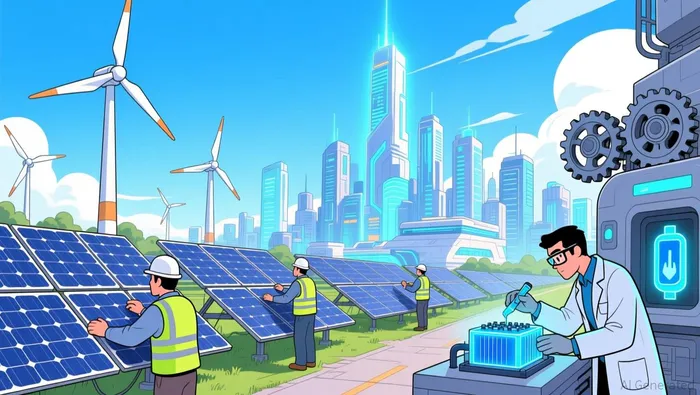 While FuelCell Energy's fundamentals show promise, the broader fuel cell industry faces an uphill battle against the dominance of solar and wind energy. According to the International Energy Agency, , driven by falling costs and policy tailwinds. In contrast, , .
, . , . Wind energy is also gaining traction, according to IEA data. These trends highlight the economic and technical advantages of solar and wind, which benefit from mature supply chains, scalable manufacturing, and supportive policies like the U.S. according to Enkiai.
Fuel cells, according to Grand View Research, remain a niche player. Their adoption is concentrated in stationary applications (68.8% of the market in 2024) and transportation, where (PEMFC) dominate according to Grand View Research. However, challenges such as high capital costs, limited hydrogen refueling infrastructure, and policy uncertainties continue to hinder broader integration according to Enkiai.
Strategic Entry Point or Cautionary Signal?
FuelCell Energy's recent stock decline, triggered by an amendment to its open market sale agreement, may reflect investor skepticism about its ability to compete in a market dominated by solar and wind. Yet, the company's focus on data centers-a sector with growing demand for reliable, low-carbon power-positions it to capitalize on AI-driven energy needs. Its strong liquidity and contract wins also suggest operational stability.
However, the broader industry context raises questions. according to Enkiai, fuel cells still lag in cost competitiveness and infrastructure development. For instance, hydrogen refueling networks remain capital-intensive, and grid limitations constrain renewable energy adoption. These factors could delay the commercialization of fuel cell technologies, even as demand for clean energy grows.
Conclusion: Balancing Opportunity and Risk
FuelCell Energy's stock dip may present a strategic entry point for investors willing to bet on its niche positioning in the data center market and its improving financials. However, the company's long-term success hinges on broader industry trends. The renewable energy sector's rapid growth, dominated by solar and wind, underscores the need for fuel cell firms to demonstrate cost parity and scalability.
For now, FuelCell Energy's strategic pivot and liquidity position offer a degree of resilience. Yet, investors must weigh these positives against the industry's structural challenges. In a market where solar and wind are the clear front-runners, fuel cells remain a high-risk, high-reward bet-particularly for those with a long-term horizon and tolerance for volatility.





Comentarios
Aún no hay comentarios