
FuelCell Energy’s Mixed Q3 Performance: Operational Gains Amid Financial Strains for Clean Energy Investors
FuelCell Energy (NASDAQ: FCEL) has delivered a mixed performance in its recent quarterly results, reflecting both promising operational advancements and persistent financial headwinds. For clean energy investors, the company’s Q3 2023 and Q3 2024 reports underscore a critical tension between long-term strategic progress and near-term profitability challenges.
Operational Progress: Strategic Expansion and Technological Milestones
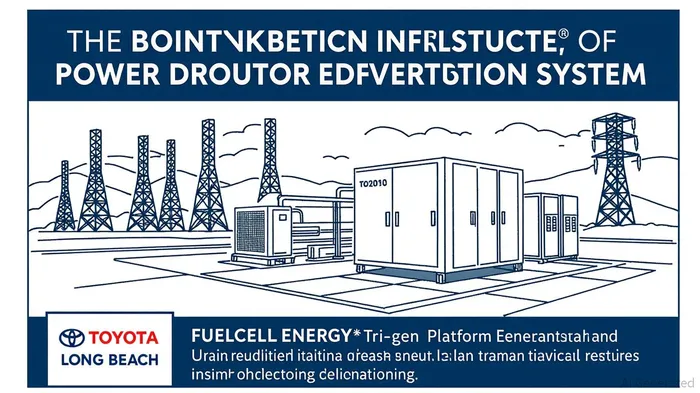
FuelCell Energy’s operational achievements in Q3 2023 and beyond highlight its commitment to scaling clean energy solutions. The completion of the Toyota Long Beach Tri-gen project marked a pivotal milestone, with the platform now producing power, water, and high-purity hydrogen for mobility applications [1]. This project not only validates the commercial viability of FuelCell’s tri-generation technology but also positions the company as a key player in the hydrogen economy.
Geographically, South Korea remains a focal point. In Q3 2024, the company secured a $73 million long-term service agreement with Noeul Green Energy in 2023 and a $1.2 billion backlog through a commercial agreement with Gyeonggi Green Energy (GGE) [1][2]. The latter includes 42 upgraded replacement fuel cell modules and operations for GGE’s Hwaseong Baran Industrial Complex, the world’s largest single-site fuel cell power platform [1]. These contracts signal growing demand for FuelCell’s modular, scalable solutions in Asia, a market critical to its future growth.
Technologically, the company extended its Joint Development Agreement with ExxonMobil through March 2024 to refine Generation 2 fuel cell technology [1]. Additionally, FuelCellFCEL-- is exploring partnerships in data centers and eFuels, aiming to diversify revenue streams beyond traditional power generation [2]. By Q2 2025, service agreement revenues had surged to $8.1 million, driven by module exchanges with Korea Southern Power Company [3], indicating maturation of its recurring revenue model.
Financial Challenges: Revenue Declines and Persistent Losses
Despite operational momentum, FuelCell’s financials remain under pressure. Q3 2023 revenues of $25.5 million represented a 41% decline from $43.1 million in Q3 2022, largely due to the absence of $18 million in module sales to Korea Fuel Cell Co., Ltd. (KFC) [1]. While service and generation revenues increased slightly, the lack of product sales exacerbated a $23.6 million net loss for the quarter [1].
The situation worsened in Q3 2024, with total revenues falling to $23.7 million and a net loss expanding to $35.1 million [2]. Adjusted EBITDA remained negative at $20.1 million, reflecting ongoing cost pressures [2]. The company’s reliance on service agreements and project milestones, rather than consistent product sales, has created volatility in its revenue streams.
A critical metric for evaluating efficiency—revenue per kilowatt—remains opaque. While FuelCell deployed 20 megawatts using 8 SureSource 3,000 platforms in Q3 2023 [1], translating to roughly $1.28 million per megawatt in that quarter, the absence of granular data complicates assessments of scalability. Investors must also weigh the company’s restructuring plan, which aims to reduce operating expenses by 30% annually [3], against its need to fund R&D and global expansion.
Balancing the Equation: Implications for Investors
FuelCell Energy’s trajectory presents a classic case of long-term potential versus short-term execution risks. On one hand, its backlog of $1.2 billion [2] and strategic partnerships in hydrogen and data centers suggest a robust pipeline. On the other, recurring net losses and declining product revenues raise questions about its ability to achieve profitability without sustained capital infusions.
For clean energy investors, the key variables will be:
1. Execution on Backlog: Can FuelCell convert its $1.2 billion backlog into consistent cash flows?
2. Cost Discipline: Will the 30% operating expense reduction target improve margins?
3. Technology Differentiation: Can Generation 2 advancements or eFuels partnerships unlock new markets?
Conclusion
FuelCell Energy’s Q3 results illustrate a company at a crossroads. Operational progress in South Korea and hydrogen innovation is undeniable, but financial sustainability remains unproven. Investors must balance optimism about its clean energy vision with skepticism about its path to profitability. For now, the stock appears best suited for risk-tolerant investors who prioritize long-term strategic value over near-term returns.
**Source:[1] FuelCell EnergyFCEL-- Reports Third Quarter of Fiscal 2023 Results [https://investor.fce.com/press-releases/press-release-details/2023/FuelCell-Energy-Reports-Third-Quarter-of-Fiscal-2023-Results/default.aspx][2] Earnings call: FuelCell Energy reports Q3 financials, eyes global expansion [https://www.investing.com/news/stock-market-news/earnings-call-fuelcell-energy-reports-q3-financials-eyes-global-expansion-93CH-3605466][3] FuelCell Energy, Inc. (FCEL) Stock Price, ... [https://www.datainsightsmarket.com/companies/FCEL]





Comentarios
Aún no hay comentarios