
Fuel Price Policy as a Catalyst for European EV Market Acceleration: A Strategic Investment Outlook
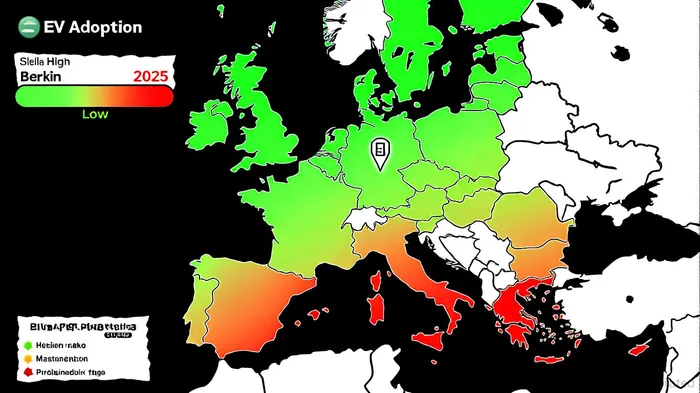
The European Union's transition to electric vehicles (EVs) has entered a critical acceleration phase, driven by a confluence of fuel price dynamics, stringent climate policies, and infrastructure investments. As of 2025, the region is on track to meet its 2035 emissions targets, with EVs projected to dominate 99% of new car sales by that year [3]. This transformation is not merely a technological shift but a policy-engineered response to volatile fuel markets and environmental imperatives. For investors, understanding the interplay between fuel price policy and EV adoption is key to identifying high-impact opportunities in this rapidly evolving sector.
Fuel Price Trends: A Double-Edged Sword
Fuel prices have long been a silent driver of consumer behavior. From 2023 to 2025, the EU witnessed a 12% decline in diesel vehicle sales, a stark contrast to the 20% annual growth in EV registrations [2]. This shift is partly attributable to rising fuel costs, which have made internal combustion engine (ICE) vehicles increasingly unattractive. For instance, diesel's market share plummeted from 55% in 2012 to just 12% in 2023, driven by higher taxation and public awareness of emissions [3].
However, fuel price volatility introduces uncertainty. While high prices incentivize EV adoption, sudden drops—such as the 15% decline in 2024 due to global oil market fluctuations—can temporarily stall momentum [1]. This underscores the need for complementary policies to stabilize the transition.
Government Policies: Incentives and Infrastructure
The EU's regulatory framework has been instrumental in accelerating EV adoption. The 2035 zero-emission mandate, coupled with the EU's requirement for fast-charging stations every 60 kilometers by 2025, has created a clear roadmap for automakers and investors [3]. Yet, the effectiveness of these policies varies by country.
Germany, for example, saw a 20% increase in EV price premiums for SUVs in 2024 after phasing out purchase subsidies [2]. In contrast, Norway's 18% EV sales share in 2023 was bolstered by tax exemptions, toll waivers, and extensive public charging networks [3]. Such regional disparities highlight the importance of localized incentives. Austria's €1,800 subsidies for home charging stations and Belgium's 15% tax credit for residential systems exemplify how tailored policies can address infrastructure gaps [2].
Charging Infrastructure: The Hidden Bottleneck
While EV sales are surging, charging infrastructure remains a critical constraint. By 2023, the EU had installed 650,000 public charging points, but private infrastructure is expected to grow to 37 million by 2035, with 85% in residential areas [4]. This shift toward decentralized charging is supported by smart grid technologies, which optimize energy use and reduce costs.
Corporate investments are also pivotal. Companies like Roche are installing charging points at headquarters, aligning sustainability goals with employee needs [4]. For investors, this trend signals opportunities in smart charging solutions and grid management software.
Regional Variations and Market Dynamics
The EU's EV landscape is far from uniform. Portugal's 18% EV sales share in 2023 was driven by aggressive tax cuts, while Spain lagged at 10% despite similar subsidies [3]. These differences reflect varying levels of policy execution and public acceptance.
Germany's recent slowdown—despite being the third-largest EV market—demonstrates the risks of inconsistent policy. The phase-out of subsidies and delays in the 2025 emissions target led to a 2 million BEV shortfall over 2025-2027 [1]. Conversely, Nordic countries like Iceland and Sweden, with robust infrastructure and tax incentives, are on pace to achieve 100% EV dominance by 2030 [3].
Future Outlook: Affordability and Asian Competition
Affordability will be the next frontier. While the EU's 2035 targets are ambitious, price premiums for EVs remain a barrier. The phase-out of subsidies in Germany and France has exacerbated this issue, with SUVs—now 20% more expensive than ICE equivalents—lagging in adoption [2]. However, the influx of affordable models from Asian manufacturers, such as BYD and Hyundai, is expected to narrow this gap by 2026 [3].
Strategic Investment Opportunities
For investors, the European EV market offers three key opportunities:
1. Policy-Driven Sectors: Tax incentives for charging infrastructure (e.g., Austria's €600 smart cable subsidies) and corporate ESG initiatives.
2. Smart Grid Technologies: Solutions for load management and bidirectional charging, critical for scaling private infrastructure.
3. Emerging Markets: Southern and Eastern Europe, where policy gaps present untapped potential for infrastructure developers.
The EU's commitment to decarbonization ensures long-term growth, but success will depend on harmonizing fuel price policies, infrastructure investments, and regional incentives. As Enerdata's EnerBlue scenario predicts, the region is poised to see EVs dominate 50% of the car fleet by 2035 [3]. For investors, the window to capitalize on this transition is narrowing—but the rewards are substantial.







Comentarios
Aún no hay comentarios