
The FTX Saga and the Evolving Risk Landscape in Crypto Custody and Governance
The collapse of FTX in 2022 remains a watershed moment for the crypto industry, exposing systemic vulnerabilities in custody practices and corporate governance. For institutional investors, the event underscored the urgent need to reevaluate due diligence frameworks in a sector where trust is both a commodity and a liability. As the industry evolves post-FTX, the interplay between regulatory reforms, technological safeguards, and institutional adaptability will define the next phase of crypto adoption.
The FTX Collapse: A Case Study in Systemic Failure
FTX's downfall was not merely a liquidity crisis but a governance and custody catastrophe. The exchange's commingling of customer funds with its sister firm, Alameda Research, allowed unchecked siphoning of billions in deposits, leaving clients with no recourse. This lack of transparency and segregation of assets highlighted the fragility of centralized custody models, where institutional investors had previously relied on exchange assurances according to industry analysis. The incident also revealed a glaring absence of independent oversight, with Sam Bankman-Fried's unchecked control over FTX's operations enabling a cascade of mismanagement.
Post-FTX Custody Reforms: From Exchange Risk to Institutional Resilience
In response to these failures, institutional investors have increasingly shifted toward third-party custody solutions. 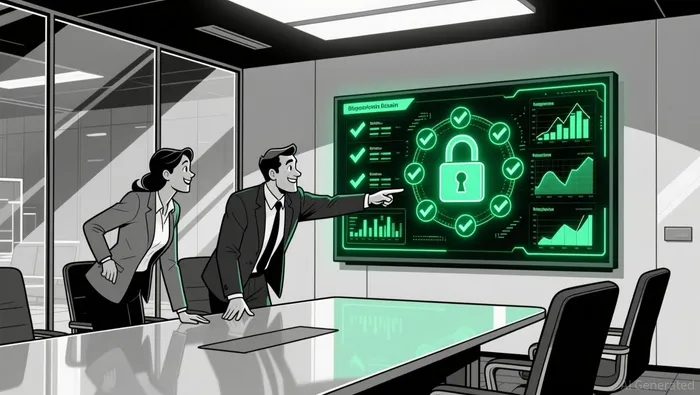 By 2025, the market for institutional-grade crypto custody had expanded to $3.28 billion, driven by demand for technologies like multi-signature wallets, hardware security modules (HSMs), and Multi-Party Computation (MPC) protocols according to market analysis. These solutions mitigate single points of failure and ensure asset segregation, addressing the vulnerabilities exposed by FTX. Major custodians such as Anchorage, BitGo, and BNY Mellon now offer insurance coverage ranging from $75M to $320M, further insulating investors from operational risks.
Regulatory clarity has also accelerated this shift. The U.S. SEC's proposed amendments to the Custody Rule under the Investment Advisers Act now explicitly extend safeguards to crypto assets, mandating stricter segregation and insolvency protections. Similarly, the New York Department of Financial Services has reinforced legal frameworks for asset segregation, providing institutional investors with a clearer compliance roadmap according to industry reports. These measures, coupled with the SEC's no-action letter for state-chartered trusts acting as crypto custodians, signal a pragmatic regulatory approach according to legal analysis.
Governance Reforms: From Ambiguity to Frameworks
The post-FTX era has also seen significant legislative progress. The U.S. enacted the GENIUS Act in 2025, establishing a federal framework for dollar-backed stablecoins by requiring 100% reserve coverage with high-quality liquid assets. This legislation, alongside the CLARITY Act's delineation of digital assets as either securities or commodities, has reduced regulatory ambiguity and fostered institutional confidence according to market analysis. Internationally, the EU's Markets in Crypto-Assets (MiCA) regulation has standardized governance across member states, promoting cross-border legal certainty according to industry research.
These reforms address a critical lesson from FTX: the need for formal governance structures. The exchange's opaque corporate architecture-featuring over 100 subsidiaries with overlapping roles-exposed institutional investors to conflicts of interest and operational opacity. Post-FTX, firms are now prioritizing due diligence that scrutinizes corporate hierarchies, custody arrangements, and conflict-of-interest policies.
Institutional Due Diligence: Beyond Traditional Checks
The FTX collapse revealed the inadequacy of conventional due diligence in a sector characterized by rapid innovation and regulatory flux. Prominent investors like Temasek and Tiger Global conducted standard checks but failed to identify red flags such as FTX's commingling practices and Alameda's reliance on FTX's liquidity. This underscores the need for operational due diligence tailored to crypto's unique risks, including real-time asset verification, private key audits, and stress-testing of governance frameworks according to industry analysis.
Institutional investors are now adopting multi-layered approaches. For instance, advanced custody solutions integrate MPC technology to distribute key control among multiple parties, reducing the risk of unauthorized access according to expert analysis. Additionally, firms are leveraging blockchain analytics tools to monitor fund flows and detect anomalies, a practice that could have flagged FTX's asset misappropriation earlier.
The Road Ahead: Balancing Innovation and Caution
While regulatory and technological advancements have bolstered institutional confidence, challenges remain. The Bybit hack in 2025-a $1.5 billion theft-demonstrated that even post-FTX, cybersecurity threats persist according to security reports. Institutional investors must continue to prioritize custodians with robust insurance and multi-layered security protocols. Furthermore, the absence of a U.S. central bank digital currency (CBDC) has left privately issued stablecoins as a critical infrastructure layer, necessitating ongoing scrutiny of their reserve practices.
The FTX saga serves as a cautionary tale: in crypto, governance and custody are not optional but existential. For institutional investors, the path forward lies in redefining due diligence as a dynamic, adaptive process-one that integrates regulatory foresight, technological rigor, and a relentless focus on transparency.







Comentarios
Aún no hay comentarios