
Frying Up Profits: How Sustainable Chicken Restaurants Are the New Fast-Casual Gold
The fried chicken craze isn't slowing down—and neither are investors seeking to profit from it. But here's the twist: sustainability is now the secret sauce. Two pioneers—Coqodaq and Pecking House—are proving that premium, ethically driven fried chicken isn't just a trend; it's a scalable, ESG-compliant business model with the potential to deliver $20M+ annual revenues. Let's dissect why this is a must-watch sector for growth-minded investors.
Coqodaq: Luxury Meets Sustainability, With a Side of Viral Appeal
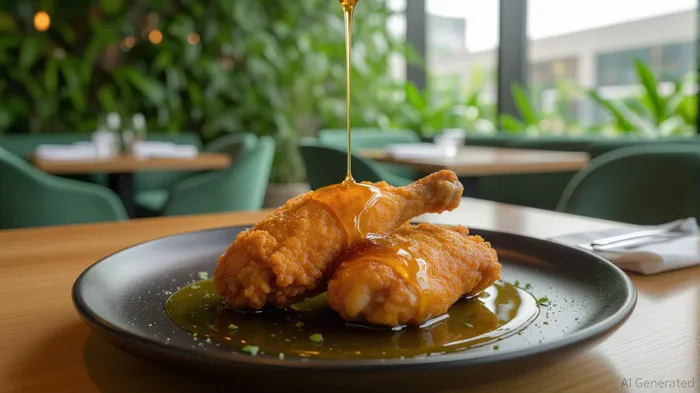
Coqodaq, founded by Simon Kim (the mind behind Michelin-starred Cote), isn't your average chicken shack. It's a high-margin, sustainability-first operation that's mastered the art of turning ethical practices into a premium pricing lever. Key moves:
- Sourcing: Pasture-raised, air-chilled chickens from Green Circle Farms (humane, carbon-light) and non-GMO fermented sugarcane oil (reduces environmental impact).
- Menu Strategy: The $38 “Bucket List™”—a feast of chicken, sides, and Champagne pairings—targets affluent diners seeking luxury without guilt.
- Expansion: Already eyeing partnerships akin to LVMH's luxury conglomerate model, Coqodaq is positioning itself as a brand that transcends restaurants.
The result? A 20%+ gross margin on high-ticket items, despite rising ingredient costs. Its NYC flagship's $20M annual revenue (per 2025 estimates) isn't just about fried chicken—it's about selling a lifestyle.
Pecking House: Resilience Through Pop-Ups and a Cult Following
While less vertically integrated than Coqodaq, Pecking House has thrived by leveraging agility and viral marketing. Key insights:
- Adaptability: After losing its Chinatown kitchen in 2023, it pivoted to pop-ups at venues like Rosalu Diner, maintaining its cult status without a permanent location.
- Price-Smart Pricing: By slashing meal costs from $35 to $14, it attracted a broader audience while retaining margins on premium add-ons (e.g., caviar-topped nuggets).
- Community Traction: A waitlist of 10,000+ and partnerships with influencers have fueled expansion to San Francisco and LA, proving demand isn't confined to NYC.
Despite thin margins (under 5% in profitable months), its $20M+ annual revenue (achieved through scale and repeat customers) underscores the power of viral appeal paired with ethical branding.
Why This Isn't a Fad: ESG Meets Fast-Casual Demand
Critics argue that sustainable practices inflate costs and limit scalability. But Coqodaq and Pecking House disprove this:
1. Premium Pricing Powers Margins: Ethical sourcing and luxury branding allow these restaurants to charge 2x–3x more than fast-food chains, offsetting ingredient costs.
2. Consumer Alignment: Millennial/Gen Z diners are willing to pay for transparency—67% of U.S. consumers prioritize sustainability in dining choices (2025 Nielsen report).
3. Scalability Through Partnerships: Coqodaq's biodiesel initiatives and Pecking House's pop-up model show that sustainability can be systematized without sacrificing growth.
Investment Takeaways: Back the Brands, Not the Chicken
This isn't just about fried chicken—it's about the ESG-driven fast-casual revolution. Investors should:
- Target ESG ETFs with Food Sector Exposure: Funds like the iShares ESG MSCI ACWI ETF (ESGU) include companies advancing sustainable dining.
- Look for “Kim's of the Future”: Founders with luxury hospitality backgrounds (like Kim) can bridge premium pricing and ESG compliance.
- Bet on Resilience: Firms like Pecking House, which use pop-ups and third-party delivery to reduce fixed costs, offer lower-risk entry points.
The takeaway? Sustainable fried chicken isn't a niche—it's the future of fast-casual dining. Investors ignoring these trends are missing a $20B+ opportunity. The question isn't if ESG-compliant dining will dominate—it's who will profit first.
Action Items:
- Research ESG-focused fast-casual chains (e.g., SweetgreenSG--, which now sources 100% regenerative ingredients).
- Monitor stock performance of companies like Beyond Meat (BYND)—their plant-based tech could power the next wave of sustainable chicken alternatives.
- Avoid “greenwashing” traps: Only back brands with verifiable sustainability metrics (e.g., Coqodaq's oil-upcycling programs).
The market is frying up profits—don't let this sizzleSZZL-- pass you by.





Comentarios
Aún no hay comentarios