
Frugality as a Strategic Advantage in Value Investing: Lessons from Hyundai's Chung Ju-Yung
In an era marked by inflationary pressures, supply chain disruptions, and volatile markets, the principles of frugality, operational discipline, and long-term thinking—once the cornerstone of Hyundai's meteoric rise—offer a compelling framework for identifying undervalued, resilient companies. These principles, exemplified by the visionary leadership of Chung Ju-Yung, remain as relevant today as they were in the 1960s, when Hyundai transformed South Korea's infrastructure landscape. For investors seeking to navigate today's economic turbulence, understanding how these traits translate into competitive advantages can unlock opportunities in overlooked sectors.
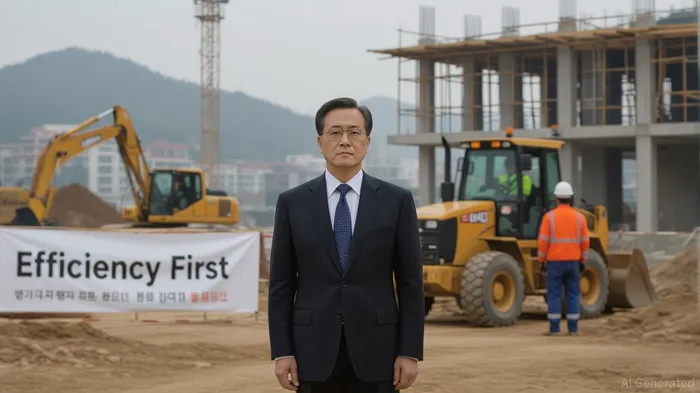
The Frugality-Driven Culture of Resilience
Chung Ju-Yung's philosophy was rooted in the belief that frugality is not a constraint but a catalyst for innovation. After rebuilding his auto repair shop in just three days following a fire in 1939, he institutionalized a mindset of minimizing waste across Hyundai's operations. This extended to double-sided printing, employee meal programs, and a relentless focus on cost optimization. For investors, this signals a critical insight: companies that embed frugality into their DNA often exhibit superior margins and adaptability during downturns.
Consider the case of Hyundai's 1965 investment in 2,000 cutting-edge construction machines—a bold move that nearly doubled South Korea's entire civilian construction fleet. While the upfront cost was staggering, the long-term payoff was undeniable: Hyundai dominated infrastructure projects like the Gyeongbu Expressway, leveraging scale and efficiency to outpace competitors. Today, investors can look for firms that prioritize capital efficiency, such as those with low debt-to-equity ratios or high return on invested capital (ROIC).
Operational Discipline: The Engine of Sustainable Growth
Chung's mantra of “shortening the time” underscored his commitment to operational discipline. By accelerating project timelines, Hyundai reduced interest costs and maximized cash flow—a strategy that resonates in today's inflationary environment, where time is money. For investors, this translates to a focus on companies with strong execution track records, such as those with consistent revenue growth or high project completion rates.
A modern parallel can be found in firms like Fluor CorporationFLR--, which mirrors Chung's emphasis on localized supply chains and employee empowerment. These traits are particularly valuable in industries like construction and manufacturing, where supply chain bottlenecks and labor shortages are acute. Investors should scrutinize metrics like inventory turnover and employee retention rates to gauge operational rigor.
Long-Term Vision: Building for the Future, Not the Quarter
Chung's refusal to chase short-term profits—instead prioritizing long-term infrastructure development—created a legacy of resilience. His employee-centric culture, which included free meals and open communication, fostered loyalty and productivity, ensuring Hyundai could scale rapidly during growth phases. For value investors, this highlights the importance of evaluating a company's long-term strategic goals, such as R&D investment or market expansion plans.
In today's AI-driven economy, firms that balance frugality with innovation—like those investing in automation while maintaining lean operations—are poised to outperform. For example, companies adopting localized manufacturing (a trend Chung championed) can mitigate global supply chain risks while maintaining cost discipline.
Applying Chung's Principles to Modern Investing
For investors, the key takeaway is clear: seek companies that treat frugality as a strategic asset rather than a cost-cutting tactic. Look for firms with:
1. High operational efficiency: Low overhead costs, strong ROIC, and disciplined capital allocation.
2. Cultural resilience: Employee engagement metrics, long-term incentive plans, and a history of navigating crises.
3. Strategic foresight: Investments in technology, localized supply chains, or sustainable practices that align with macroeconomic trends.
In inflationary markets, these traits act as a buffer against rising costs and margin compression. For instance, companies with low debt burdens and high cash reserves—often a byproduct of frugal management—can weather interest rate hikes more effectively.
Conclusion: Frugality as a Competitive Moat
Chung Ju-Yung's legacy demonstrates that frugality, when paired with operational discipline and long-term vision, creates a durable competitive moat. For investors, this means prioritizing companies that optimize resources, execute with precision, and think decades ahead. In today's unpredictable markets, such firms are not just survivors—they are the architects of the next industrial revolution.
By studying the principles that propelled Hyundai to global prominence, investors can identify undervalued opportunities in sectors where frugality and resilience are the ultimate differentiators. The next time you evaluate a stock, ask: Does this company build for the future, or just the quarter? The answer may reveal the next great value investment.







Comentarios
Aún no hay comentarios