
Frugality and Shifting Priorities Reshape Automotive and Tech Stock Valuations in 2025
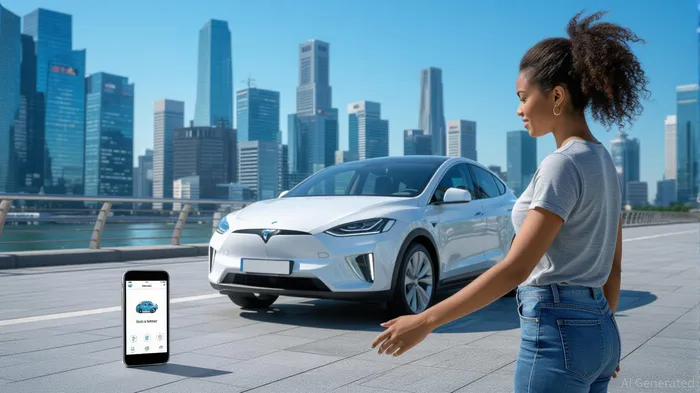
The global economic climate in 2025 is defined by a paradox: consumers are both more cautious and more discerning. As inflationary pressures persist and recession fears loom, spending behavior is evolving in ways that are reshaping the automotive and technology sectors. For investors, understanding these shifts is critical to identifying opportunities in a market where frugality and innovation collide.
Automotive: The Rise of Pragmatism Over Prestige
The automotive industry is witnessing a seismic shift in consumer priorities. According to the 2025 Global Automotive Consumer Study, demand for all-battery electric vehicles (BEVs) remains subdued, with 62% of consumers expressing hesitation over full electrification due to cost and infrastructure concerns. Instead, internal combustion engine (ICE) and hybrid vehicles are gaining traction, particularly in markets like the U.S. and Europe. This trend is compounded by a 40% increase in brand defection rates, as consumers prioritize value over brand loyalty.
For automakers, this means rethinking their product portfolios. Companies like FordF-- and ToyotaTM--, which have maintained a balanced approach to ICE and hybrid offerings, are outperforming peers who have overcommitted to BEVs. Meanwhile, luxury brands such as TeslaTSLA-- and BMW face a dual challenge: maintaining premium pricing while addressing cost-conscious buyers. Tesla's recent price cuts—despite record deliveries—highlight the fragility of its market position in a frugal environment.
Investors should also monitor the rise of mobility-as-a-service (MaaS). Younger consumers, particularly Gen Z, are increasingly favoring ride-hailing and car-sharing platforms over ownership. This shift threatens traditional automakers but creates opportunities for tech-driven mobility players. For example, Uber's Q2 2025 earnings showed a 18% year-over-year increase in trips, driven by its integration of delivery services and expanded partnerships.
Technology: The Paradox of Value and Splurging
The tech sector is experiencing a similar tug-of-war between frugality and indulgence. While 79% of global consumers report engaging in trade-down behaviors (e.g., seeking discounts or delaying purchases), 19% are cutting essentials to splurge on high-value tech products. This duality is reshaping demand for everything from smartphones to cloud services.
Tariffs and supply chain disruptions are amplifying these trends. The Trade Partnership Worldwide report reveals that U.S. consumers face a 31–69% price increase on key tech products, reducing purchasing power by $123 billion. In response, 58% of consumers are actively seeking cheaper alternatives, and 80% of Gen Z shoppers report using wholesale channels. This has created a surge in demand for budget-friendly tech brands like Temu and Walmart's online offerings.
Gen Z's influence is particularly noteworthy. As the wealthiest generation in history, their willingness to splurge on convenience-driven services—such as buy-now-pay-later (BNPL) options—is driving growth in fintech and e-commerce. For instance, 25% of Gen Z consumers in 2025 use BNPL for tech purchases, a trend that benefits platforms like AffirmAFRM-- and Klarna.
Ride-Hailing: A Tale of Two Strategies
The ride-hailing sector exemplifies the divergent paths companies are taking to adapt. Uber's Q2 2025 results underscore its dominance, with $46.8 billion in Gross Bookings and a 35% increase in Adjusted EBITDA. Its strategy of integrating delivery services and tightening operational efficiency has paid off, allowing it to maintain profitability even as consumers cut discretionary spending.
Lyft, by contrast, has focused on geographic expansion and partnerships. Its acquisition of FreeNow in Europe and alliances with United AirlinesUAL-- and BaiduBIDU-- have nearly doubled its addressable market. However, Lyft's Q2 earnings miss (EPS of $0.10 vs. expected $0.26) highlight the risks of prioritizing growth over short-term profitability.
For investors, the key is to assess which strategy aligns with long-term consumer behavior. Uber's focus on monetization and cross-platform engagement positions it as a safer bet in a frugal market, while Lyft's expansion could pay off if MaaS adoption accelerates.
Investment Implications
- Automotive: Prioritize companies with hybrid ICE-electric portfolios and strong MaaS partnerships. Avoid over-leveraged EV startups.
- Technology: Look for undervalued tech brands offering cost-effective solutions and BNPL integration. Avoid overpriced premium products.
- Ride-Hailing: Favor Uber's disciplined growth over Lyft's aggressive expansion, but monitor MaaS trends for long-term potential.
The 2025 market is a test of adaptability. As consumers redefine value, companies that balance innovation with affordability will emerge as leaders. For investors, the challenge is to spot these shifts early and position portfolios accordingly.





Comentarios
Aún no hay comentarios