
FRTY ETF: A High-Stakes Gamble on Mid-Cap Growth?
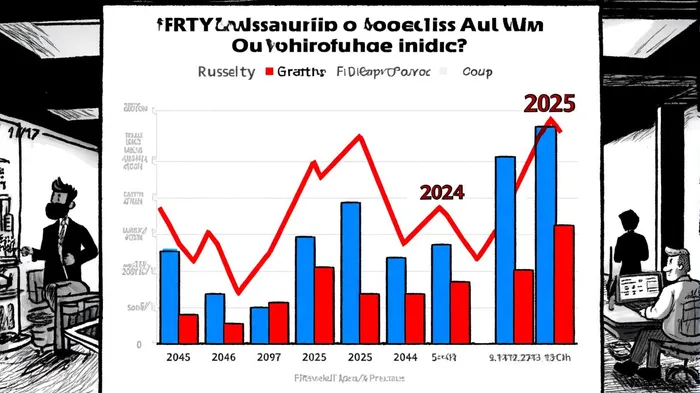
The Alger Mid Cap 40 ETF (FRTY) has emerged as a polarizing player in the mid-cap growth space, boasting a 3-year total return of 88.52% as of September 2025—translating to an 18.23% compound annual growth rate (CAGR) [1]. This performance, however, masks a rollercoaster ride: a -42.23% plunge in 2022 followed by a 38.86% rebound in 2024 [1]. For investors weighing long-term viability against underwhelming risk-adjusted returns, FRTYFRTY-- presents a compelling case study in the trade-offs of concentrated, active management.
The Allure of Growth, the Cost of Concentration
FRTY's strategy hinges on a 40-stock portfolio of mid-cap growth equities, with heavyweights like AppLovin (7.89%), Robinhood Markets (4.85%), and Cloudflare (3.73%) dominating holdings [3]. This approach, managed by Alger's seasoned team, aims to capitalize on high-growth sectors such as technology and healthcare [5]. While the fund's 1-year return of 16.12% outpaces the Russell MidCap Growth Index's 16.52% 3-year CAGR [2], its Sharpe ratio of 0.56 lags behind the S&P 500's 0.88, signaling subpar returns per unit of risk [4].
The expense ratio of 0.60% further complicates the calculus [2]. Though moderate compared to the 0.00%–2.12% range for similar ETFs [4], it's steep for a product targeting long-term growth. Active management and a 199.13% portfolio turnover rate amplify costs, potentially eroding returns in taxable accounts [5].
Volatility as a Double-Edged Sword
FRTY's non-diversified structure exposes it to outsized risks. A 53.14% maximum drawdown in October 2022 underscores the fragility of its concentrated holdings [4]. While the fund's 1.60 beta suggests it amplifies market movements [5], its performance in 2024—a 38.86% surge—demonstrates the potential for outsized gains during favorable cycles. Yet, such volatility demands a high-risk tolerance and a long-term horizon to weather downturns.
Strategic Pillars vs. Market Realities
Alger's “Process, People, Parent” framework—emphasizing repeatable investment processes, experienced management, and aligned parent company priorities [1]—provides a theoretical foundation for FRTY's strategy. However, mixed analyst ratings (a “Moderate Buy” based on 502 ratings) reflect skepticism about its ability to sustain outperformance [4]. The fund's forward P/E of 36.56x and lower-than-peer ROE also raise questions about valuation sustainability [5].
Verdict: A Niche Play for the Resilient
FRTY's growth-focused strategy appeals to investors seeking exposure to high-conviction mid-cap stocks, particularly in tech and healthcare. Its 3-year CAGR of 18.23% [1] and active management justify its place in a diversified portfolio for those with a 5–7-year time horizon. However, the high expense ratio, concentration risk, and subpar Sharpe ratio make it unsuitable for risk-averse investors or those prioritizing cost efficiency.
For FRTY to justify its bold premise, Alger must demonstrate consistency in navigating market cycles and maintaining a balance between growth and risk mitigation. Until then, it remains a high-stakes bet—a testament to the enduring tension between ambition and prudence in the world of mid-cap investing.





Comentarios
Aún no hay comentarios