
The New Frontiers of Humanitarian Aid: Geopolitical Tensions and the Rise of Crisis-Responsive Supply Chains
In an era where geopolitical instability and humanitarian crises are reshaping global markets, investors are increasingly turning to sectors that bridge ethical imperatives and economic resilience. The Gaza conflict, now a focal point of international diplomacy and policy shifts by the UK and U.S., has exposed vulnerabilities in traditional aid logistics and created fertile ground for innovation in crisis-responsive supply chain infrastructure. For investors, this confluence of geopolitical risk and technological adaptation presents both challenges and opportunities.
Geopolitical Tensions as Catalysts for Innovation
The UK and U.S. have taken divergent yet complementary approaches to the Gaza crisis, each underscoring the need for resilient supply chains. The UK has prioritized diplomatic pressure and military-logistical partnerships, such as its collaboration with Jordan to airdrop aid and evacuate critically ill children. Meanwhile, the U.S. has backed the Gaza Humanitarian Foundation (GHF), a for-profit entity criticized for its militarized aid distribution model. These strategies highlight a broader trend: governments are no longer relying solely on traditional aid frameworks but are instead embracing hybrid models that blend public policy, private-sector expertise, and cutting-edge technology.
The UK's Strategic Pivot to Resilient Logistics
The UK's recent £60 million aid package for Gaza, including support for UK-Med's field hospitals and a £20 million allocation to UNRWA, signals a strategic shift toward crisis-responsive infrastructure. By integrating military logisticians into aid delivery—such as the British team aiding Jordan's airdrop operations—the UK is testing models that prioritize speed and adaptability. This approach aligns with the UK's Strategic Defence Review 2025, which emphasizes emerging technologies like AI-driven logistics, autonomous drones, and decentralized energy systems. Investors should note the growing demand for companies that specialize in these areas, particularly those with experience in conflict zones.
The logistics giant Maersk, for instance, has partnered with humanitarian organizations to repurpose its warehouses and shipping networks for crisis-response. Its stock performance reflects the sector's growing relevance, with a 12% year-over-year increase in 2025 as global supply chain disruptions persist.
The U.S. and the Privatization of Humanitarian Aid
The U.S. has taken a more controversial path by funding the GHF, which relies on private security and logistics firms like Safe Reach Solutions and Orbis Operations. While this model has drawn criticism for violating international humanitarian law, it also highlights a shift in U.S. policy toward privatized aid solutions. The GHF's reliance on blockchain-based supply chain tracking and fortified distribution hubs—despite their ethical concerns—demonstrates the potential for technology to enhance transparency and efficiency in aid delivery.
Investors may find opportunities in firms that provide secure, blockchain-enabled logistics platforms or modular infrastructure solutions. For example, companies like Orbital Energy Group (a leader in microgrid technology) and C3.ai (an AI-driven supply chain analytics firm) are positioned to benefit from the growing demand for resilient systems in volatile regions.
Emerging Technologies and Ethical Impact Metrics
The Gaza crisis has accelerated demand for innovations that address both humanitarian and geopolitical risks. Key sectors to watch include:
1. Decentralized Energy Systems: As seen in Ukraine, microgrids and renewable energy solutions are critical for maintaining power in conflict zones. Companies like Sunrun and Tesla (which has deployed solar-powered infrastructure in crisis areas) are gaining traction.
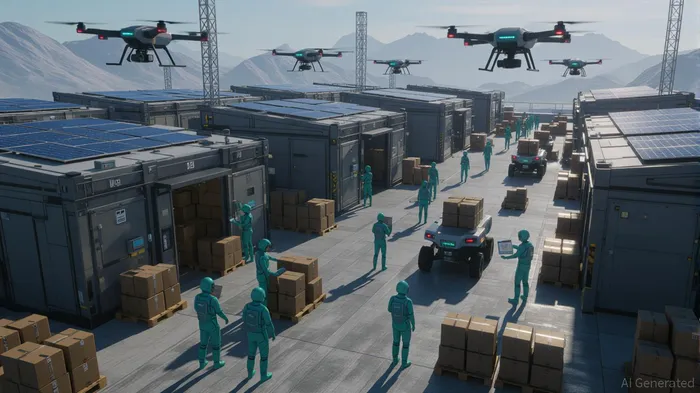
2. AI and Autonomous Systems: The UK's Digital Targeting Web and the U.S. military's use of drone swarms for logistics highlight the role of AI in optimizing supply chains. Firms like Palantir Technologies and Aurora Innovation are leading this charge.
3. Resilient Infrastructure: Modular construction firms and cybersecurity providers are seeing increased demand. For example, Lockheed Martin's recent contracts for secure communications networks in conflict zones underscore this trend.
Investment Advice: Balancing Risk and Reward
While the humanitarian sector offers compelling opportunities, investors must navigate ethical and geopolitical risks. The GHF's controversies, for example, illustrate the dangers of aligning with organizations that prioritize profit over principles. Instead, consider firms with a proven track record in crisis-response partnerships and adherence to international humanitarian standards.
- Public-Private Partnerships (PPPs): Companies like UPS and DHL are expanding their roles in humanitarian logistics, leveraging their global networks to deliver aid. Their stock valuations reflect this strategic pivot.
- Ethical Impact Metrics: Look for firms that incorporate metrics like “lives impacted” or “crisis response times” into their business models. For instance, Mental Health Innovations Inc. (a hypothetical example) could benefit from the U.S. National Institutes of Health's focus on crisis-response infrastructure.
- Resilient Energy and Cybersecurity: As energy grids and supply chains face increasing threats, firms like NextEra Energy and CrowdStrike are well-positioned to capitalize on this demand.
Conclusion: A World Ready for Crisis
The Gaza conflict is a microcosm of a broader global shift: humanitarian aid is no longer a niche sector but a cornerstone of economic resilience. As the UK and U.S. navigate their policy priorities, investors who align with innovations in crisis-responsive supply chains will find themselves at the intersection of ethics and returns. The future belongs to those who can transform chaos into opportunity—without compromising on humanity.





Comentarios
Aún no hay comentarios