
The New Frontier in Real Estate: Israeli West Bank Settlements and the Calculus of Geopolitical Risk
The Israeli West Bank settlement expansion of 2024–2025 represents one of the most consequential geopolitical shifts of this decade. While international actors decry these actions as illegal under the Fourth Geneva Convention, the reality on the ground is clear: Israel's settlement policies are accelerating, creating both profound instability and unprecedented real estate opportunities. For investors willing to navigate the volatile intersection of geopolitics and property, the West Bank's settlements are now a high-risk, high-reward arena. Here's why—and how—to position for this emerging frontierULCC--.
The Geopolitical Catalyst: Settlements as De Facto Annexation
Since 2023, Israel has embarked on an aggressive settlement-building campaign, with over 50,000 housing units projected by year-end 2025—a 200% increase from prior years. This isn't mere construction; it's a strategic land grab. Settlements now sprawl across 1.4 million dunams (140,000 hectares) declared “state land,” fragmenting Palestinian territory and solidifying Israeli control. The 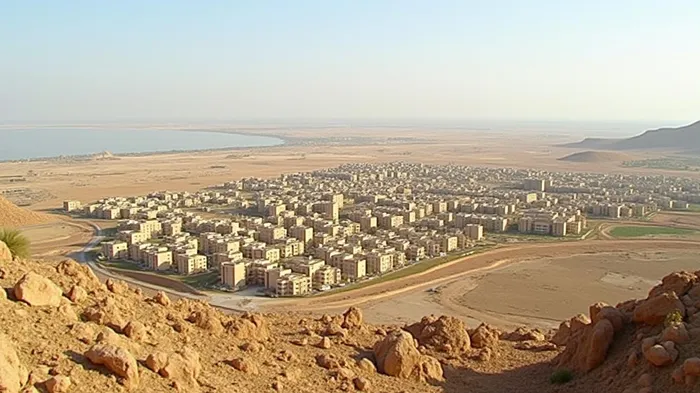 epitomizes this shift. Key projects like the E-1 plan—a 3,412-unit settlement near East Jerusalem—aim to physically disconnect Ramallah from Bethlehem, rendering a contiguous Palestinian state impossible. For investors, this is the ultimate “buy land before they make it illegal” scenario.
Real Estate Sectors to Watch
1. Construction & Infrastructure: The Engine of Expansion
The settlement boom is driven by construction firms and infrastructure projects. Over NIS 247 million (≈$82 million) in government funding in 2025 alone is earmarked for housing, roads, and utilities. Companies like Shikun & Binui (part of the Elbit Group) and niche settlement-focused builders are prime beneficiaries.
Key opportunities:
- Road networks: Projects like Route 55 and Route 60 expansions, which prioritize settler mobility while isolating Palestinian communities, offer infrastructure plays.
- Legal land disputes: Firms specializing in land rights litigation—such as Goldfarb & Co.—are critical to securing contested plots.
2. Parastate Entities and Land Development
Organizations like the Jewish National Fund (JNF) and World Zionist Organization (WZO) act as de facto developers, acquiring land and facilitating settlement growth. Their projects, such as the 13 settlements legalized in March 2025, are often shielded from international scrutiny.
3. Agriculture and Security: The Rural Frontier
Settlement farms, numbering 113 by late 2024, are both economic engines and security buffers. Investors in agricultural tech or security equipment (e.g., ATVs for farm patrols) can capitalize on subsidies for these “frontier” operations.
Risks: Sanctions, Diplomatic Fallout, and Volatility
The rewards come with steep risks. The EU and U.S. have already sanctioned entities like Hashomer Yosh and individuals involved in violent land seizures. While current measures target non-state actors, broader sanctions on construction firms or banks funding settlements could destabilize investments.
Critical risks to hedge against:
- Diplomatic pressure: The June 2025 UN conference on the two-state solution could intensify global scrutiny.
- Military escalation: Rising settler violence (1,18 incidents/month in 2024–2025) risks triggering broader conflict.
- Legal challenges: The International Court of Justice's reaffirmation of settlements' illegality could lead to asset seizures or lawsuits.
How to Invest Strategically
- Focus on Government-Backed Projects: Prioritize firms directly contracted by ministries like the Settlements and National Missions Ministry, which ensures policy alignment.
- Diversify Geographically: Invest in settlements near the security barrier (e.g., Ma'ale Adumim) and deeper into the West Bank (e.g., E-1), balancing immediate demand with long-term strategic value.
- Use Derivatives to Hedge: Short positions in regional stability indices (e.g., West Bank Conflict Index) or options on settlement-linked equities can mitigate volatility.
- Monitor Sanction Triggers: Track UN resolutions and U.S. policy shifts—Trump's administration may back Israeli actions, but European allies could pivot to tougher measures.
Conclusion: A Geopolitical Pivot Point
The West Bank's settlements are no longer just political flashpoints—they are real estate battlegrounds. With over 50,000 units in the pipeline and Israel's far-right government prioritizing expansion, this is a buyer's market in a zone of contested sovereignty. Investors who act now, while hedging against sanctions and volatility, can secure assets in areas that may soon become irrevocably annexed. The calculus is stark: high risk, but the prize is a stake in a geopolitical reshaping of the Holy Land.
Act decisively—but stay vigilant.







Comentarios
Aún no hay comentarios