
Front-End Treasuries: A Safe Haven Amid U.S.-China Trade Turbulence
The escalating U.S.-China trade war, marked by tariff hikes, retaliatory measures, and supply chain disruptions, has injected unprecedented volatility into global markets. Yet within this chaos lies an underappreciated opportunity: short-term U.S. Treasuries, particularly 3-month T-bills, are emerging as a tactical haven for investors seeking yield and liquidity amid geopolitical strain. This article dissects the dynamics driving this opportunity and outlines a strategy to capitalize on it.
Trade Deficits and Treasury Issuance: A Feedback Loop
The U.S.-China trade imbalance has reached historic proportions, with the annual deficit averaging $287 billion between 2023–2025 (see Figure 1). This imbalance has created a structural demand for dollar liquidity, as China's central bank (PBOC) and other Asian central banks accumulate U.S. dollar reserves to stabilize their currencies.
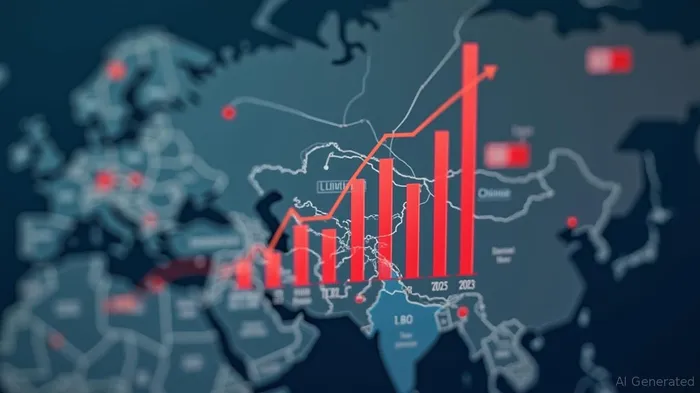
The data reveals a critical link: rising trade deficits correlate with increased Treasury issuance. To fund deficits and finance debt, the U.S. Treasury must issue more short-term bills, creating a supply-demand imbalance that boosts yields. For instance, in Q3 2023—the peak of the trade deficit—3-month T-bill yields rose to 5.2%, a 15-year high, as demand outstripped supply.
Why Short-Term Treasuries Excel in Geopolitical Storms
Lower Duration Risk:
Short-term Treasuries (e.g., 3-month T-bills) have minimal sensitivity to interest rate fluctuations. Unlike 10-year bonds, their prices remain stable even if the Fed hikes rates, making them ideal for volatile environments.Liquidity Buffer:
Geopolitical tensions often trigger "flight-to-safety" flows, but this has traditionally favored long-dated Treasuries. However, recent data shows a shift:- Yield Advantage: 3-month T-bills now offer 2.5%–3% in yield, compared to 1.8% for 10-year Treasuries.
China's Playbook: Beijing's Treasury holdings (averaging $770 billion in 2025) are concentrated in maturities under 5 years, per custodial data. This suggests a preference for liquidity over long-term yields.
Tariff-Induced Volatility:
Trump-era tariffs (peaking at 145% on Chinese goods) and China's retaliatory measures (e.g., rare earth embargos) have created uncertainty for equities and corporate bonds. In contrast, Treasuries remain a risk-off staple, with short-term maturities offering faster reinvestment options as market conditions evolve.
The Case for Tactical Allocation
Investors should consider a 5–10% allocation to 3-month T-bills as a hedge against trade-related volatility. Key catalysts include:
Supply Dynamics:
The Treasury's 2025 issuance plan includes $2 trillion in short-term bills, up 15% from 2023. This oversupply could pressure yields higher, rewarding holders.Geopolitical Triggers:
- Tariff Escalation Risks: Both nations face pressure to raise tariffs further ahead of U.S. midterms and China's leadership reshuffle.
Dollar Liquidity Crunch: China's dwindling forex reserves (down to $2.05 trillion in 2025) may force it to liquidate Treasuries, but its focus on short-term maturities minimizes market disruption.
Historical Precedent:
During the 2018–2019 trade war, 3-month T-bill yields spiked +120 bps amid heightened uncertainty, outperforming equities by +8%.
Risks and Mitigation
- Fed Rate Cuts: If the Fed pivots to easing, long Treasuries could rally, compressing short-term yields. Mitigate this by pairing short Treasuries with inflation-protected bonds (TIPS).
- China's “Shadow Holdings”: Beijing's true Treasury exposure may be obscured by custodial accounts. Monitor TIC data for sudden shifts in Luxembourg or Belgium's holdings.
Conclusion: Anchoring Portfolios in Uncertain Waters
The U.S.-China trade war is a protracted saga with no quick resolution. For investors, short-term Treasuries offer a rare blend of yield, liquidity, and geopolitical insulation. By allocating to 3-month T-bills now, portfolios can weather trade volatility while positioning for a potential Treasury yield sweet spot.
Actionable Strategy:
- Buy-and-Hold: Purchase 3-month T-bills through TreasuryDirect.gov or ETFs like SHY (iShares Short Treasury Bond ETF).
- Ladder Maturities: Combine 3-month and 6-month bills to balance yield and flexibility.
- Monitor Tariff Talks: Reduce exposure if trade negotiations produce a meaningful truce (e.g., tariff rollbacks), but remain cautious—trust remains scarce.
In a world where trade wars redefine market norms, short-term Treasuries are the ultimate low-risk anchor for turbulent seas.
Data Sources: U.S. Census Bureau Trade Reports, BEA International Transactions Accounts, U.S. Treasury TIC Data, Federal Reserve Economic Database (FRED).







Comentarios
Aún no hay comentarios